Leiden, Haarlem, Amsterdam and The Hague have thousands of listed buildings, called monumenten in Dutch, and many of them are ordinary homes. Their owners want them warmer and cheaper to heat too. That is possible, but it takes more preparation than in a standard house. Almost any change to a national monument needs a permit, and old walls and roof timbers react differently to insulation than modern construction. This guide covers the rules, where the damp risk lies, which measures often work and how to approach the process. We do not give permit advice; the gemeente (local council) and the Cultural Heritage Agency (RCE) are the people to ask. The general rules for renovating a listed building or a home in a protected area are in renovating a listed building or protected area.
- According to the RCE, almost any change to a national monument needs a permit (omgevingsvergunning).
- Insulation that affects listed interior features, such as decorative plaster ceilings, also needs a permit.
- Start with early talks with the council and its heritage officer, before anything is ordered.
- The main technical risk when insulating a listed building is damp in walls and timber.
- Fix existing damp first and choose a build-up that suits the old construction.
National monument, municipal monument or protected townscape
Not every old house is listed, and not every listed building follows the same rules. A rijksmonument, or national monument, is on the register of the Cultural Heritage Agency (Rijksdienst voor het Cultureel Erfgoed, RCE). A gemeentelijk monument is listed by the local council, which sets its own rules. A home in a protected townscape (beschermd stadsgezicht) is not a monument itself, but there are often rules on what you may change on the outside.
Whether your home is listed is shown in the RCE's monument register, or the council can tell you. Be sure before you make a plan, because it decides which procedure applies.
| Status | Where the rules come from |
|---|---|
| National monument | Environment and Planning Act, permit for the national monument activity |
| Municipal monument | Local plan and council rules |
| Protected townscape | Local plan, mainly for the outside |
The permit: talk early
According to the Cultural Heritage Agency, you generally need a permit for every change to a national monument. That includes insulation and other energy saving measures that may affect interior features of heritage value, such as plaster ceilings. Under the Environment and Planning Act (Omgevingswet) this is called the national monument activity.
The RCE advises talking to the council about your plans in good time. The council's heritage officer (erfgoedambtenaar) can explain local rules and available grants. If the heritage values are unclear, the RCE recommends a building history survey by an independent specialist.
You apply through the Omgevingsloket, the national planning portal. According to the RCE, the council decides within 8 weeks, with a 6 week period for public inspection, if the plan can be assessed. Build that time into your schedule.
Tip from the trade: Photograph every existing detail, such as mouldings, ceilings and panelling, before a plan is drawn up. It helps in talks with the council and during the work.
Why damp is the biggest risk
Old walls are often solid brick with lime mortar. They take in moisture and release it again, on both sides. A historic roof structure has timber that has stayed dry for centuries because air can move around it. Once you insulate, that balance changes.
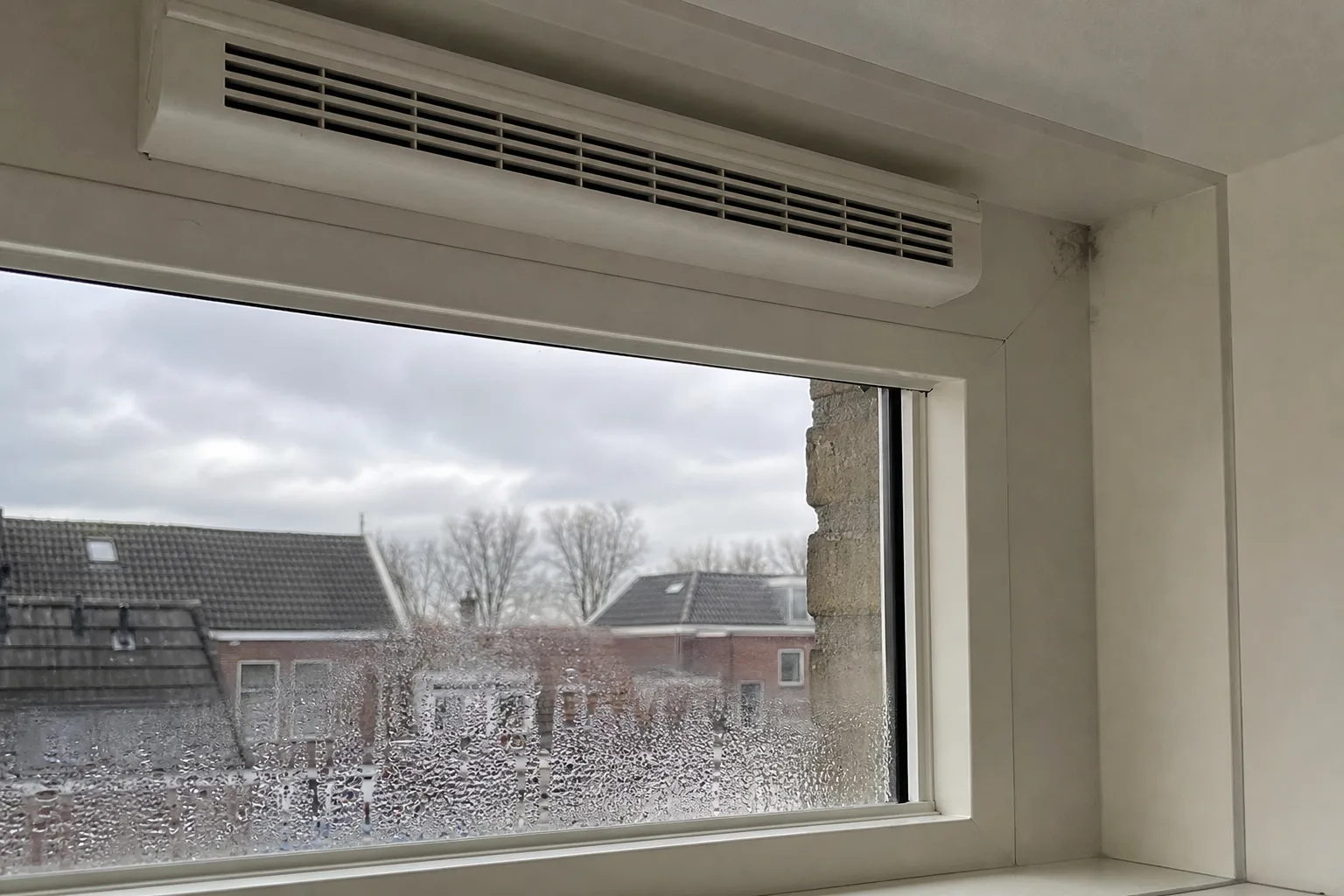
The RCE points out that careless insulation can lead to damp problems and eventually to decay of materials. Insulating on the inside makes the old wall colder. If moist indoor air reaches it, or rain gets in from outside, the wall no longer dries out properly. Joist ends in the wall and timber window frames are the first to suffer.
So in a listed building it matters even more than elsewhere: fix existing damp, let the wall dry, and only then insulate. See also damp and condensation after insulating.
Watch the finish as well. An old wall with lime mortar and lime plaster can lose moisture through its surface. If it is later sealed with hard cement plaster or vapour-tight paint, it loses that way out. When repairing plaster in a listed building, choose materials that suit the old wall.
Ik dank Stanislav voor zijn snelle, hoogwaardige en professionele werk! Om te beginnen kwam Stanislav kijken, evalueren en praten over de fasen van het werk en de kosten. Binnen twee dagen was al het werk gedaan.
Measures that often work
What is possible differs per building. The RCE stresses that every monument needs a tailored approach, balancing energy saving against heritage value. Still, some measures often fit well.
The RCE advises starting with a sustainability plan and basic measures, such as sealing gaps and mapping energy use. Insulation comes next, and only then installations and energy generation. Ventilation remains important throughout.
- Sealing gaps around windows, doors and shutters.
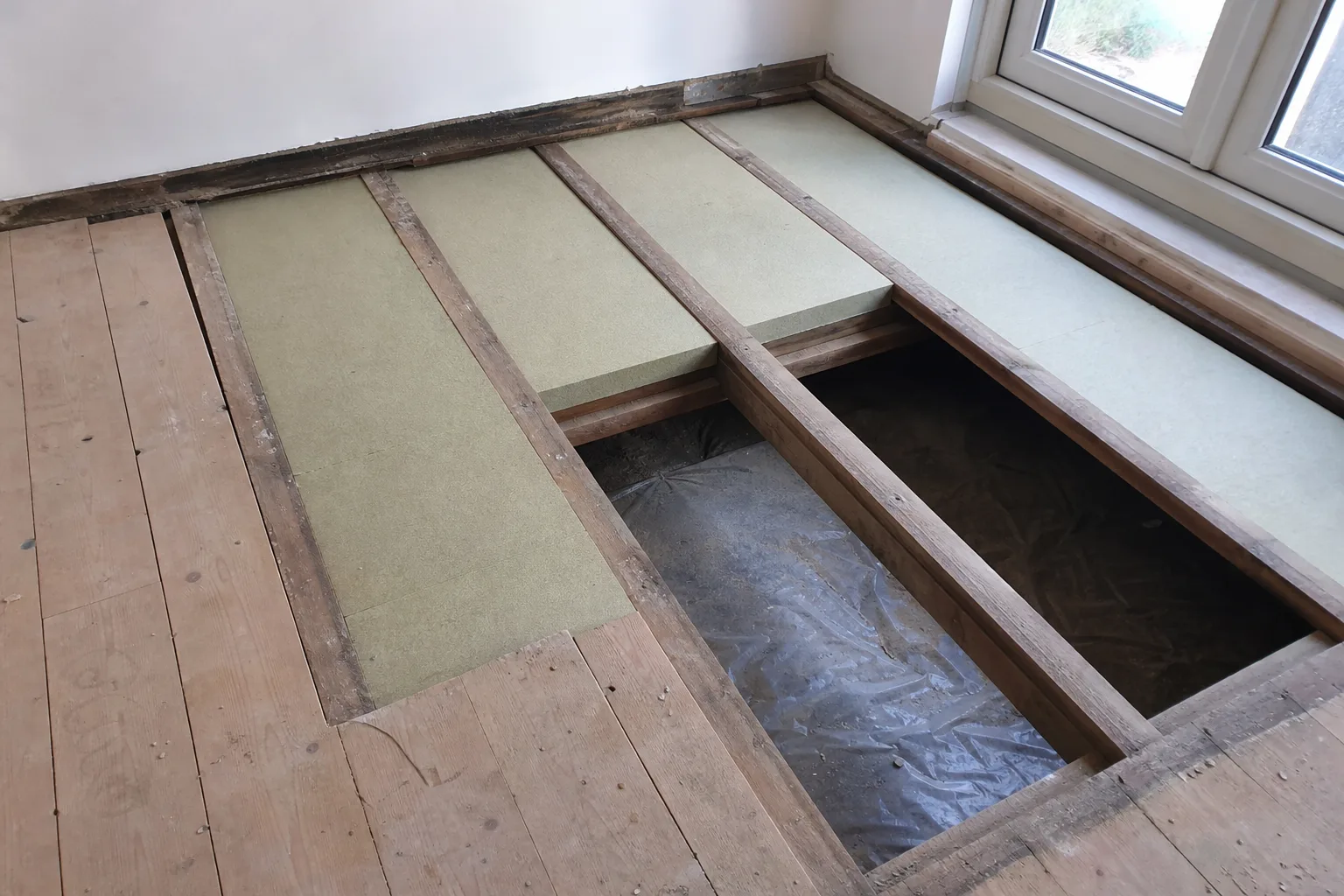
- Insulating the floor above a crawl space, which is usually out of sight.
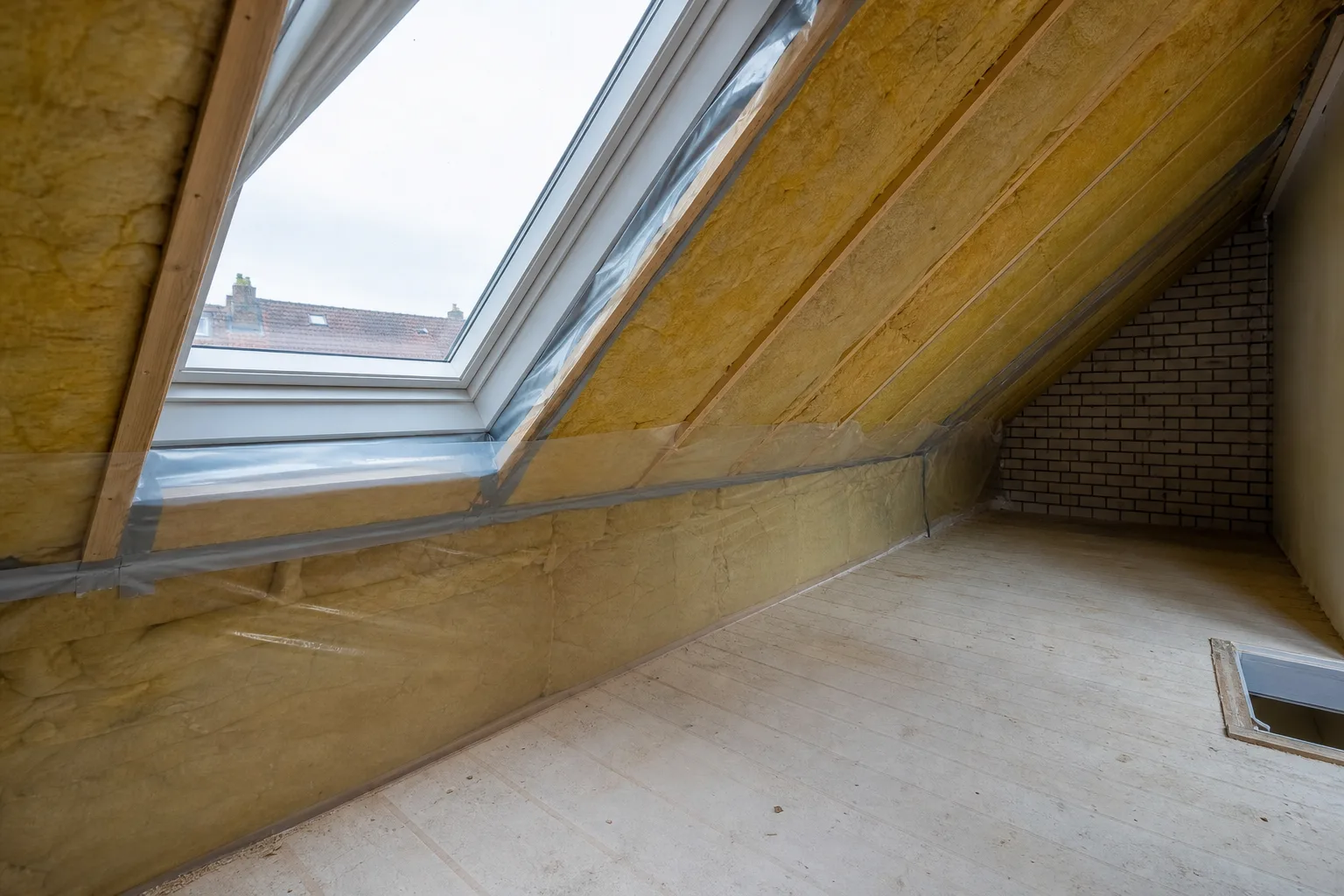
- Insulating an attic floor under an unheated roof.
- Secondary glazing on the inside or outside of historic glass, for which the ISDE has looser rules for monuments since 2026.
- Inside wall insulation only after investigation, with a build-up that suits the wall.
Insulating the walls from inside in a listed building
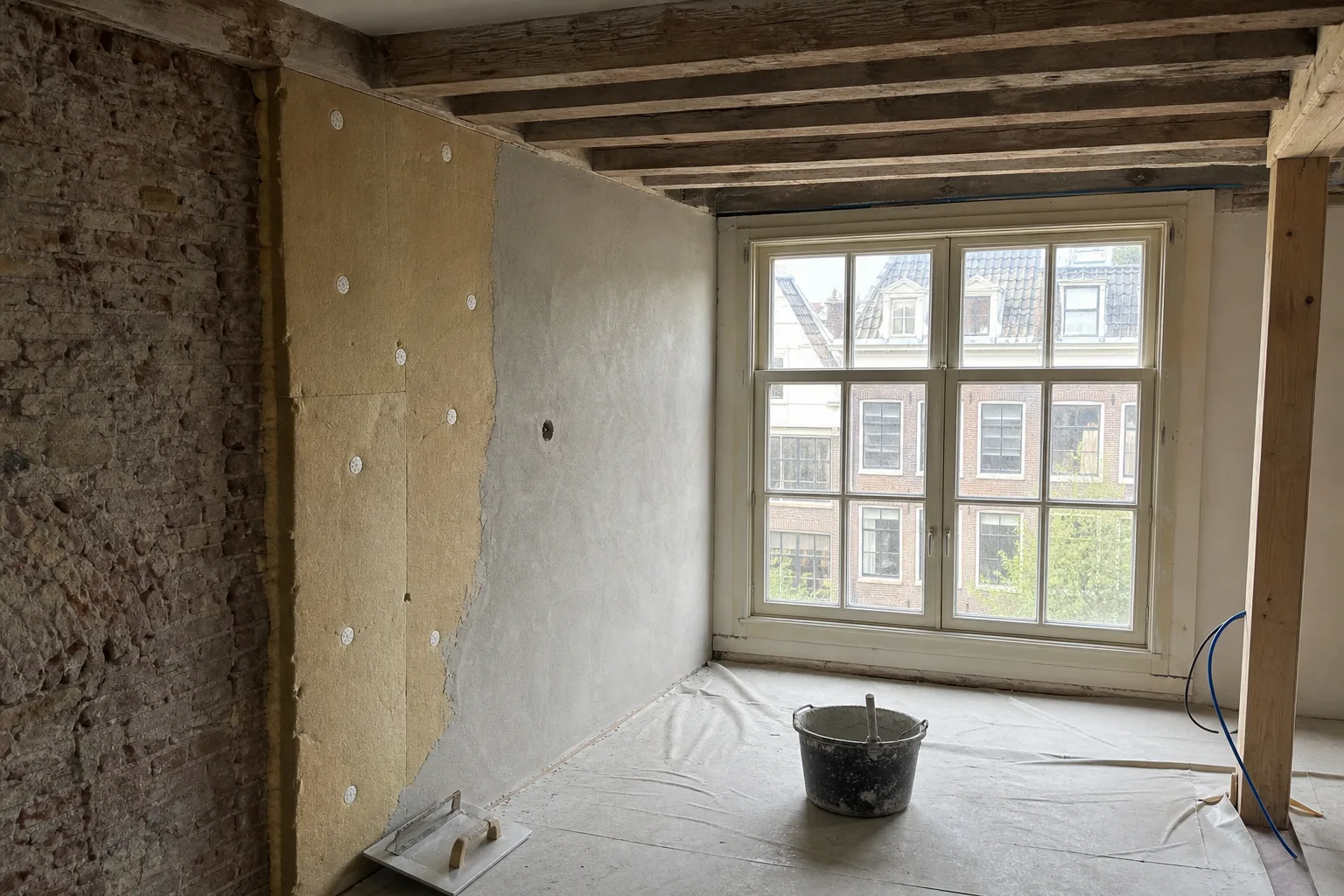
On listed buildings, insulating the outside of the facade is often not possible, because the brickwork or facade design carries the heritage value. That leaves insulation on the inside, with a stud wall or another build-up. For external wall insulation on a monument a permit is almost always needed and approval is less likely.
For inside insulation in a monument, a vapour control membrane is not always the best choice. In its publications the RCE also mentions capillary active, vapour open materials such as calcium silicate, which can take in moisture and release it again. Which build-up fits depends on the wall, its exposure to wind and rain and what is valuable on the inside. That needs a building physics assessment, not a standard solution.
Listed plaster ceilings, mouldings and panelling cannot simply disappear behind a new wall. The council weighs that in the permit too.
Grants and the energy label for monuments
The ISDE grant has separate rules for monuments. According to RVO, since 2026 secondary glazing in listed homes qualifies, because the glass insulation requirement for monuments has been relaxed. For the other conditions, see our ISDE grant guide for 2026.
The energy label has changed too. According to RVO, listed buildings need an energy label when sold or let since 29 May 2026. More in improving your energy label. Ask the heritage officer about local grants for monuments as well.
How to go about it
Start by confirming the status of the building and having a first conversation with the council. Then map where the home loses heat and where there is damp now. Based on that, make a plan per part, in this order: basic measures and damp repair first, then insulation, then installations.
Make sure the work follows the plan and the permit conditions, and put that in writing with your contractor beforehand. Stas, the owner, visits, looks at the walls, roof, floor and details, and you get a free quote with no obligation. The price depends on the area, the chosen build-up, the state of the structure and the permit conditions. Get in touch.
Frequently asked questions
Can I insulate the attic floor of a national monument myself?
Even insulation on the inside can need a permit, for example if listed features are affected. Talk to the council before you do anything.
Is inside insulation in a listed building always risky?
Not always, but it needs more care than in a standard home. With a suitable build-up, dry walls and good junctions it can work. A building physics assessment beforehand is wise.
What is the difference between a national and a municipal monument?
A national monument is listed by the state and appears in the RCE register. A municipal monument is listed by the local council. The rules and the contact point differ.
How long does a permit for a national monument take?
According to the RCE, the council decides within 8 weeks, with a 6 week inspection period, if the plan can be assessed. Talking to the council first can make it smoother.
Can I fit double glazing in a listed building?
That depends on the value of the existing glass and frames. Secondary glazing, which keeps the historic glass in place, is often an option. That usually needs a permit as well.
Renovation and finishing work from Roelofarendsveen: plastering, bathrooms, microcement, extensions, insulation, floors, electrics and plumbing. One point of contact from quote to completion. Questions? Call or WhatsApp +31 6 87 61 60 78.
Sources
- Consultation and permits for making monuments sustainable (RCE, Dutch)
- Measures for making monuments sustainable (RCE, Dutch)
- National monument activity (IPLO, Dutch)
- ISDE changes in 2026 (RVO, Dutch)
Rules change. Always check your own address with the Permit Check (Vergunningcheck) in the Omgevingsloket or with your municipality.