The historic centres of Amsterdam, Leiden and Haarlem are full of houses that are listed buildings or stand in a protected townscape. They are wonderful places to live, but a renovation needs more preparation. Much of the work on a national monument needs a separate permit, and in a protected townscape the local plan may set stricter rules for anything you change on the outside. Not everything inside has to be different, but you do need to know where the line is. This guide explains the types of protection, what the rules say and how to approach a renovation in such a house. It is an explanation, not permit advice. Mainly want to insulate? Also read insulating a listed building.
- There are three kinds of protection: national monument, municipal monument and protected townscape.
- Changes to a national monument usually need a permit for a rijksmonumentenactiviteit.
- Routine maintenance that keeps the same shape, colour and material does not need a permit.
- In a protected townscape, the municipality sets the protection in its environment plan.
- Check your home's status before you make plans or order anything.
Three kinds of protection
A national monument (rijksmonument) is designated by central government for its cultural and historical value. Every one is listed in the Monuments Register of the Cultural Heritage Agency, the RCE. A municipal monument (gemeentelijk monument) is designated by the municipality, and you find that list with the gemeente itself.
A protected townscape (beschermd stads- of dorpsgezicht) is not a building but an area. According to the RCE there are 472 such areas in the Netherlands. Large parts of the historic centres of Amsterdam, Leiden and Haarlem are among them. So a house that is not a monument itself can still be in a protected area.
| Type | Designated by | Where to look |
|---|---|---|
| National monument | Central government | RCE Monuments Register |
| Municipal monument | The municipality | The municipality's list or map |
| Protected townscape | Government or municipality, protected in the local plan | Environment plan, map on the Omgevingsloket |
National monuments: what needs a permit
Under the Environment and Planning Act (Omgevingswet), a national monument needs a permit for what is called a rijksmonumentenactiviteit: demolishing, disturbing, moving or altering the monument. According to IPLO, the government's information point for the Act, the municipality decides on most applications.
Not everything needs a permit. Routine maintenance is permit-free as long as the detailing, profiles, shape, colour and type of material stay the same. Internal changes to parts with no heritage value are also permit-free. But you do not decide for yourself what has value. An old ceiling, a staircase, a fireplace or an internal door may be exactly why the house is protected. If in doubt, talk to the gemeente before anything is removed.
- Usually permit-free: repainting in the same colour, repointing with the same mortar, replacing a rotten corner of a frame in the same profile.
- Usually needs a permit: windows or frames of a different type, a dormer, an opening in an original wall, insulation that changes the appearance.
- Always check: work on ceilings, staircases, fireplaces, panelling and historic floors.
Protected townscapes: the local plan counts
In a protected townscape the concern is the look of the street: the facades, the roofs and the spaces between them. The RCE says the municipality must protect these areas in its environment plan (omgevingsplan). So the rules differ from town to town and sometimes from one neighbourhood to the next. They often cover the front facade, the roof, window frames, colours and extensions visible from the street or the canal.
Inside, you usually have more freedom in a protected townscape, as long as the house itself is not a monument. A new bathroom, floor or kitchen is normally not covered by the area's protection. A rear extension, however, can face stricter rules than in an ordinary neighbourhood. See permit-free extensions for the standard rules.
Tip from the trade: Run the permit check on the Omgevingsloket, the national permit portal, for your address. It takes the status of the building and the area into account and shows whether you need a permit.
Snel en kwalitatief hoogstaand werk. 3 kamers opgeleverd in 3 dagen. Gestuukte wanden en plafond. Nu zijn de kamers onherkenbaar. Zulke gladde muren waren hier nooit. Ik adviseer iedereen Parus Construction. Ook de prijzen zullen u verrassen.
What is different in practice
Old houses are built differently from new ones. Solid brick walls laid in lime mortar, timber floors, ceilings plastered onto reed or laths, and often no cavity. These materials need to breathe. A dense cement plaster or a vapour-tight layer on top can cause damp problems. That is why, in consultation with you, we choose materials that suit the old work in these houses, such as lime plaster.
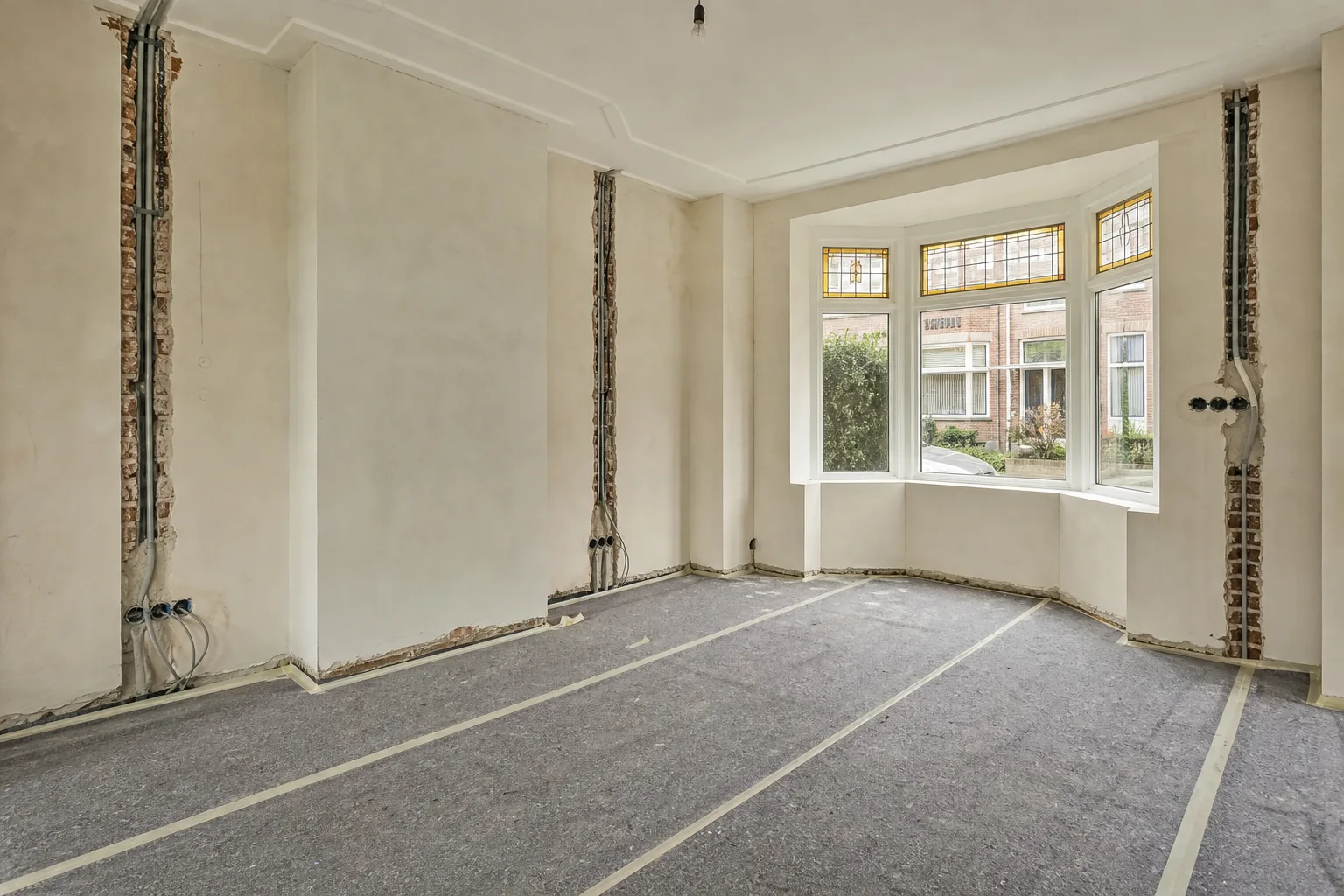
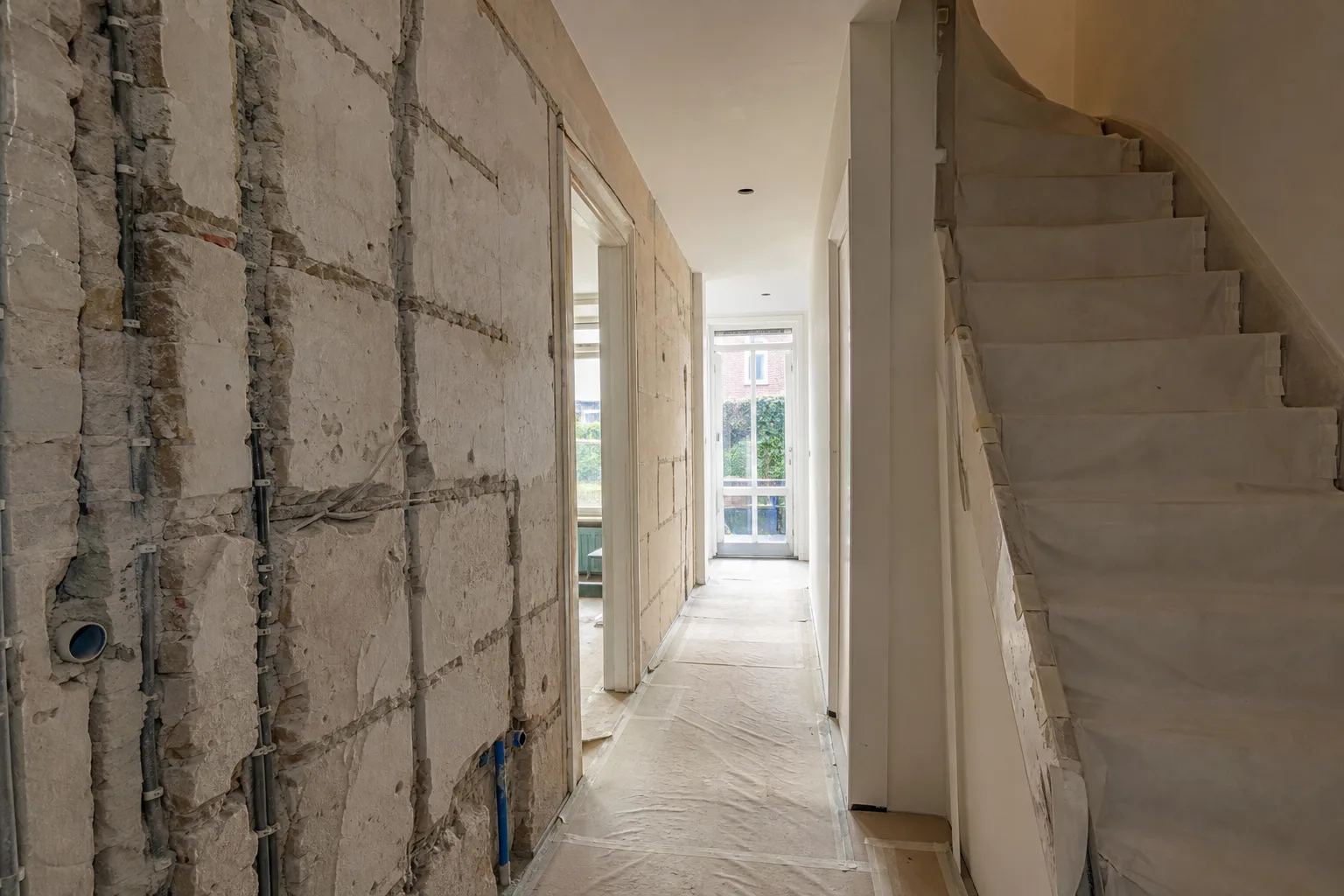
Behind the walls and under the floors there is often a mix of pipes and cables from different decades. Houses built before 1960 may still have lead water pipes, and the wiring is sometimes partly unearthed. We replace these during a renovation. In a monument we route the new services so they touch the historic fabric as little as possible, for example by reusing existing chases and ducts.
Insulation needs care too. An insulated stud wall on the inside of the facade can work, but the build-up has to be right to prevent condensation behind it. In a monument, insulation can also need a permit if it affects historic interiors. Read more on our insulation page.
Step by step for a protected house
Start with the status. Look the house up in the Monuments Register, check the municipality's website for municipal monuments, and look at the environment plan for the area. Then have a survey done and draw up a plan that shows clearly what changes and what stays.
Many municipalities offer a pre-application meeting or a heritage consultation hour. Use it. A plan discussed in advance usually goes through the application more smoothly. Allow time as well: a permit procedure takes longer than an order from the builders' merchant.
- Look up the status of the house and the area.
- Survey and list the valuable features.
- Make a plan: what stays, what is repaired, what is new.
- Pre-application meeting with the municipality.
- Apply for a permit where needed, then order and start.
Tenants and owners' associations in old buildings
Many historic buildings in the city centre are divided into flats. The owners' association (VvE) then has a say in work on the facade, roof, foundations and shared pipes. In an old building with timber floors, sound also travels easily to the neighbours, and the association's rules sometimes set requirements for a new floor.
If you rent, you need the landlord's permission for most alterations. With a monument, the permit comes on top of that. Always put agreements in writing.
How Parus works in old houses
Parus Construction works in Amsterdam, Haarlem, Leiden, The Hague and Utrecht, including old buildings in the city centres. At the survey we look at how the house is built and what is valuable, and we discuss what its status means for the plan. Where needed we help with the application. Whether a permit is needed is up to the municipality.
We do plastering, insulation, bathrooms, floors, electrics and plumbing with one team, and Stas, the owner, is your single point of contact. For a larger project, read our guide to a full renovation, step by step. Get in touch for a free survey. We reply within 24 hours.
Frequently asked questions
How do I know if my house is listed?
Look up your address in the RCE Monuments Register for national monuments. For municipal monuments, check with the gemeente. Whether your house is in a protected townscape is shown in the environment plan.
Can I put a new bathroom in a national monument?
Often yes, but it depends on what has to be removed or opened up. If the work affects parts with heritage value, you need a permit. Talk to the municipality first.
Is painting permit-free on a listed building?
Routine maintenance in the same colour and material is permit-free for a national monument. A different colour on the facade can need a permit.
Can a listed building be insulated?
Often, with a build-up that suits the old construction. For a national monument, insulation can need a permit if it changes the appearance or valuable interiors.
What does a renovation in a listed building cost?
It depends on the condition of the building, the materials and what needs restoring. After a survey you get a free quote.
Renovation and finishing work from Roelofarendsveen: plastering, bathrooms, microcement, extensions, insulation, floors, electrics and plumbing. One point of contact from quote to completion. Questions? Call or WhatsApp +31 6 87 61 60 78.
Sources
- National monument activity (IPLO, Dutch)
- Protected townscapes (RCE, Dutch)
- Monuments Register (RCE, Dutch)
- Permit check (Omgevingsloket, Dutch)
Rules change. Always check your own address with the Permit Check (Vergunningcheck) in the Omgevingsloket or with your municipality.