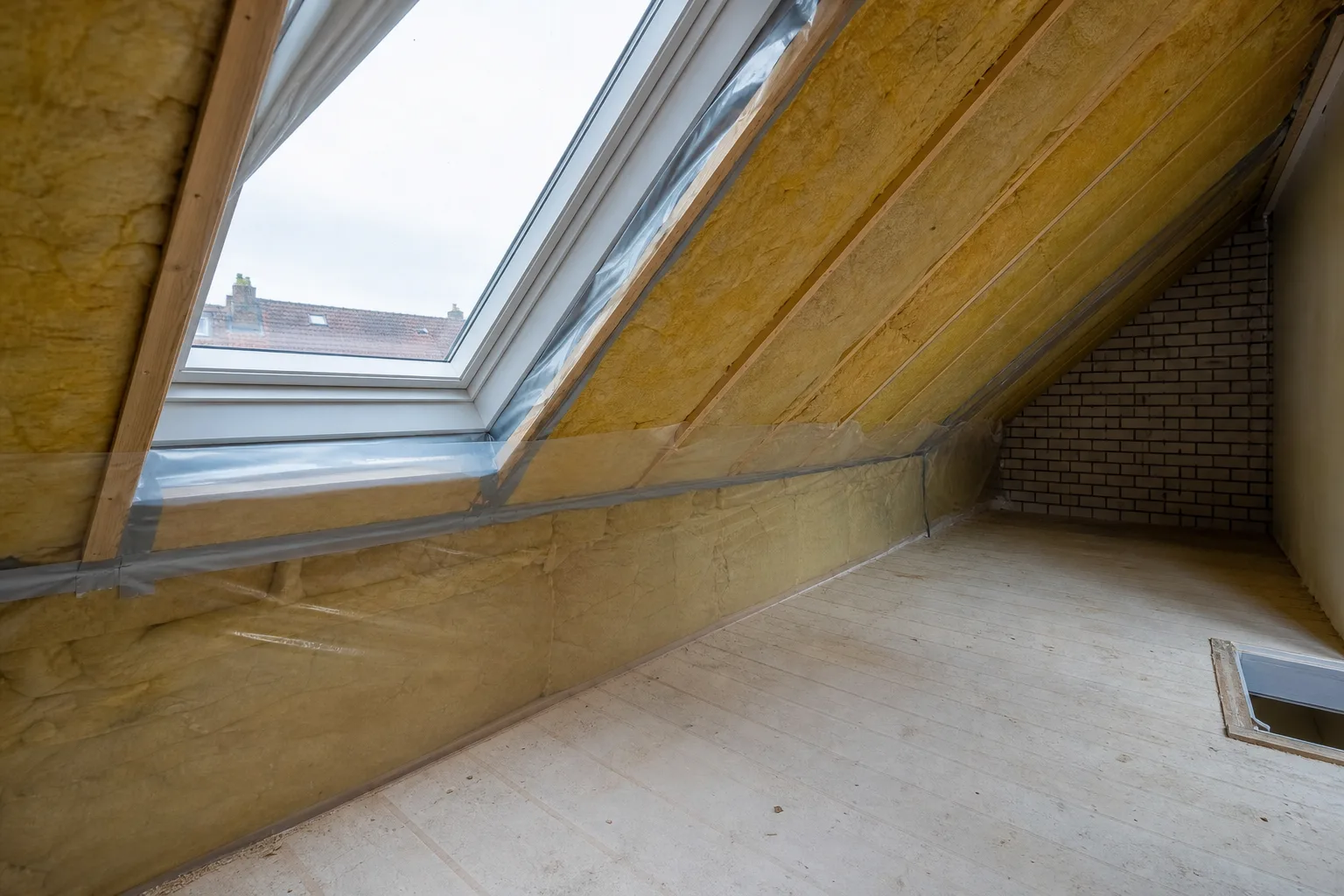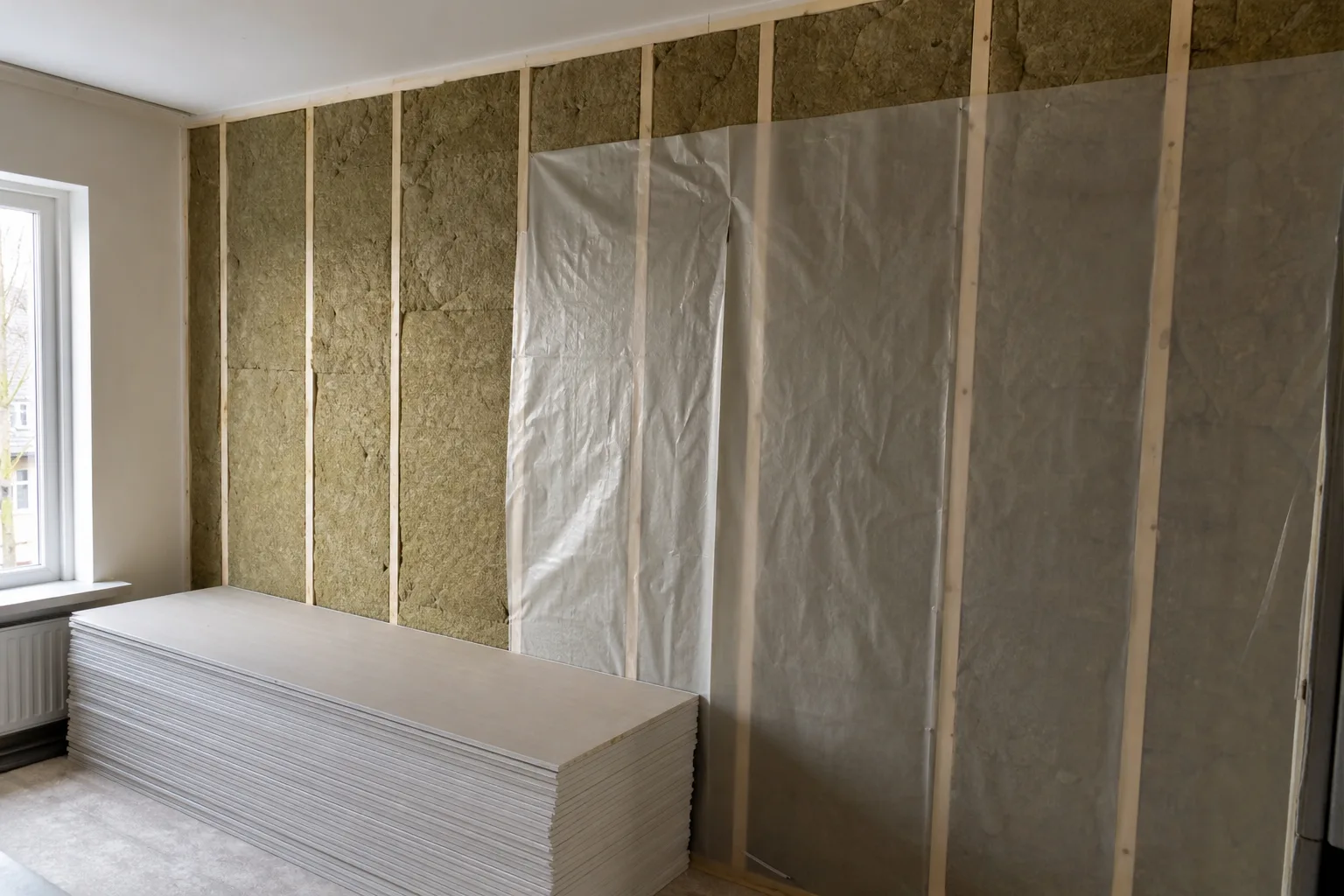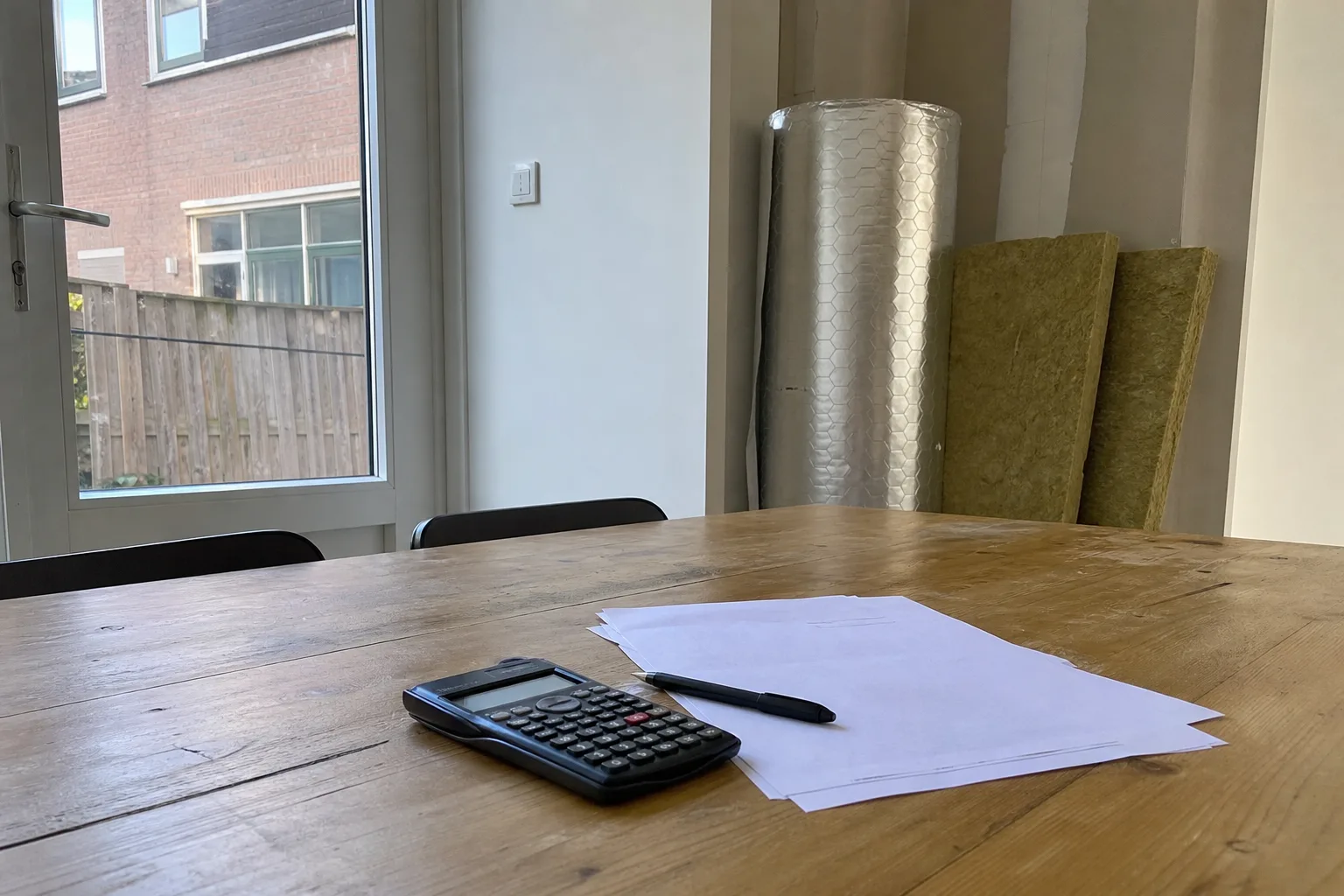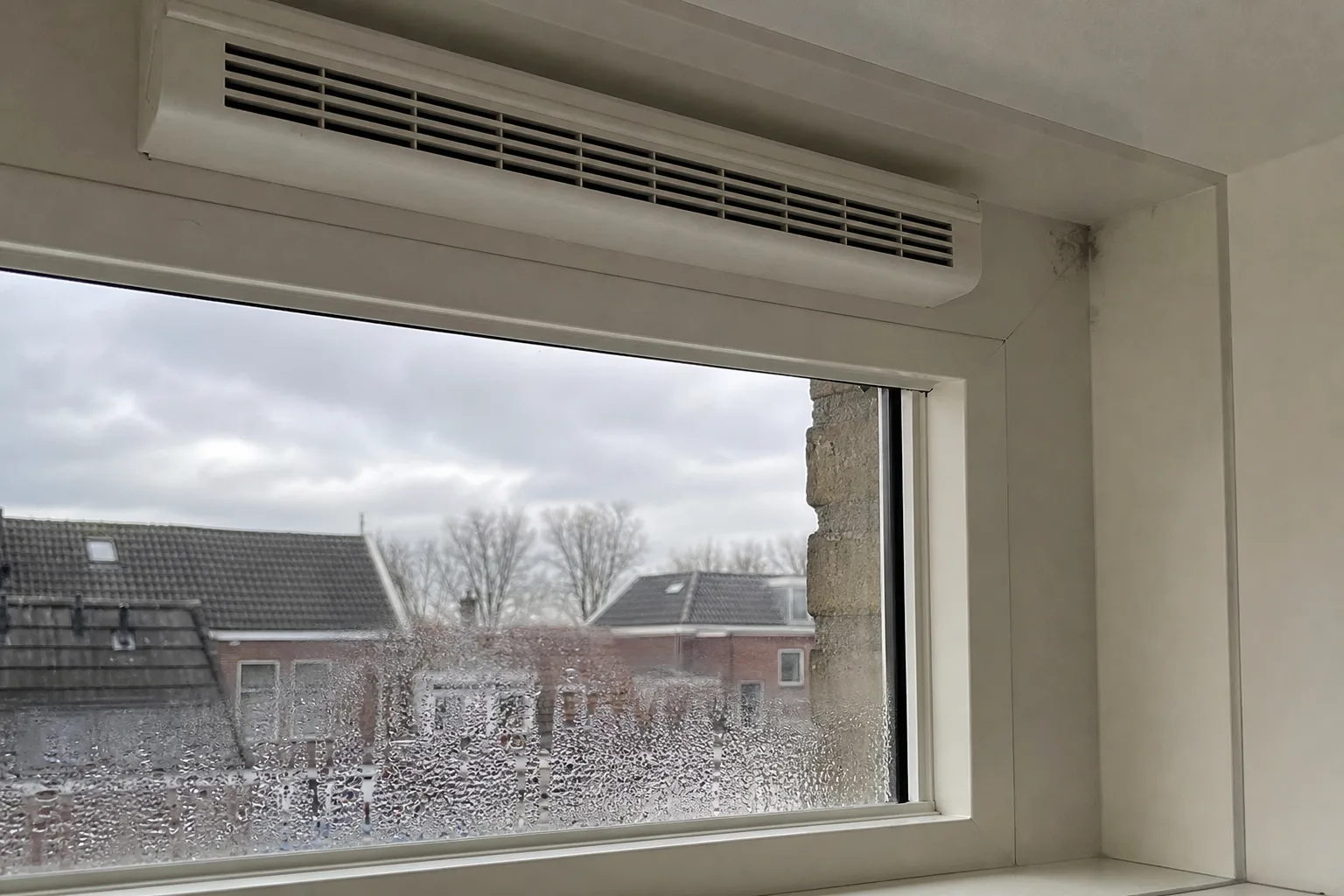
- Condensation forms where moist indoor air meets a cold surface.
- After insulating, cold spots remain at window frames, joist ends and junctions: thermal bridges.
- The vapour control layer belongs on the warm side and must be airtight.
- Milieu Centraal advises ventilating day and night, all year round; after insulating it matters even more.
- Existing damp, such as leaks or rising damp, must be fixed before you insulate.
How condensation forms
Air can hold a certain amount of water vapour, and warm air more than cold air. When moist indoor air cools against a cold window or wall, it can no longer hold that moisture. It settles as droplets. That is what you see on single glazing in the morning, still common in older Dutch homes.
There are two kinds. Surface condensation you can see: on glass, in a corner, behind a wardrobe against an outside wall. Interstitial condensation you cannot see: it forms inside a construction, for example behind a stud wall or between roof insulation and roof boarding, when moist air gets in and meets a cold layer. That second kind is the real risk when insulating.
Good insulation makes the inner surface of walls and windows warmer. So surface mould from condensation often disappears after insulating. Problems start only when spots stay cold, or when the build-up lets moisture into the construction.
Thermal bridges: the cold spots that remain
A thermal bridge is a place where the insulation is interrupted. Heat escapes faster there and the inner surface stays colder than the rest of the wall. In an insulated room such a spot stands out, because everything else is warm. Moisture finds exactly that spot.
Milieu Centraal, the independent Dutch energy advice body, names timber joists resting in the external wall as a known example. After insulating from inside, the joist end gets colder, moisture condenses there and the wood can rot. Other places we check:
- Window reveals and the underside of frames.
- Lintels above windows and doors.
- Where an insulated wall meets an internal wall or floor.
- Joist ends of a timber floor in the external wall.
- Entries for pipes, cables and drains.
Tip from the trade: Does a damp patch keep appearing in the same spot after insulating, always the same corner or along the same frame? That is nearly always a thermal bridge or a leak in the vapour layer, not a ventilation problem.
The vapour control layer on the warm side
When you insulate from inside, a vapour control layer goes on the room side of the insulation. It keeps moist indoor air away from the cold wall or roof. It only works if it is closed: overlaps taped, edges sealed to floor, ceiling and frame, and every hole for a socket or pipe made good.
A loose joint or a careless hole looks small, but air flowing through a gap carries far more moisture into the construction than would ever pass through an intact membrane. That is why a stud wall or attic insulation needs airtight back boxes and seals that break the membrane as little as possible.
Too much vapour control can cause problems too. Timber trapped between two vapour-tight layers can no longer dry out. For old walls with a vapour-tight outer layer, such as glazed tiles, Milieu Centraal advises against a stud wall.
We zijn heel erg tevreden. Hele aardige man en echt vakwerk afgeleverd. Alles keurig netjes achtergelaten!
Ventilation matters more
According to Milieu Centraal, you should always ventilate: day and night, all year round, also in winter. After insulating, gaps and joints are sealed, and a good ventilation system becomes even more important. Moist air has to leave the house, or it will find the coldest spot.
In practice that means keeping the trickle vents above the windows open, making sure the extraction in bathroom and kitchen works, and leaving the window or fan on long enough after a shower. With mechanical ventilation, Milieu Centraal says the vents must always be open, or the system creates negative pressure.
Since 2026, energy efficient ventilation combined with insulation qualifies for the ISDE grant. See our ISDE grant guide for 2026.
- Trickle vents always open.
- Extraction on during and after cooking and showering.
- Dry laundry outside or in a ventilated room where possible.
- Keep wardrobes a few centimetres away from an external wall.
- Do not leave rooms completely unheated in winter.
Fix existing damp first
Insulation does not solve a damp problem that is already there. A leaking gutter, rain driving through poor pointing, rising damp from the foundations or a leaking pipe in the wall: put insulation over it and you lock the moisture in. The wall can no longer dry.
Milieu Centraal advises having existing damp solved by an expert first. During our visit we look for salt deposits, loose plaster, dark edges and the state of gutters and pointing. If a pipe leaks, our plumber fixes it. Then we repair the plaster with plastering work, and only once the wall is dry do we insulate.
| Sign | Possible cause |
|---|---|
| White salt crystals low on the wall | Rising damp |
| Wet patch on the outside wall after rain | Penetrating damp or a leaking gutter |
| Patch around a pipe that never dries | Leaking pipe |
| Black spots in a cold corner | Condensation from a thermal bridge or poor ventilation |
What to do if it gets damp after insulating
If you see condensation on windows after insulating, that is first a sign of a lot of moisture indoors. Check that the vents are open and the extraction works. You can measure humidity with a simple hygrometer.
If a damp patch or mould appears in one fixed spot on a wall or ceiling, it is usually a detail. Call the company that fitted the insulation. A spot at a thermal bridge can often be solved by extending the insulation there or resealing the junction.
One client wrote in a Google review about an external wall in his flat that leaked water and heat: ‘unlike other companies, they were very precise recommending what I should do instead’. A good fix starts with the right diagnosis, not with another layer.
Next steps
Want to insulate and be sure no damp follows, or do you have damp or mould after earlier insulation? Stas, the owner, visits, looks at the cause and you get a free plan and quote with no obligation. Get in touch.
Frequently asked questions
Is condensation on my windows after insulating normal?
A little on a cold morning can happen, especially on old glass. If you see it often or for long, there is too much moisture indoors and you need to ventilate better.
Can I see mould behind a stud wall?
Usually not directly. Signs are a musty smell, discolouration at the edges or skirting coming loose. If in doubt, have the wall opened in one spot.
Do I need to ventilate more after insulating?
Yes. An insulated home is more airtight. Milieu Centraal advises ventilating day and night, and after insulating a good ventilation system matters even more.
Will a dehumidifier help?
A dehumidifier takes moisture out of the air, but does not fix a thermal bridge or a leak. Find the cause first.
What if I rent and have mould?
Serious mould can be a defect the landlord is responsible for. Report it to the landlord in writing. See also our guide to insulating a rented home.
Renovation and finishing work from Roelofarendsveen: plastering, bathrooms, microcement, extensions, insulation, floors, electrics and plumbing. One point of contact from quote to completion. Questions? Call or WhatsApp +31 6 87 61 60 78.
Sources
- Ventilating your home (Milieu Centraal, Dutch)
- Insulating an external wall with a stud wall (Milieu Centraal, Dutch)
Rules change. Always check your own address with the Permit Check (Vergunningcheck) in the Omgevingsloket or with your municipality.