The ISDE is the Dutch national grant for homeowners who make their home more energy efficient. It is run by RVO, the Netherlands Enterprise Agency. For insulation you receive an amount per square metre, provided you meet the conditions. Those conditions are precise: a minimum insulation value, a minimum area, installation by a company, and proof in the form of an invoice and photos. Below are the 2026 conditions as RVO publishes them, explained for people new to the Dutch system, plus what you arrange yourself. Always check RVO's current text before you order. The official pages are in Dutch only. How VAT on insulation works is explained in VAT on insulation work.
- You have the insulation installed first and apply afterwards, within 24 months.
- You must own the home and live in it; DIY insulation does not qualify.
- Wall, roof, floor, crawl space ground and attic floor need an Rd value of at least 3.5, cavity walls 1.1.
- Two measures within 24 months double the amount for the first measure.
- New in 2026: energy efficient ventilation qualifies when combined with insulation.
Who can apply
The homeowners' ISDE is meant for owner-occupiers. According to RVO you must own the home and live in it yourself. If you let the home, this scheme does not apply; RVO points landlords to a different scheme. Owners' associations (VvE) have their own grant, the SVVE.
The home must also be an existing building. RVO requires it to have been built before 1 January 2019, or the building permit to have been applied for before 1 July 2018. Only the existing area counts: insulating a new extension, an added storey or a new dormer does not qualify.
If you rent, you cannot apply for the ISDE yourself. See our guide to insulating a rented home.
Conditions per insulation measure
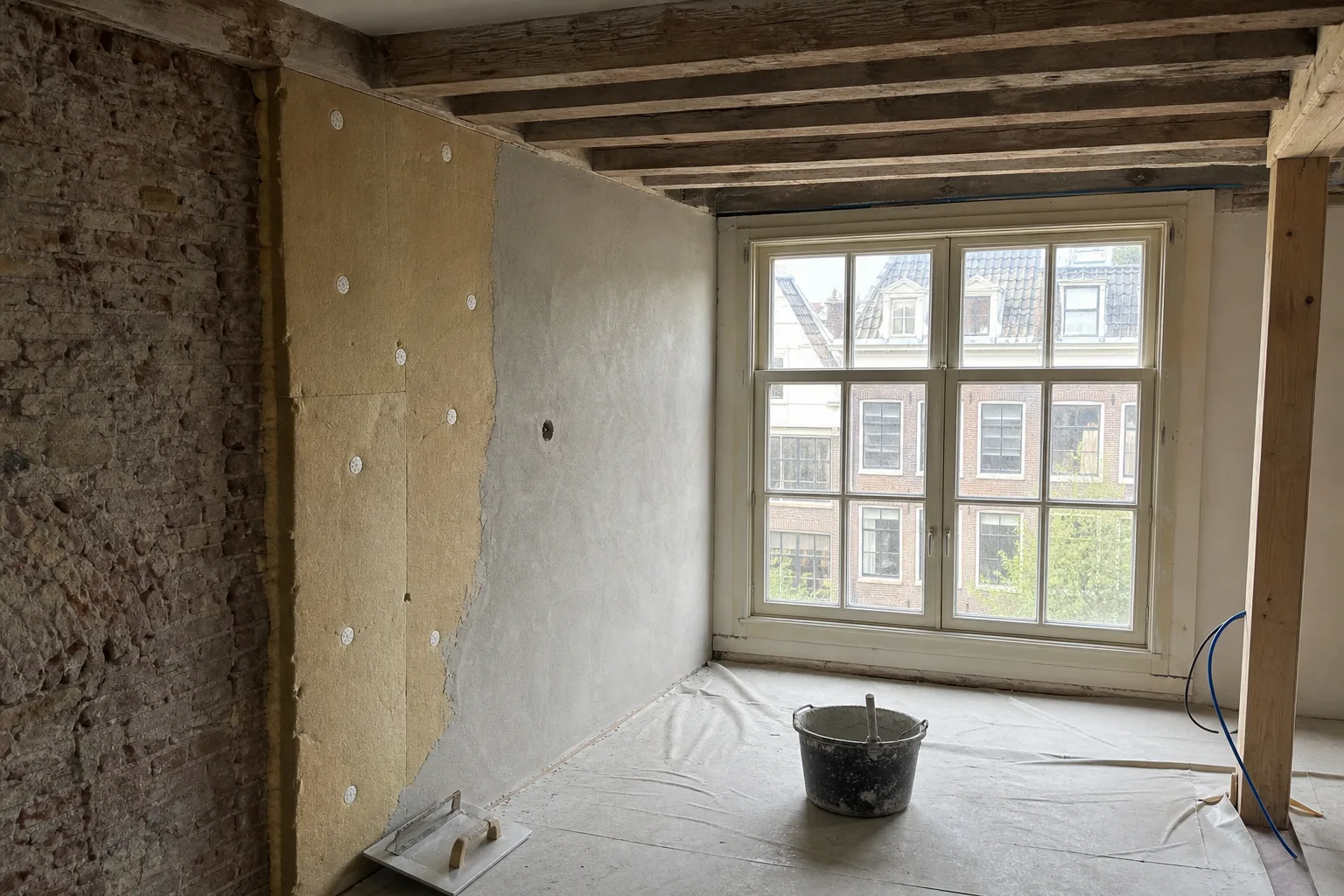
RVO sets a minimum insulation value and a minimum area for each type. Existing insulation does not count towards the required value; the new layer must reach it on its own. There is also a maximum number of square metres covered. The amounts per m² are on RVO's insulation measures page and are reviewed each year. The Rd value is the thermal resistance of the insulation layer: the higher, the better it insulates.
- Internal and party walls do not count as facade insulation.
- Roof and attic floor directly above each other: grant for one of them.
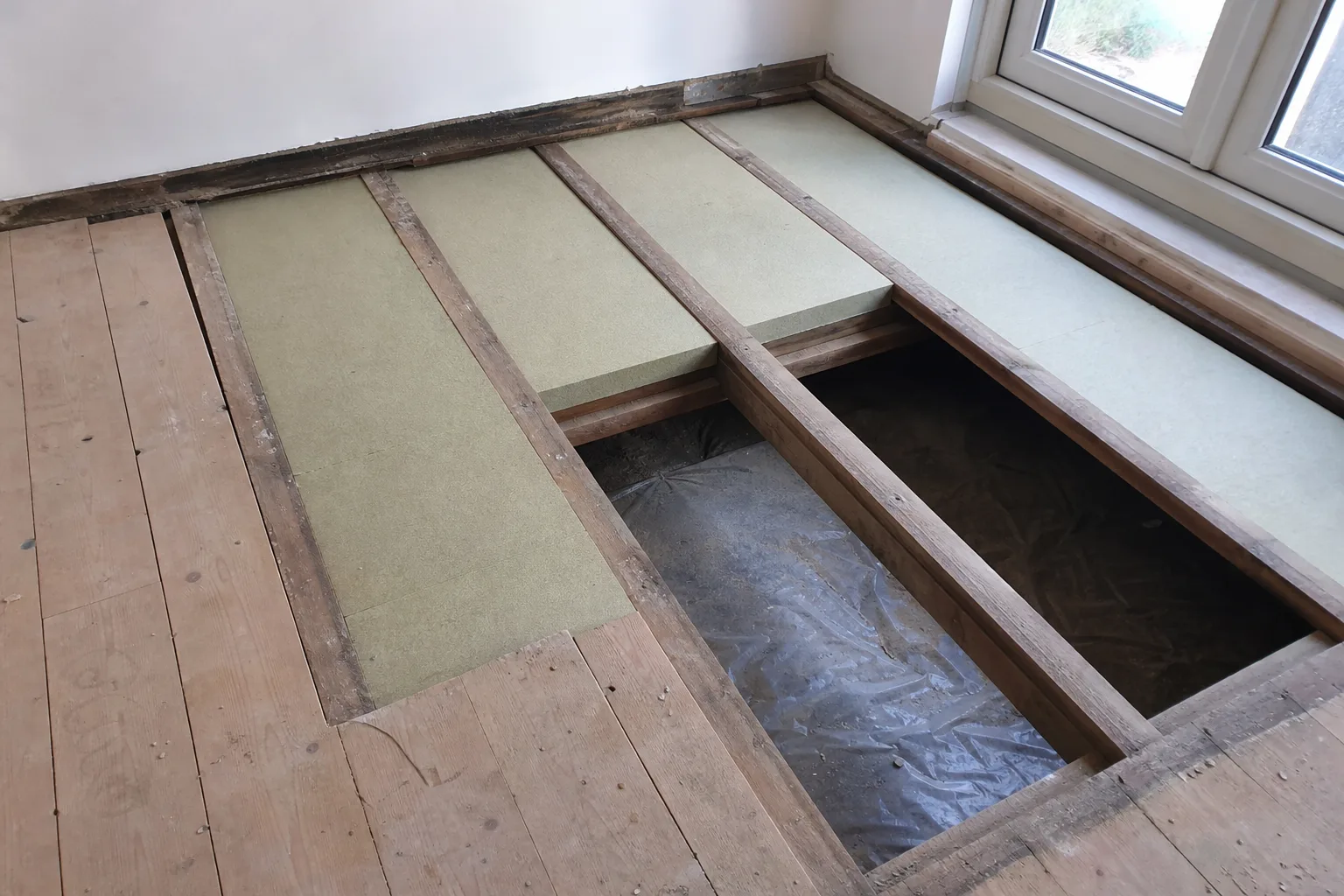
- Floor and crawl space ground directly above each other: grant for one of them.
- Sprayed PIR or PUR under the floor must use HFC-free blowing agents.
- The grant for UF foam ended on 1 April 2026.
| Measure | Minimum Rd value | Minimum area |
|---|---|---|
| Facade insulation (external wall, inside or outside) | 3.5 | 10 m² |
| Cavity wall insulation | 1.1 | 10 m² |
| Roof insulation | 3.5 | 20 m², together with attic floor |
| Attic floor (unheated space above) | 3.5 | 20 m², together with roof |
| Floor insulation | 3.5 | 20 m², together with crawl space ground |
| Crawl space ground insulation | 3.5 (Rd or Rbf) | 20 m², together with floor |
One measure or two
You get the grant only once per type of insulation. The gain is in combining. According to RVO, the amount for the first measure doubles if a second measure is carried out within 24 months. That also applies if you combine insulation with a heat pump, a solar water heater or a district heating connection. Ventilation alone as the second measure does not trigger the doubling.
In practice it pays to think in one plan. If you insulate the attic and within two years also the floor or an inside wall, you get more back than if you spread it over five years.
If the same type of insulation goes in different places, for example roof insulation on two separate roofs, you submit them together.
Tip from the trade: Have every possible measure looked at during one visit, even if you plan to do them in two stages. Then you know in advance whether you stay within the 24 month window.
What is new in 2026
RVO lists this year's changes on its page what changes in 2026. For insulation, these are the main ones:
- Energy efficient ventilation, such as an extract unit with CO2 sensors or a heat recovery unit, qualifies when combined with one or more insulation measures.
- The bonus for bio-based insulation uses an adjusted limit on the material's environmental score.
- For crawl space ground insulation you may state the Rd or the Rbf value; the minimum stays 3.5.
- When frames are replaced together with insulating glass, there is no longer a requirement for the frame's insulation value.
- The application form is new; draft applications from 2025 can no longer be used.
We zijn heel erg tevreden. Hele aardige man en echt vakwerk afgeleverd. Alles keurig netjes achtergelaten!
Why ventilation now counts
A better insulated home is also more airtight. Gaps and joints that used to ventilate the house on their own are closed after insulating. Moisture from cooking, showering and breathing then hangs around longer and condensation forms sooner on cold spots. That is why energy efficient ventilation has been part of the ISDE since 2026, but only in combination with insulation.
You apply for the ventilation within 24 months of the insulation, or together with the insulation application. If your home is now only ventilated by a window left ajar, this is the moment to change that. See also damp and condensation after insulating.
What you need for the application
You apply online with RVO yourself, using DigiD, the Dutch government login. Setting up DigiD can take several working days, so arrange it early if you are new to the Netherlands. You can also authorise someone else. You apply after the work, at the latest 24 months later. RVO aims to decide within 8 weeks.
The paperwork has to be right, or the application is rejected or delayed. According to RVO you need at least:
- The product code (meldcode) of the insulation material, found on RVO's meldcode list.
- An invoice showing the m², thickness, insulation value and type of material, with any new parts shown separately.
- Proof of payment showing installation date, amount and payment date.
- A photo showing both the home and the work at your address.
- Your address and the company's, with the name and phone number of the contact person.
Sort out the paperwork with your contractor
You apply yourself, but the documents come from the company doing the insulation. So agree before the start that the quote and invoice will show the material, meldcode, thickness, Rd value and area per measure, with existing and new parts listed separately. Raise it with us during the survey too.
Also make sure the insulation is photographed before it is covered, with the home recognisable in the picture. Once it is boarded over, that cannot be put right. The same photos and invoice help you get a new energy label later.
Common mistakes and next steps
Most rejections come down to details. A material that is not on the meldcode list. An invoice without square metres or without an Rd value. A photo of insulation where the house cannot be recognised. Or an application that arrives just after the 24 months.
The area is often underestimated too. A single cold wall of 8 m² does not reach the 10 m² minimum for facade insulation. Two walls together often do.
Want to know which measures suit your home and how to combine them? Stas, the owner, visits and you get a free quote per measure with no obligation. Get in touch.
Frequently asked questions
Do I apply before the work starts?
No. For homeowners, you have the insulation installed first and apply afterwards, within 24 months. Do check beforehand that the material is on the meldcode list.
Can I get the grant for insulation I fit myself?
No. RVO requires all insulation work to be carried out by a company.
Is insulation in my new extension covered?
No. Only the existing area of the home qualifies. New extensions, storeys and dormers do not.
I own a flat in a building with an owners' association. Can I use the ISDE?
For insulation inside your own flat, such as a stud wall against the facade, you can apply as an owner-occupier if you meet the conditions. Measures taken by the owners' association (VvE) fall under the separate SVVE scheme.
Will the rules change in 2027?
Changes have been announced from 1 January 2027. Always check RVO's site for the current position, especially if your work falls around the turn of the year.
Renovation and finishing work from Roelofarendsveen: plastering, bathrooms, microcement, extensions, insulation, floors, electrics and plumbing. One point of contact from quote to completion. Questions? Call or WhatsApp +31 6 87 61 60 78.
Sources
- ISDE insulation measures for homeowners (RVO, Dutch)
- ISDE step-by-step plan for homeowners (RVO, Dutch)
- ISDE changes in 2026 (RVO, Dutch)
- Sustainable energy investment subsidy ISDE (Business.gov.nl, English)
Rules change. Always check your own address with the Permit Check (Vergunningcheck) in the Omgevingsloket or with your municipality.