A poorly insulated roof lets a lot of heat escape, because warm air rises. In the attic, known in Dutch as the zolder, you have two choices. You insulate the sloping roof so the attic itself becomes warm, or you insulate the attic floor so the heat stays in the rooms below. Which one fits depends on how you use the space. This guide explains how to choose, how the build-up works, what thickness you need and what to watch for with damp, ventilation and grants.
- If you use the attic as a room, or plan to, insulate the roof.
- If it is only storage and closed off with a hatch, insulating the attic floor is a good, simple choice.
- Milieu Centraal advises an Rd value of 3.8 or more for the roof; the ISDE grant asks for at least 3.5.
- The vapour control layer always goes on the warm side of the insulation.
- Roof and attic floor insulation directly above each other only get the ISDE grant once.
Roof or attic floor: how to choose
The question is simple: does the attic need to be warm? If someone sleeps there, you work there, or a bathroom may go in later, insulate the sloping roof. The attic then becomes part of the warm house.
If the attic is unheated storage closed off by a hatch or door, you can insulate the attic floor instead. According to Milieu Centraal, the independent Dutch energy advice body, you save about as much as with the roof, using less material. With an open attic and no separation, floor insulation is pointless: warm air simply goes up the stairs.
If you think the attic may become a room later, insulate the roof now. Otherwise you will end up removing the floor insulation or doing the work twice.
| How you use the attic | Advice |
|---|---|
| Bedroom, office or bathroom | Insulate the sloping roof |
| Storage, hatch or door kept shut | Attic floor insulation is fine |
| Open attic with no separation | Insulate the roof |
| Storage now, a room later | Insulate the roof now |
Insulating the sloping roof from inside
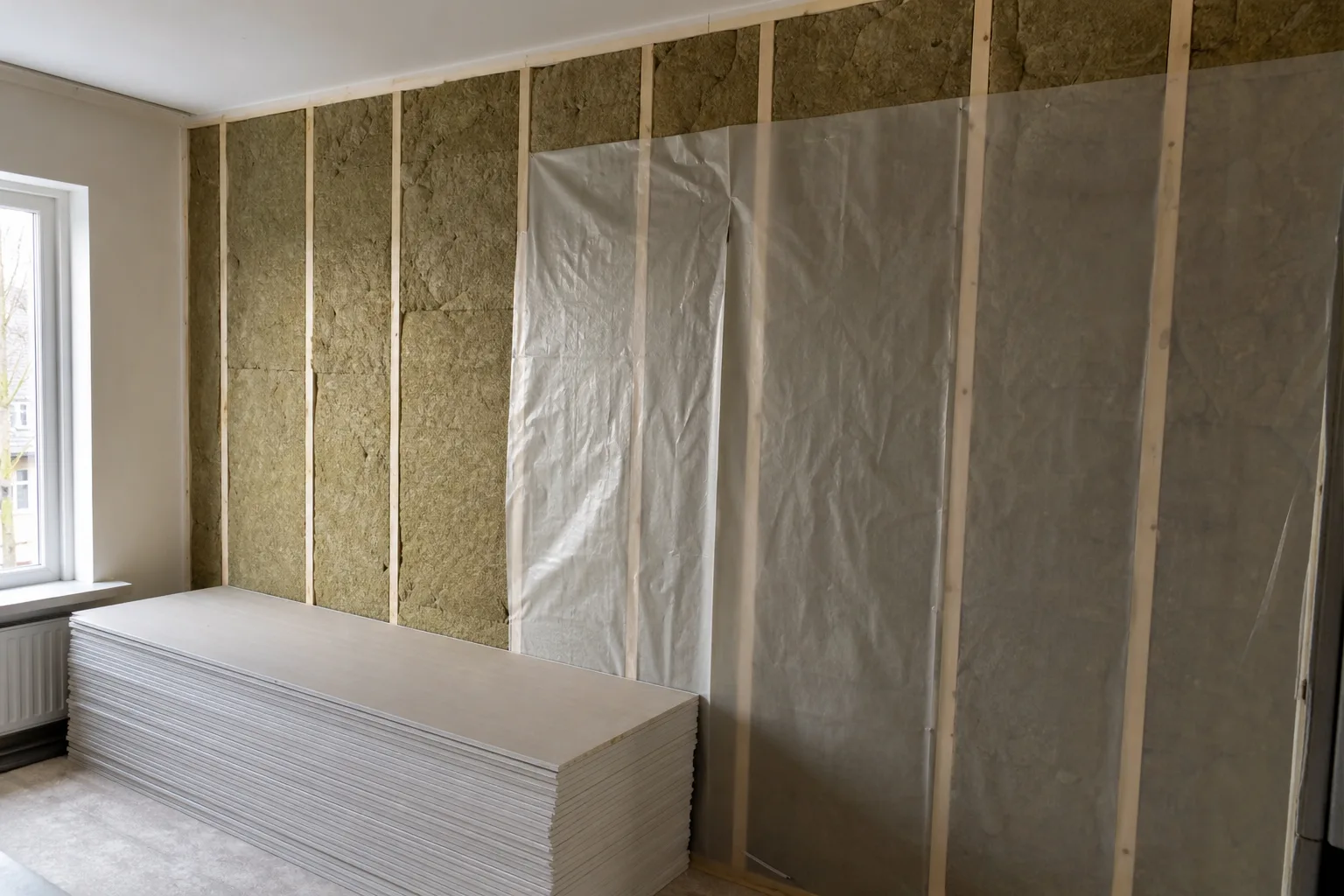
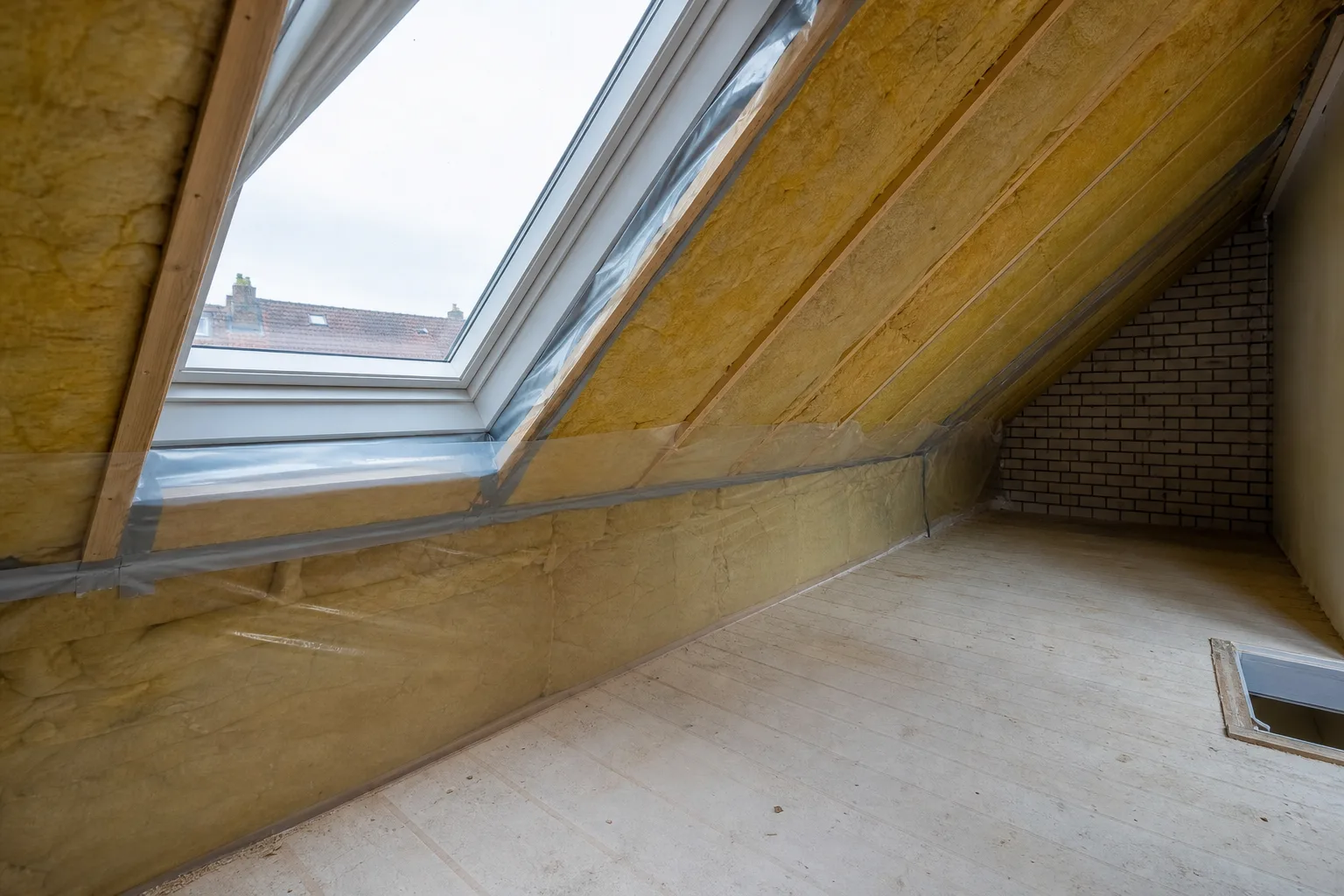
Most roofs in the Randstad are insulated from the inside. The tiles stay on, no scaffolding is needed and the work happens indoors. Insulation goes between or against the rafters, a vapour control layer goes over it, and then a finish of plasterboard or timber boarding. Plasterboard can be skimmed so the sloping walls are smooth and ready to paint.
You do lose some headroom. How much depends on the material. For an Rd value of 3.8, Milieu Centraal mentions about 14 cm of glass or rock wool, about 15 cm of wood fibre or cellulose and about 9 cm of PIR or PUR board. In a low attic a thinner material with a higher insulation value is the better choice.
Insulating from outside, with the tiles off, gives an unbroken layer over the rafters. That is always a job for a roofer and mainly pays off when the roof is being replaced anyway.
- Check roof boarding and membrane: dry and intact.
- Insulation between or against the rafters, tightly fitted.
- Vapour control layer on the room side, joints taped.
- Battens for the finish and any cables.
- Plasterboard with a plaster skim, or timber boarding.
Insulating the attic floor
In an unheated attic the insulation can go on or between the joists of the attic floor. If the floor is boarded, insulation goes on top, with new boards if you still want to use the space for storage. With open joists it goes between them.
Do not forget the hatch. An insulated floor with a thin timber hatch in it still leaks heat. Milieu Centraal advises insulating the hatch too and sealing its edges with draught strip.
With attic floor insulation the vapour layer goes underneath, on the warm side. The attic itself stays cold and must stay ventilated so moisture can escape.
Tip from the trade: Keep a walkway or a few boards clear to the boiler, the ventilation unit or a solar inverter in the attic. They must stay reachable for servicing.
Ik dank Stanislav voor zijn snelle, hoogwaardige en professionele werk! Om te beginnen kwam Stanislav kijken, evalueren en praten over de fasen van het werk en de kosten. Binnen twee dagen was al het werk gedaan.
Damp, vapour control and ventilation
The vapour control layer belongs on the warm side. For the roof that is the room side below the insulation, for the attic floor the underside. Milieu Centraal warns that timber trapped between two vapour-tight layers can become damp and rot. On older roofs with a vapour-tight layer outside, we first check what is already there before adding anything.
A well insulated attic is also more airtight. That helps your energy bill, but you must keep ventilating. Trickle vents, tilt windows or mechanical ventilation remove moist air. Without it, condensation can form on cold spots. Read more in damp and condensation after insulating.
If we see damp patches on the roof boarding during our visit, we find the cause first. A slipped tile or a poor seal around the chimney gets fixed before the roof is closed in.
An attic renovation in one go
Insulation is often part of a bigger attic project. On one of ours a dormer window went in, then we plastered ceiling and walls, painted everything and laid a new floor. If insulation, electrics, plastering and flooring happen in one project, nothing has to be opened up twice.
Cables for sockets and lighting can run in the battens before the vapour layer closes. Airtight back boxes fitted by the electrician break the membrane as little as possible. Then we finish the walls with plaster and a new floor can go down.
Note for the grant: according to RVO, insulating new parts such as a new dormer does not qualify. Only the existing roof area counts.
The ISDE grant for roof and attic
According to RVO, the Netherlands Enterprise Agency, roof insulation and attic floor insulation need, among other things, an Rd value of at least 3.5, at least 20 m² together, installation by a company and an application within 24 months of the work. For attic floor insulation the space above must be unheated.
If roof and attic floor insulation sit directly above each other, you get the grant for only one of them. Combine the roof with a second measure, such as wall or floor insulation, and the amount goes up. Our ISDE grant guide for 2026 explains how.
What the price depends on
The cost of attic insulation depends on the area, the material and thickness, the finish and what else needs doing up there. A plain, easy to reach roof with straight rafters is quicker than an attic with knee walls, a chimney and a roof window.
Access counts as well. Every board, roll and bag of waste has to go up and down the stairs or through a hatch. In an upper floor flat in Amsterdam or The Hague with steep, narrow Dutch stairs that takes longer than in a family house with a fixed attic staircase.
Stas, the owner, visits, looks at the roof, rafters, floor and ventilation, and you get a free quote with no obligation. Get in touch or read more about our insulation work.
Frequently asked questions
Will the attic be cooler in summer after insulating?
Usually, yes. Insulation also slows down heat from a hot roof. A heavier material such as wood fibre helps further. Shading on a roof window does the rest.
Can I keep using the attic during the work?
The attic must be empty while we insulate. You can carry on living on the floor below. We cover the stairs and landing.
What happens to old insulation?
It depends on its condition. Dry, intact insulation can sometimes stay, but according to RVO it does not count towards the grant requirement. Wet or dirty insulation comes out.
Can I insulate the attic floor myself and still get the grant?
No. For the ISDE the work must be done by a company. DIY insulation is not eligible.
Do I need a permit to insulate the roof from inside?
For insulating from inside an ordinary house, usually not, because the outside does not change. A listed building or insulation on the outside can be different. Check with your council.
Renovation and finishing work from Roelofarendsveen: plastering, bathrooms, microcement, extensions, insulation, floors, electrics and plumbing. One point of contact from quote to completion. Questions? Call or WhatsApp +31 6 87 61 60 78.
Sources
Rules change. Always check your own address with the Permit Check (Vergunningcheck) in the Omgevingsloket or with your municipality.