A quote for insulation in the Netherlands often shows two VAT rates. Dutch VAT is called btw, and that split is not a mistake. According to the Belastingdienst, the Dutch tax office, fitting insulation in a home that is more than 2 years old falls under the reduced rate of 9 percent, while the insulation material itself is charged at the standard 21 percent. Some work around the insulation also falls under 21 percent. This guide explains the rules, how to read a quote and what to watch for. It is not tax advice; if in doubt, the tax office's own text applies. For VAT and grants on the rest of a renovation, such as painting and plastering, read VAT and subsidies for renovation.
- Labour for fitting insulation to floors, walls and roofs is charged at 9 percent if the home is over 2 years old.
- The insulation material itself is charged at 21 percent.
- Work that is not insulating, such as demolition beforehand or a dormer, is charged at 21 percent.
- Plastering a home over 2 years old is charged at 9 percent, materials included.
- With mixed work, the company splits the quote and invoice by rate.
The tax office's main rule
According to the Belastingdienst, the labour costs of fitting insulation to floors, walls and roofs fall under the 9 percent rate. Two conditions apply: the home is more than 2 years old, and the purpose is to make it more energy efficient.
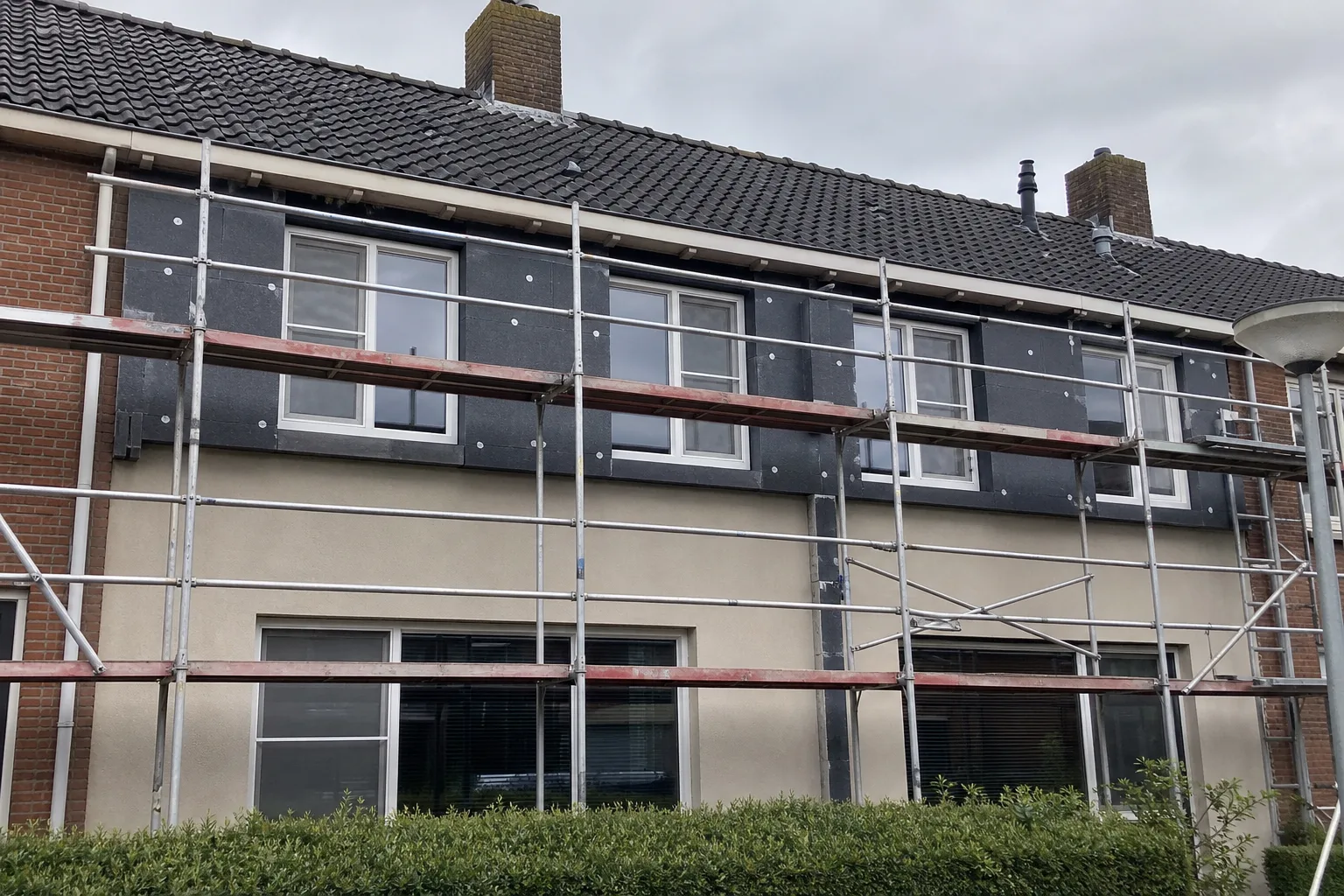
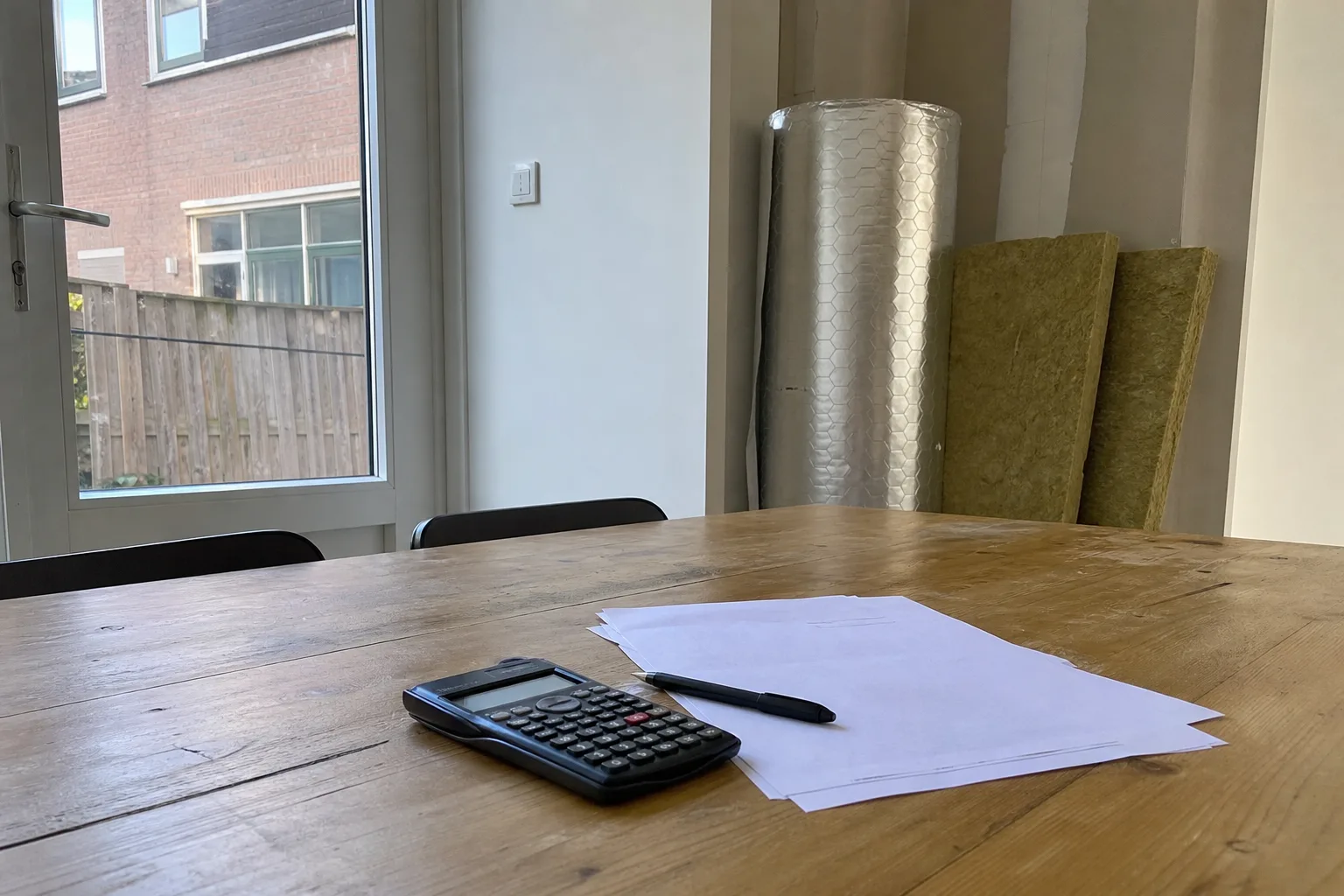
Materials are charged at 21 percent. The tax office gives examples of insulation material such as glass wool, rock wool, polystyrene, insulating glass, PUR and PIR, reflective cushions, shells and clay granules. Doors, frames and thatch do not count as insulation material.
So a quote for insulation almost always has two rates: a labour part at 9 percent and a materials part at 21 percent.
| Item | Rate according to the tax office |
|---|---|
| Fitting insulation to floor, wall or roof | 9 percent (home over 2 years old) |
| Insulation material | 21 percent |
| Demolition before insulating | 21 percent |
| Dormer or sun shading | 21 percent |
| Plastering a home over 2 years old | 9 percent, materials included |
When is a home over 2 years old
According to the Belastingdienst, the 2 years start when the building is first used as a home. A company can check this in the national buildings register (BAG), or ask the client to sign a statement that the home is over 2 years old.
For most homes in the Randstad this is not an issue. It only matters for a new build that was recently completed, or a home built in phases. In that case at least half of the home must consist of parts older than 2 years.
The reduced rate only applies to homes intended for permanent residence. In a building with a home and a business part, it applies to the living part only.
What falls under 21 percent
Not everything that happens during an insulation job is insulating. The tax office names demolition before insulating, sun shading and a dormer as examples of work charged at 21 percent. If a dormer goes in while your attic is insulated, it appears separately on the quote at the higher rate.
With an inside stud wall the line is not always sharp. Fitting the insulation is 9 percent. Installing plasterboard walls is something the tax office names as too far removed from plastering, so it falls under 21 percent. The plastering afterwards is 9 percent again. How a particular wall is classified depends on the build-up and the job, and the company should show that on the quote.
Electrics and pipework changed during the job, such as a moved socket or a radiator brought forward, are not insulation work either.
- Demolition and removal before insulating.
- A new dormer or extension.
- Sun shading.
- Window frames and doors, even if they insulate.
- Installing plasterboard walls.
Plastering and painting
Plastering has its own rule. According to the Belastingdienst, plastering homes over 2 years old falls under 9 percent. That includes preparation, priming and the materials used. So for plastering the reduced rate is wider than for insulating.
That matters for external wall insulation, where insulation and render together form the system, and for a stud wall that is plastered once it is up. That is why plastering should appear as a separate line next to the insulation on the quote.
Met dit bedrijf werk ik niet voor het eerst samen. Ze hebben voor mij verschillende werkzaamheden uitgevoerd, zoals het vervangen en maken van deuren, het realiseren van een aanbouw en het uitvoeren van binnenrenovaties. De jongens zijn zeer verantwoordelijk, en vooral Stanislav geeft altijd goede adviezen.
How to read an insulation quote
A good quote makes the split visible. You see per item what happens, how many square metres it is and which rate applies. That also makes it easier to compare two quotes.
When comparing, put totals including VAT side by side. A quote that charges everything at 9 percent looks cheaper, but is probably not drawn up according to the rules. A quote that charges everything at 21 percent may mean you pay too much.
- Separate lines for labour and materials.
- Per measure the m², thickness and Rd value.
- Demolition and extra work listed separately.
- Plastering as its own item.
- A subtotal per VAT rate and a total including VAT.
Tip from the trade: Keep the itemised invoice safe. You need the same details on m², thickness and Rd value for the ISDE grant application.
Example: an attic with a new dormer
Say you have the sloping roof of your attic insulated, a dormer added and the walls plastered afterwards. The quote will then show several blocks. Removing old boarding counts as demolition at 21 percent. Fitting insulation against the existing roof is 9 percent, with the insulation material at 21 percent. According to the tax office, the dormer itself is 21 percent. Plastering the walls is 9 percent, materials included.
So one attic job can produce four or five lines with different rates. That is normal, and it shows the quote has been drawn up with care.
VAT and grants together
The reduced VAT rate and the ISDE grant are separate. You can get both for the same work, as long as you meet the conditions of each. The VAT is already in the invoice; you apply for the grant yourself with RVO afterwards.
The grant has its own minimum insulation value and minimum area. See our ISDE grant guide for 2026.
Check and ask for a quote
The rules in this guide come from the Belastingdienst and apply to companies invoicing the work. If you are unsure about your situation, for example a home with a business part or one built in phases, ask the tax office or a tax adviser. The tax office's pages on this topic are in Dutch.
Want to know what insulating your home costs? Stas, the owner, visits and you get a free, itemised quote with no obligation. The price depends on the area, material and thickness, access and finish. Get in touch or read more about our insulation work.
Frequently asked questions
Does 9 percent VAT apply to insulating glass?
The tax office lists insulating glass as an insulation material, and materials are charged at 21 percent. Fitting it can fall under 9 percent. Ask the glazier for the split.
My home was just completed. Do I get 9 percent?
No, not on the labour while the home has been in use as a home for less than 2 years. The period starts with its first use as a home.
Does the reduced rate apply to my holiday home?
The reduced rate applies to homes intended for permanent residence. For a holiday home, check with the tax office.
Why is plastering 9 percent including materials, but insulation is not?
They are two separate rules of the tax office. For plastering the materials are included at 9 percent, for insulating only the labour.
Can I reclaim the VAT?
Not as a private person. Reclaiming VAT is for VAT registered businesses. As a private client you pay the rate on the invoice.
Renovation and finishing work from Roelofarendsveen: plastering, bathrooms, microcement, extensions, insulation, floors, electrics and plumbing. One point of contact from quote to completion. Questions? Call or WhatsApp +31 6 87 61 60 78.
Sources
- VAT rate for insulating homes (Belastingdienst, Dutch)
- VAT rate for work on homes over 2 years old (Belastingdienst, Dutch)
- VAT rate for plastering (Belastingdienst, Dutch)
Rules change. Always check your own address with the Permit Check (Vergunningcheck) in the Omgevingsloket or with your municipality.