- Smooth plaster is a flat base for paint or wallpaper; a spray finish is a textured final coat.
- A spray finish hides small bumps; smooth plaster shows every surface in full.
- Ceilings in the Netherlands are often sprayed; living room walls are usually plastered smooth.
- The surface underneath matters more than the technique: loose plaster, cracks and old paint come first.
- On ceilings in homes built before 1994 we check whether an existing textured coat could contain asbestos.
What smooth plaster is
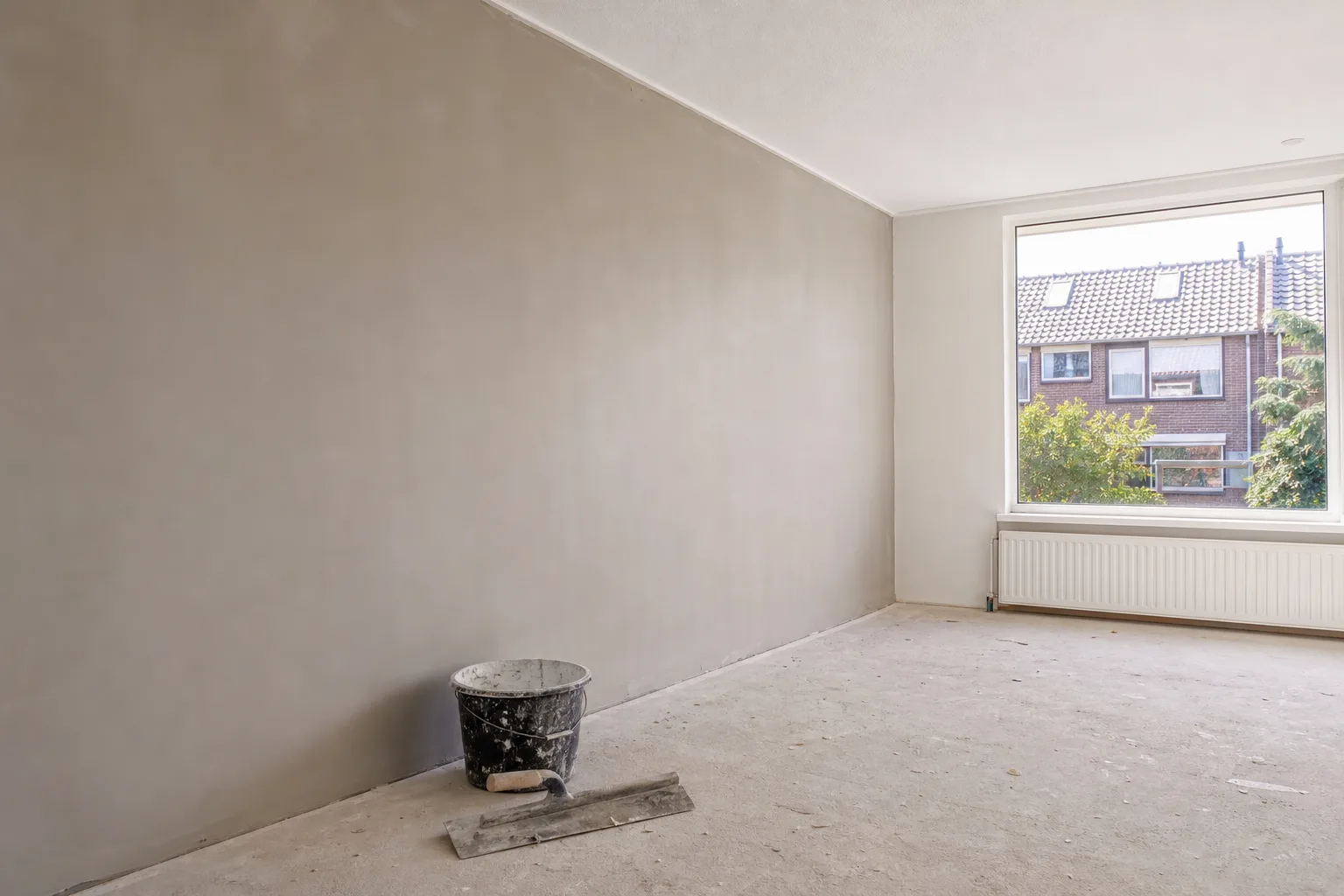
Smooth plaster is a layer of gypsum plaster applied with a trowel and then flattened and polished in a few passes. On a new or bare wall there is usually a filling coat first and a thin finishing coat after that. On an existing wall that is already fairly flat, one thin skim coat is often enough.
The result is a plain, even surface with no texture. That is the point: smooth plaster is the base for whatever comes next. You can paint it with emulsion, have it finished with a matt ceiling paint (the Dutch call this sauzen), or hang wallpaper on it. Because the surface is so flat, side light will also show any flaws. A good plasterer therefore always works with a lamp held along the wall.
- Suits walls in living rooms, bedrooms and hallways.
- Base for paint or wallpaper.
- Clean, modern look, even next to large windows.
- Needs careful preparation of the surface.
What a spray finish is
For spackspuiten, a ready-mixed paste is sprayed onto the ceiling or wall with a machine. It forms a thin layer with a fine grain, and that grain is the finish. No paint is needed on top, although you can paint it later if you want a different colour.
Spray finishes are very common on Dutch ceilings. The texture catches light differently from a flat surface, so small bumps and the joints between ceiling boards are less visible. People choose it less often for walls, because a grain at eye level can collect dust and is harder to wipe clean. In a storage room, stairwell or loft it can still be a practical choice.
Before spraying, we cover everything that must not turn white: window frames, floors, pipes and sockets. Masking sometimes takes longer than the spraying itself. After that the work goes quickly, especially on large surfaces.
The difference side by side
The main difference is the purpose. Smooth plaster prepares a surface for its final finish. A spray finish is the final finish. The other differences in look, time and upkeep follow from that.
| Point | Smooth plaster | Spray finish |
|---|---|---|
| Look | Plain and flat | Fine grain, matt white |
| Final finish | Still needs paint or wallpaper | Done once sprayed |
| Bumps and joints | Visible in side light | Less noticeable |
| Typical use | Walls in living spaces | Ceilings and large surfaces |
| Method | By hand, in coats | Spray machine, lots of masking |
| Changing it later | Repaint or replaster | Repaint; going smooth needs a new coat |
Ze hebben in 1 week tijd de hele beneden verdieping stucwerk gerepareerd, geschilderd en gesausd tot volle tevredenheid. Netjes en accuraat gewerkt, flexibel geweest en vakwerk afgeleverd. Dus top.
The surface decides
You choose a finish on paper, but in practice the wall has a say. During the survey we tap the wall to find hollow spots, look at cracks and ask what was on it before. A wall with loose plaster, old wallpaper or gloss paint has to be dealt with first. That applies to both techniques.
A ceiling of plasterboard with visible joints can look very good with a spray finish, as long as the joints are taped and filled and the boards are fixed firmly. If you want the same ceiling smooth, the whole area needs a plaster coat, which makes the job bigger. In older homes with ceilings of plaster on reed or timber laths, we often see cracks that come back through a spray coat alone. Repair comes first there. Read more in plastering old walls.
In homes built before 1994 we pay attention to old textured coats. According to IPLO, the Dutch government's information point for building rules, buildings from before 1994 are presumed to contain asbestos. If an old sprayed coat has to come off, it should be tested first when in doubt, before anyone scrapes or sands it.
Tip from the trade: Not sure whether to go smooth or sprayed? Hold a lamp along your ceiling one evening. If you see lots of joints and waves, a spray finish usually gives a calmer result than a flat surface that shows every wave.
Which finish suits which room
In living rooms, bedrooms and hallways most people choose smooth walls. You look at them every day, furniture and pictures go against them, and a flat surface is easy to repaint. Ceilings in the same rooms are often sprayed, especially when the area is large.
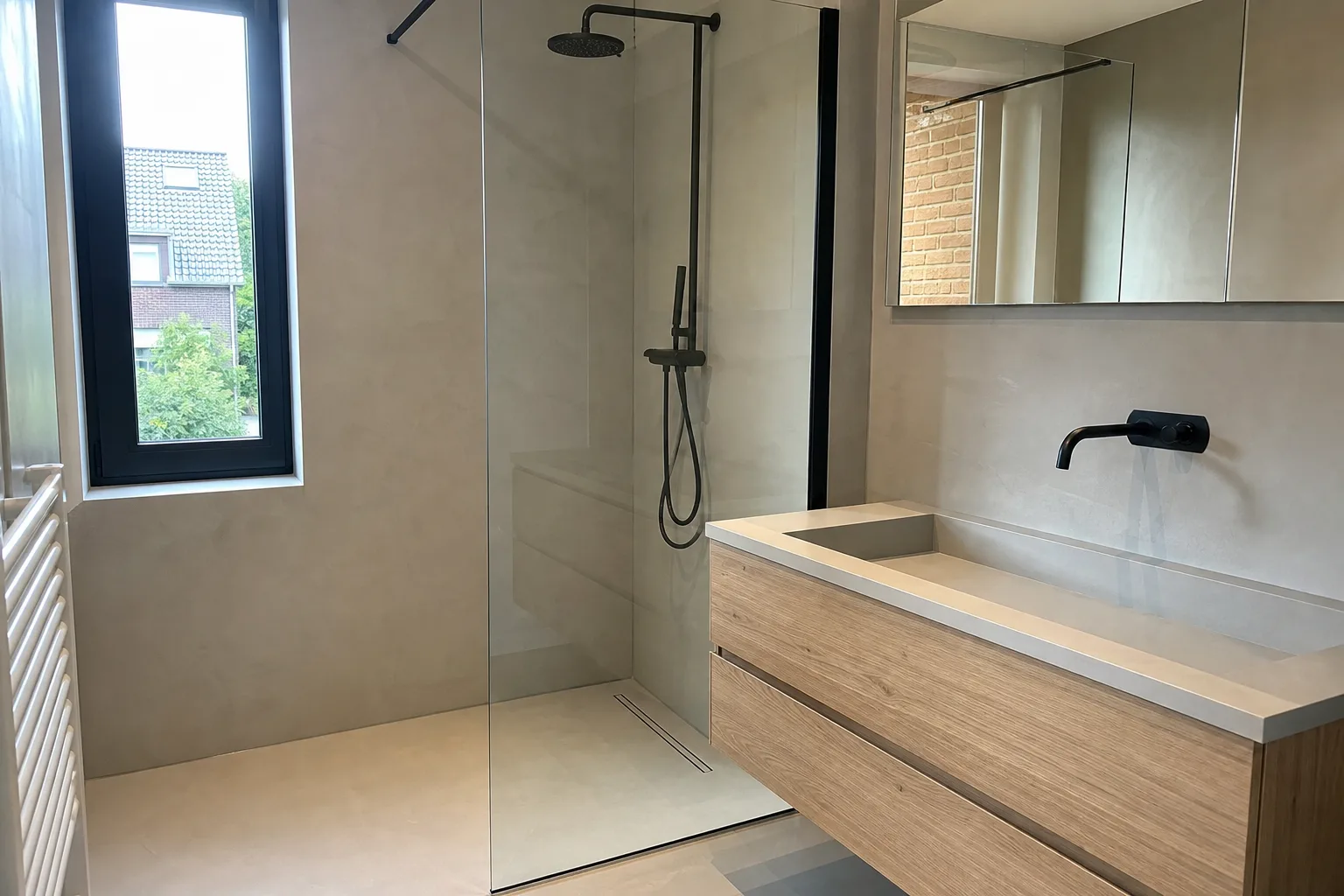
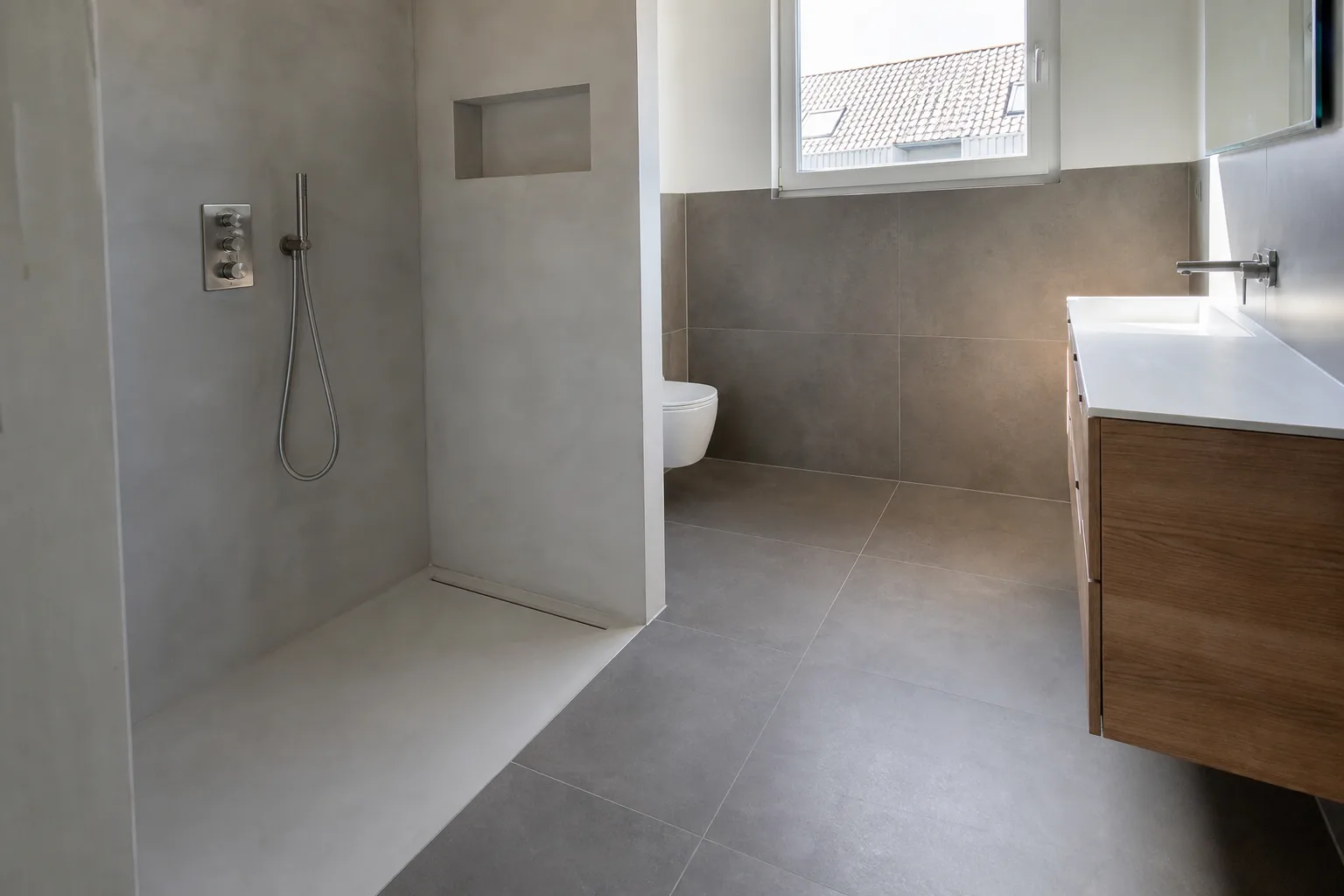
Bathrooms and toilets are different. There you want a finish that can handle moisture and is easy to clean. Ordinary gypsum is not meant for the wet zone around the shower. For bathroom walls we look at tiles, microcement or a moisture resistant system. See microcement bathroom for how that works.
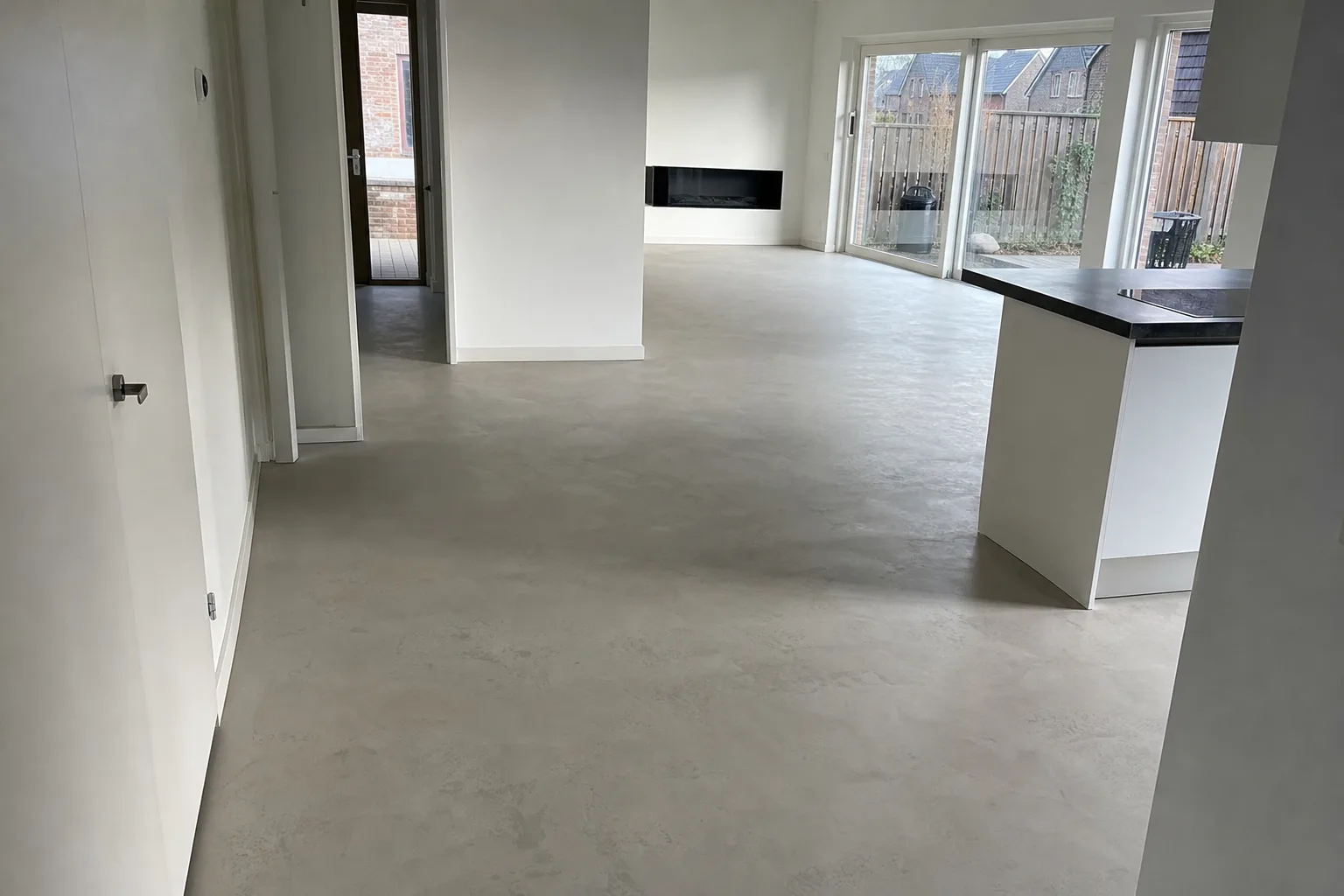
If you want more character than a plain surface, decorative plaster is a third option. We cover it in decorative plaster and concrete look.
- Living room and bedroom: smooth walls, ceiling smooth or sprayed.
- Hallway and stairwell: smooth, or sprayed if the area is large and hard to reach.
- Loft with boarded walls: often sprayed to hide joints.
- Bathroom: no ordinary gypsum in the wet zone, a moisture resistant finish instead.
How we do the work
It starts with a survey. Stas, the owner, comes to see the rooms, measures the surfaces and talks through what you want. You then receive a free quote with no obligation, describing the surface we found and what it needs. You get a reply within 24 hours of your request.
On the day itself we cover floors, frames and furniture. We then repair cracks and holes, fit corner beads where needed and apply a primer that controls adhesion. Only then does the plaster or spray coat go on. Because plastering, electrics and plumbing are all done by the Parus team, sockets and pipes can be put in the right place first, so the wall does not need to be opened again later.
After plastering, the coat has to dry before it can be painted. Milieu Centraal, the Dutch independent advice centre for energy and the home, also advises letting the plaster dry well before finishing the wall. How long that takes is explained in plaster drying time. If you want the walls painted as well, we can do that in the same project. See our plastering service for the full range.
What the price depends on
We do not list fixed prices on this site, because every wall is different. We can tell you what makes a job bigger or smaller. The area counts, but so do the number of corners, window reveals and openings. A bare, flat wall is quicker to finish than one with old layers that need to come off first.
With a spray finish, masking takes a lot of the time, especially in a furnished home. With smooth plaster the time is in the coats and in getting the surface flat. Height matters too: a stairwell or high ceiling needs a mobile scaffold. The quote shows what happens in each room.
Frequently asked questions
Can I paint smooth plaster straight away?
No, it has to be fully dry first. Then you apply a primer or a thinned first coat, because fresh gypsum soaks up a lot of moisture. The top coat comes after that.
Can a sprayed ceiling be made smooth later?
Yes. A bonding coat and a new layer of plaster go over the texture. With old sprayed coats in homes built before 1994, they should be tested for asbestos first when in doubt.
Is a spray finish suitable for a bathroom?
On the ceiling it can work with a suitable product, as long as the bathroom is well ventilated. In the wet zone around the shower we use tiles or microcement.
What does paint-ready plaster mean?
A wall finished so flat and smooth that paint can go straight on without extra filling. A wallpaper-ready finish can be slightly less exact, because wallpaper hides small flaws.
How soon can you come and look?
You get a reply within 24 hours of your request. We then plan the survey. Call or WhatsApp +31 6 87 61 60 78, or use the form on our contact page.
Renovation and finishing work from Roelofarendsveen: plastering, bathrooms, microcement, extensions, insulation, floors, electrics and plumbing. One point of contact from quote to completion. Questions? Call or WhatsApp +31 6 87 61 60 78.
Sources
- Asbestos inventory duty: rules in the Bbl (IPLO, Dutch)
- Plastering and wallpapering (Milieu Centraal, Dutch)
Rules change. Always check your own address with the Permit Check (Vergunningcheck) in the Omgevingsloket or with your municipality.