- Decorative plaster is a final finish with texture or colour in the plaster; no paint is needed on top.
- There are coarse and fine textures, coloured plasters and lime plasters with a soft sheen.
- A concrete look can be done with a special plaster or with microcement; microcement is harder and better for wet zones.
- The base must be flat and firm; decorative plaster hides small bumps, not cracks.
- Lime plaster is breathable and suits old walls that need to let moisture out.
What decorative plaster is
Decorative plaster is not flattened so it can be painted afterwards; it is the finish itself. The texture, colour or sheen comes from the material and from the way it is applied. That can be with a trowel, a roller, a brush or a float moved across the wall in a set pattern.
On our plastering page we put it like this: decorative plaster gives a wall or ceiling its own character, with a visible texture in the plaster, from coarse to fine, matt or coloured. We match the texture to the room and the light. A coarse texture in a small room with side light looks very different from the same plaster in a large room lit from the front.
The main types
The word decorative plaster covers several products and techniques. The choice depends on the look you want and on the location: a stairwell that takes a lot of knocks needs something different from a feature wall in the bedroom.
| Type | Look | Typical use |
|---|---|---|
| Coarse textured plaster | Clear grain or scratched texture | Stairwell, hall, ceiling |
| Fine textured plaster | Calm, soft grain | Living room, bedroom |
| Coloured plaster | Colour through the material, matt | Feature wall, whole room |
| Polished lime plaster | Soft clouding and a light sheen | Living room, old walls |
| Concrete look plaster | Shades of grey, cast concrete | Feature wall, kitchen, hall |
| Microcement in concrete look | Concrete look, harder and jointless | Bathroom, floor, kitchen |
Concrete look: plaster or microcement
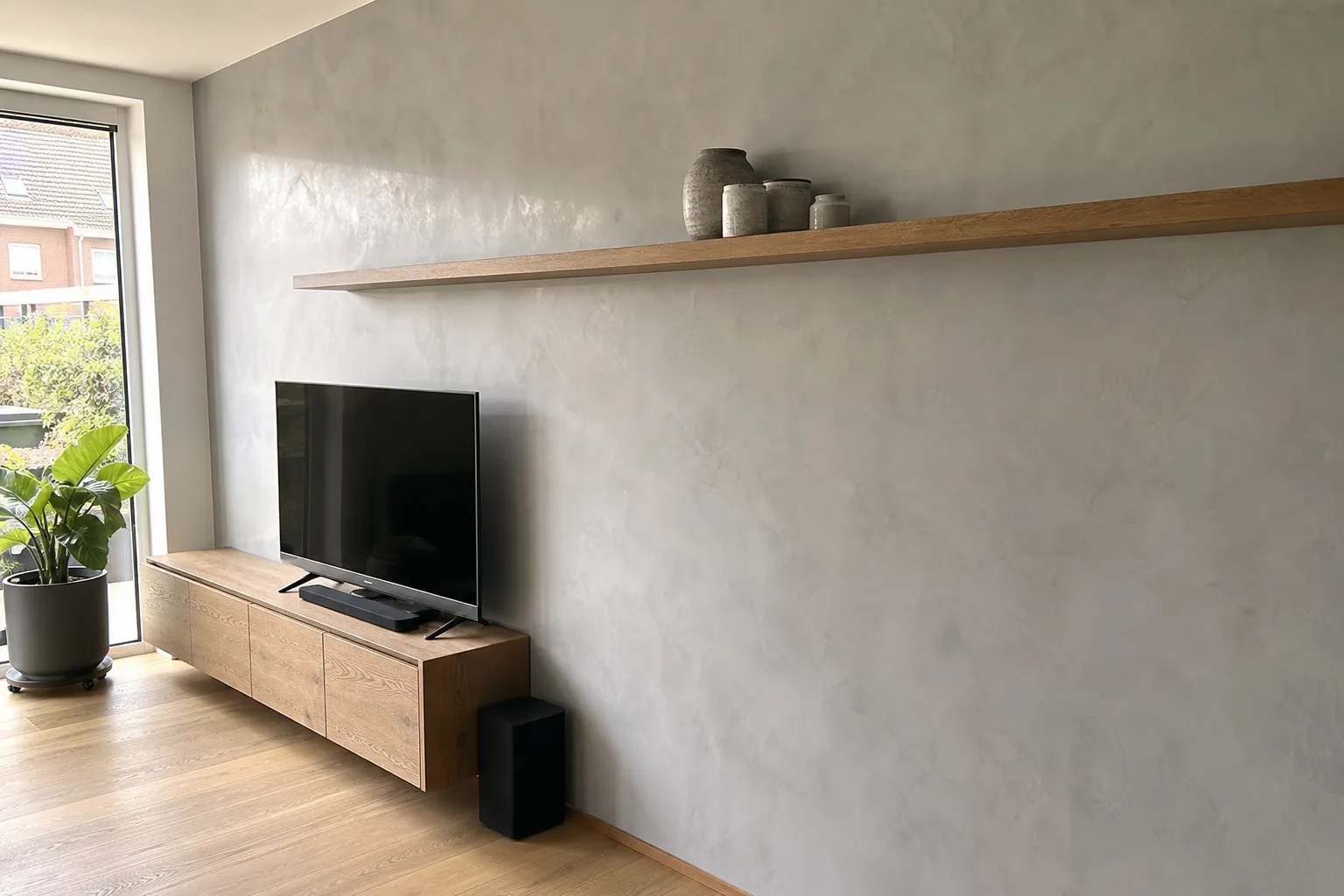
The concrete look is popular in clean, modern interiors and lofts. There are two ways to get it. With a concrete look plaster, the plasterer uses a trowel to build clouds and shadows in shades of grey, so the wall resembles smooth cast concrete. Sometimes even the holes from formwork ties are imitated. It is a decorative technique for walls and ceilings in dry rooms.
Microcement gives a similar look with a harder, sealed layer. It can also go on the floor, in the bathroom and in the shower, provided there is a waterproofing layer underneath. If you want the concrete look to run from the wall onto the floor or into the shower, microcement is the logical choice. For a feature wall in the living room, a concrete look plaster often does the job well. How microcement works in wet rooms is explained in microcement bathroom, and our full range is on the microcement page.
Tip from the trade: Always ask for a test patch or a sample board in your chosen colour. Concrete look and lime plaster look different under artificial light than in daylight, and a sample in your own room tells you more than a photo.
Met dit bedrijf werk ik niet voor het eerst samen. Ze hebben voor mij verschillende werkzaamheden uitgevoerd, zoals het vervangen en maken van deuren, het realiseren van een aanbouw en het uitvoeren van binnenrenovaties. De jongens zijn zeer verantwoordelijk, en vooral Stanislav geeft altijd goede adviezen.
Lime plaster: soft, breathable and right for old walls
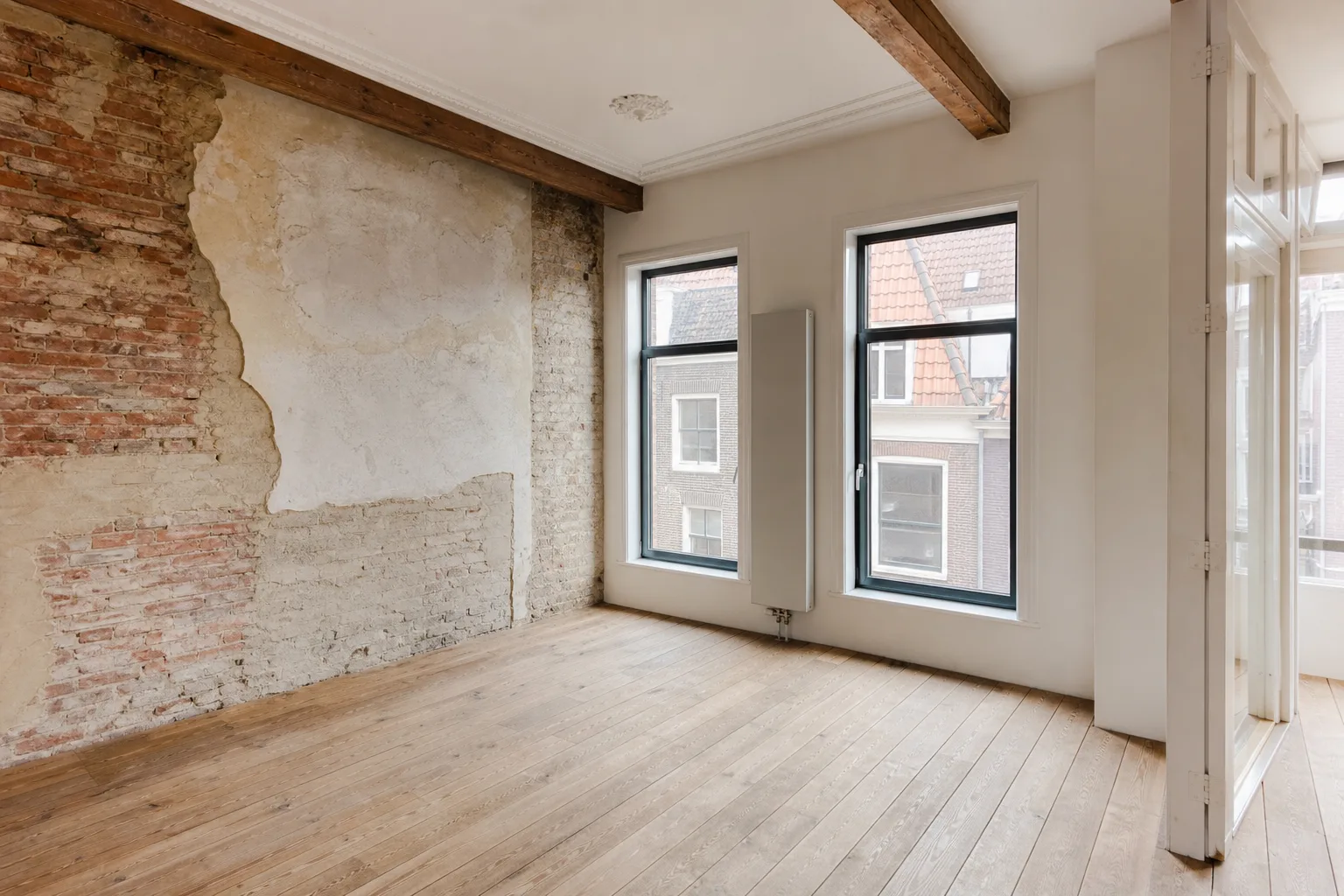
Lime plaster is one of the oldest forms of plastering. In Dutch canal houses and other old buildings, the walls have often carried lime for centuries. As a decorative finish, lime is applied in thin coats and pressed with the trowel to a soft sheen, with light clouding in the colour.
Lime has a technical advantage: it lets moisture through. According to Milieu Centraal, the independent Dutch advice centre for energy and the home, lime and clay paints, lime and clay plasters and mineral paints let moisture through, while latex paint, tiles and cement hold it back. On an old solid wall that needs to breathe, that is a reason to choose lime over a dense finish. More in plastering old walls.
Preparing the base
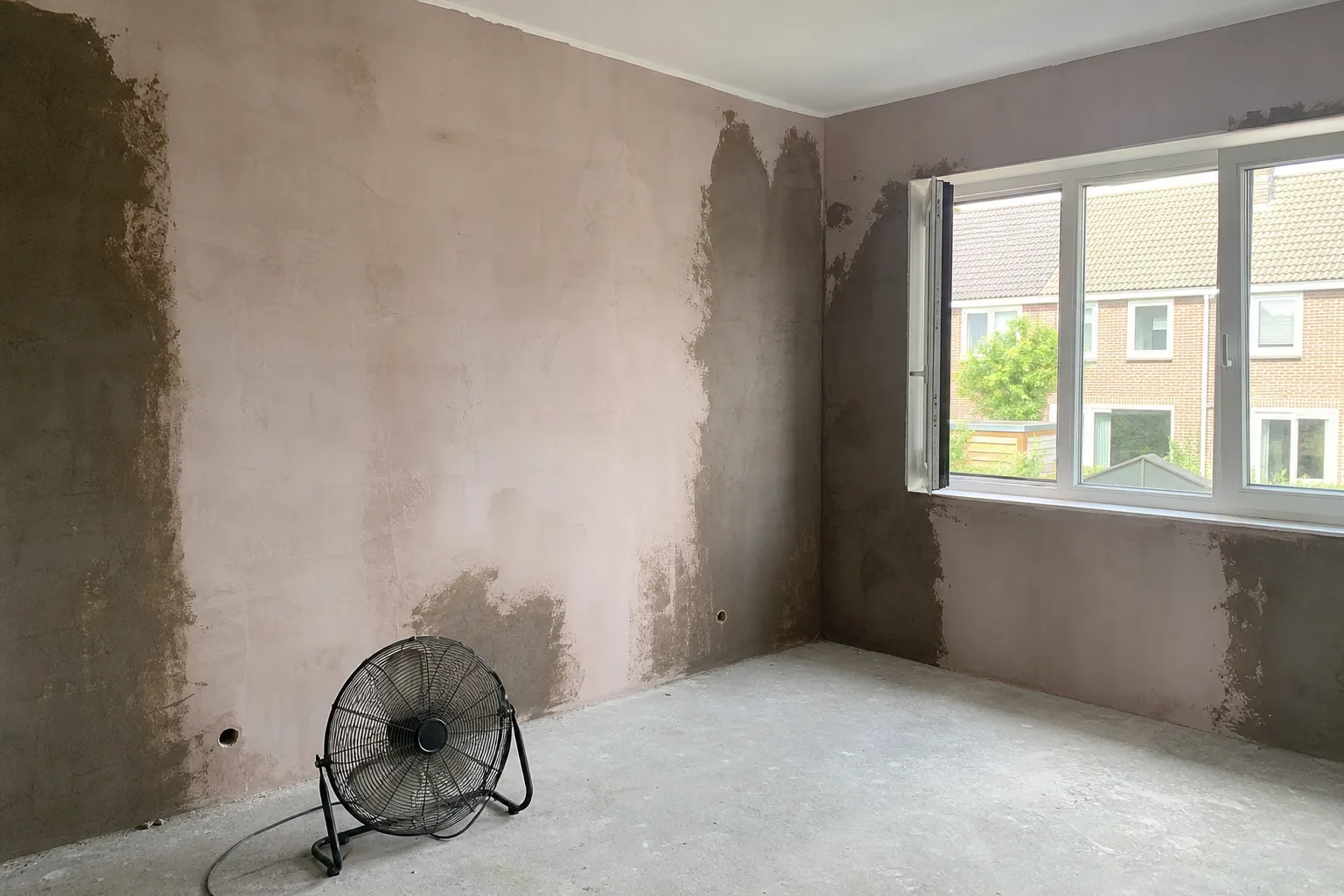
Many people think decorative plaster hides everything. That is only half true. A coarse texture hides small dents and waves, but not cracks, hollow spots or loose layers. Those come back through the new coat within months. Fine plasters and polished lime actually show the base clearly, just like smooth plaster.
Preparation is therefore almost the same as for smooth plaster. Loose material out, cracks opened up and reinforced, the wall flattened where needed and a primer that suits the product and the base. On plasterboard the joints are finished first. See also smooth plaster or spray finish for the choice between the basic finishes.
- Remove loose or hollow layers.
- Reinforce cracks with mesh or tape.
- Flatten the wall where needed.
- Primer that suits the product and the base.
- Test patch for colour and texture.
Removing old textured plaster
Many Dutch homes already have a textured plaster from the 1970s or 1980s on the walls or ceiling, the familiar swirled or stippled finish. If you want a smooth or different surface, a bonding coat and a new layer of plaster can often go over it. Sometimes removal is better, for example if the old layer is loose.
In homes built before 1994 we first think about asbestos. According to IPLO, the Dutch government's information point for building rules, buildings from before 1994 are presumed to contain asbestos, and an asbestos inventory is required for demolition work where asbestos is suspected. When in doubt, the old layer should be tested first. Working over it without sanding or scraping is often the calmest route.
Upkeep and what the price depends on
Decorative plaster in a dry room needs little upkeep. Dusting with a soft brush or a dry cloth is usually enough. Lime plaster can be finished with a wax or a protective coat so it marks less easily. A coarse texture in a hallway may wear a little where it gets knocked; it can be touched up, although with a hand applied technique that sometimes shows. If you want a different colour later, most decorative plaster can be painted over, although part of the pattern is then lost.
We do not list fixed prices. What drives the price: the area, the state of the base, the chosen technique and the number of coats. A fine polished lime plaster takes more handwork than a texture applied in one coat. A concrete look needs experience with colour and trowel work. Stas, the owner, comes to look and you receive a free quote with no obligation. Book your survey through the contact page.
Frequently asked questions
Does decorative plaster need painting?
No, decorative plaster is the final finish. The colour or texture is in the material. You can paint over it later, but part of the pattern will then disappear.
Can a concrete look go in a bathroom?
Concrete look plaster is meant for dry rooms. In bathrooms and showers we use microcement in a concrete look, with a waterproofing layer underneath.
Can decorative plaster go over an old textured wall?
Often, with a bonding coat and if needed a levelling coat. In homes built before 1994 the old layer should be tested for asbestos first when in doubt.
Is lime plaster suitable for an old house?
Yes, lime is breathable and lets moisture through. That suits old, solid walls that need to breathe.
Can I see a test patch?
Yes. Ask for a sample or test patch in your chosen colour and texture, so you can judge it in your own light.
Renovation and finishing work from Roelofarendsveen: plastering, bathrooms, microcement, extensions, insulation, floors, electrics and plumbing. One point of contact from quote to completion. Questions? Call or WhatsApp +31 6 87 61 60 78.
Sources
- Insulating an external wall with an inner wall (Milieu Centraal, Dutch)
- Asbestos inventory duty: rules in the Bbl (IPLO, Dutch)
Rules change. Always check your own address with the Permit Check (Vergunningcheck) in the Omgevingsloket or with your municipality.