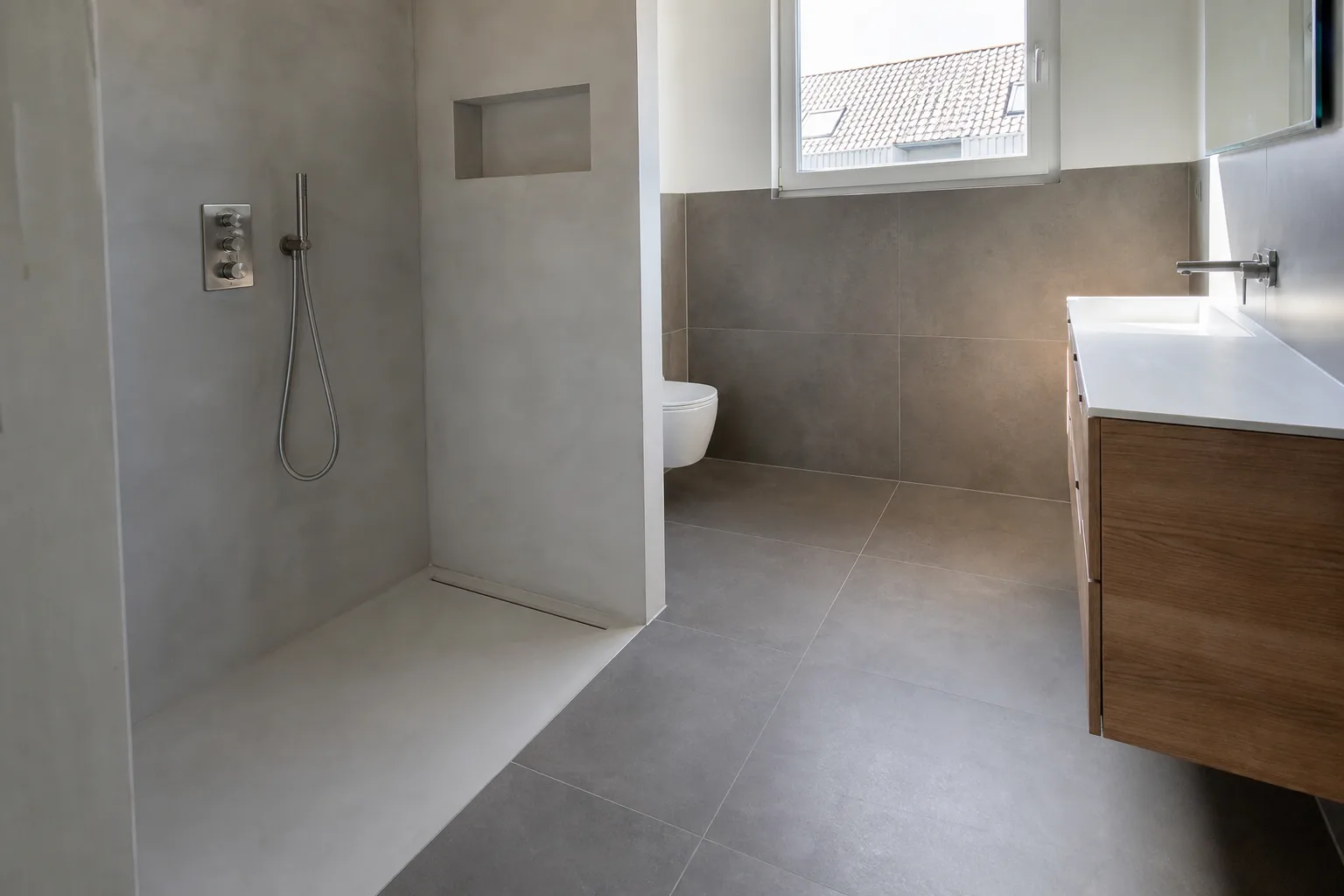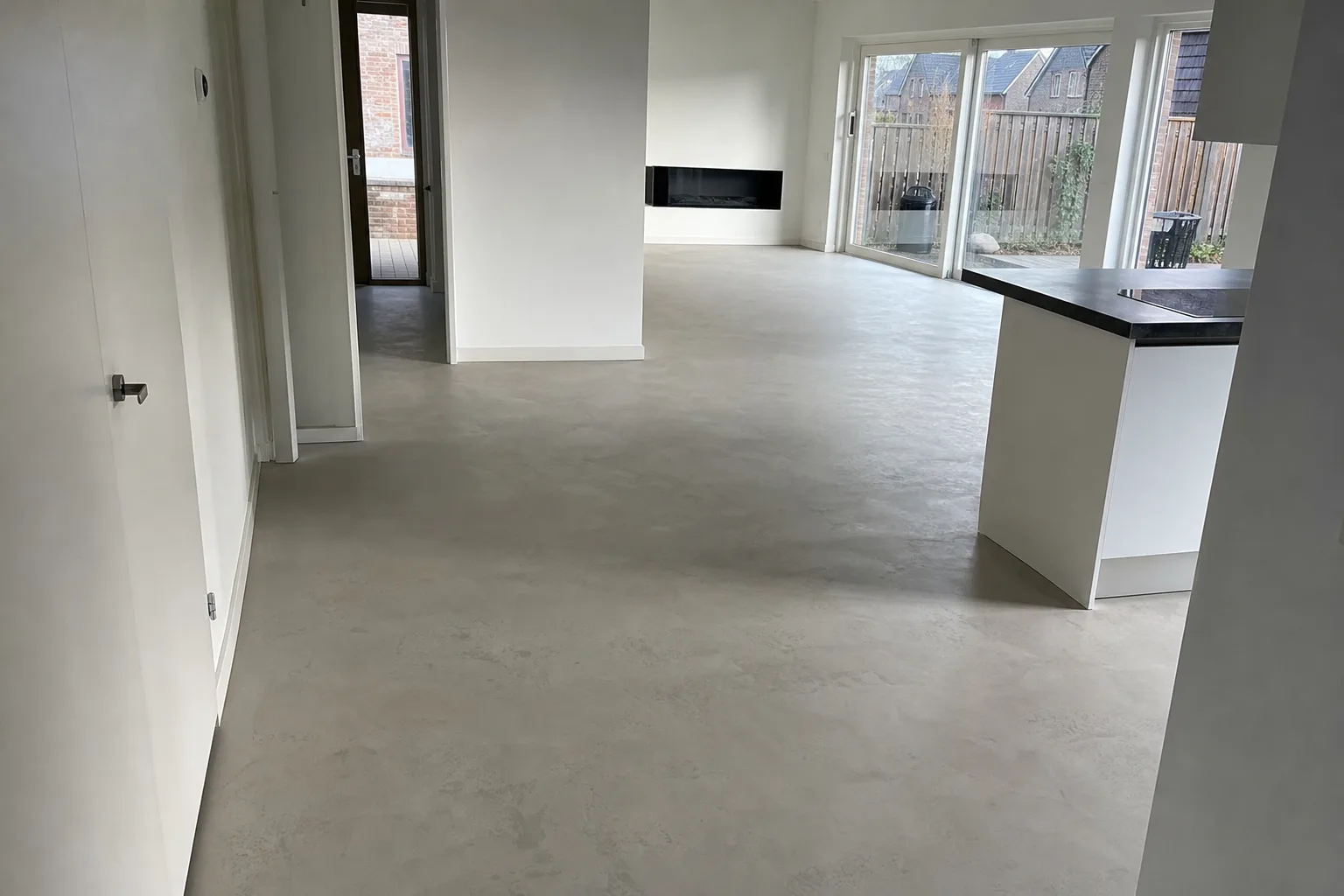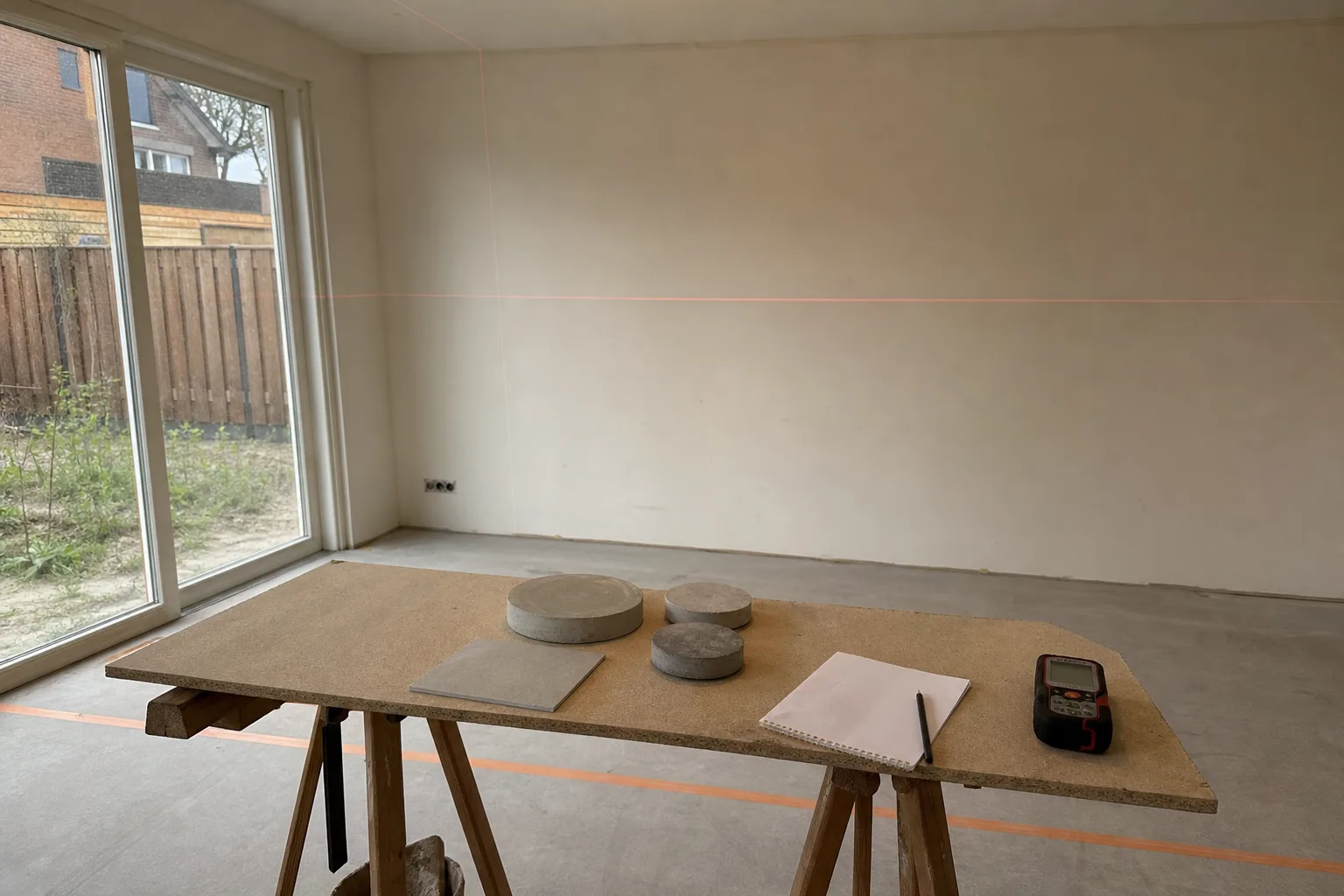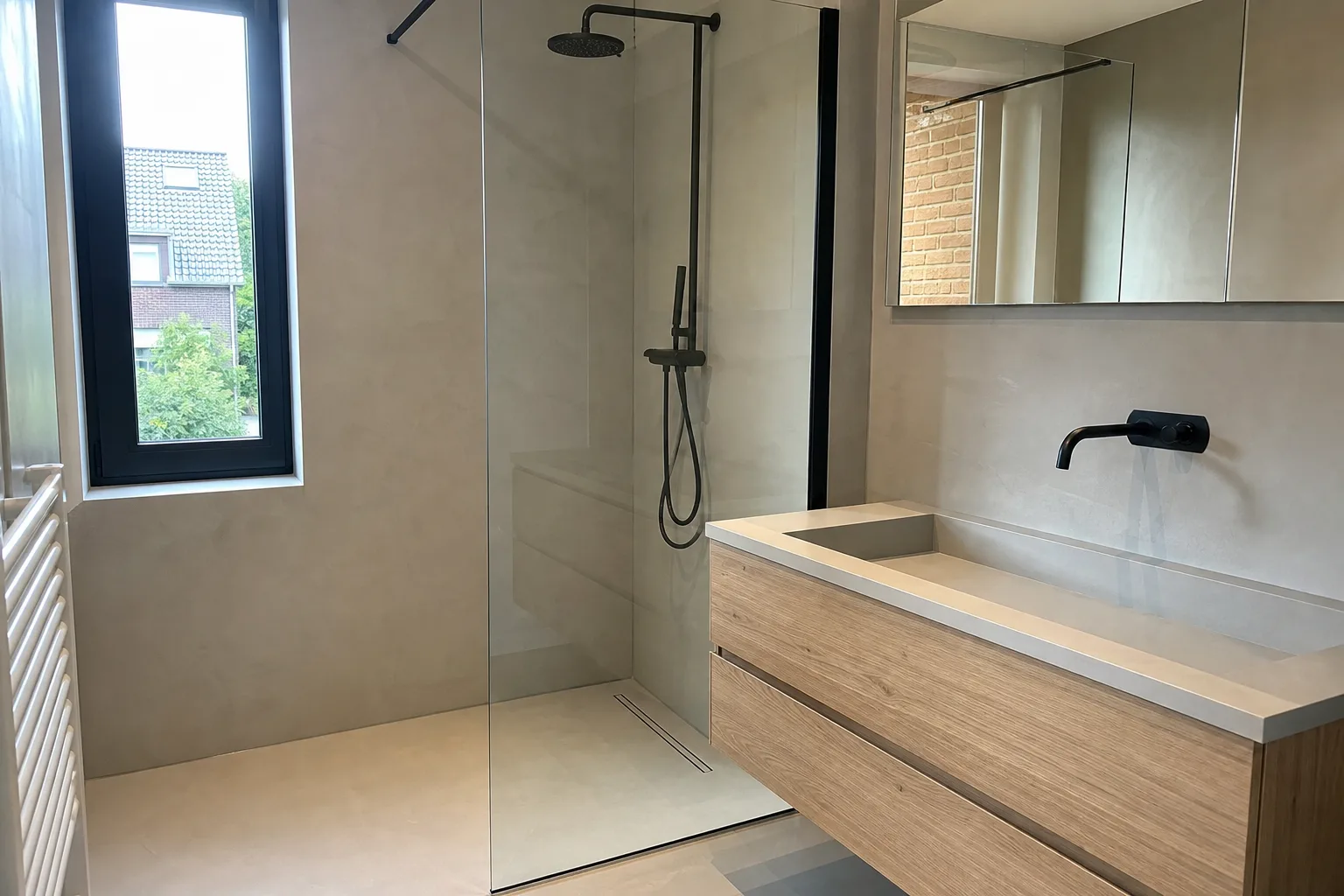
Microcement is a thin, cement based top layer, a few millimetres thick, applied without joints over walls, floor and shower floor. In a bathroom it gives a calm look with no grout lines. It only works if the build-up is right: a stable base, a waterproofing layer in the wet areas and a good protective sealer on top. This guide explains what that build-up looks like, where things go wrong in practice and how to keep the surface looking good for years.
- Microcement is a top layer; the waterproofing is a separate layer underneath, plus sealing at corners and pipe entries.
- The sealer on top keeps dirt and water out of the cement and needs occasional maintenance.
- The base must be firm, dry and stable; cracks in the base come back through the top layer.
- It can often go over existing tiles, if they are firmly fixed and flat.
- Clean with a mild, pH neutral cleaner; no abrasives and no strong descaler.
What microcement is and why it suits a bathroom
Microcement is a mix of cement, fine fillers and polymers, applied in thin coats with a trowel. Once dry, it is sanded and finished with a sealer. The result is a continuous surface without joints that can run from the floor up the wall and also cover a shower floor or a niche.
In a bathroom that has two advantages. The look is calm, which makes a small room feel bigger. And there are no grout lines for limescale and mould to settle in. On our microcement page you can see a bathroom with microcement on walls, floor and shower floor, and a small toilet where the layer was applied around a concealed Geberit frame.
The build-up from bottom to top
A microcement bathroom has more layers than the one you see. Each layer has its own job. Skip one and you will see it later as hairline cracks, stains or damp behind the wall.
- Base: firm, dry, flat walls and floor, such as plaster, cement board or well fixed tiles.
- Primer: controls adhesion and how much the base absorbs.
- Waterproofing layer: across the shower zone and floor, with sealing tape in corners and collars around pipes and the drain.
- Mesh and base coats: a reinforcing mesh and one or two coarser coats that give strength.
- Top coats: the fine layers that set the colour and look.
- Sealer: a protective coat that keeps water, soap and dirt out of the cement.
Tip from the trade: With every quote for a microcement bathroom, ask which layer does the waterproofing. If the answer is only the top coat or only the sealer, ask more questions.
Waterproofing: what really matters
Microcement is often called waterproof, and with a good sealer the surface does keep water out. But a thin top layer can develop a hairline crack over the years, for example over a joint in the base. That is why the real waterproofing goes underneath: a waterproofing layer over the whole shower zone, with tape in every corner and between floor and wall.
The weak points in any bathroom are the transitions. Around the drain or shower channel, where the mixer tap comes through the wall, along the edge of a bath and where the wall meets a window frame. We fit collars and tape there before any microcement goes on. The fall of the shower floor towards the drain must also be built into the base. A thin layer of microcement cannot correct a sloping floor.
For comparison, the Dutch building code, the Besluit bouwwerken leefomgeving (Bbl), requires the walls and floors of a bathroom in a new home to be water repellent. Next to the bath or shower that applies to the wall over a length of 3 m and a height of 2.1 m, and to 1.2 m on the rest of the wall. Renovations of existing homes usually face lower requirements, but these figures are a sensible minimum for the wet zone.
Ze hebben in 1 week tijd de hele beneden verdieping stucwerk gerepareerd, geschilderd en gesausd tot volle tevredenheid. Netjes en accuraat gewerkt, flexibel geweest en vakwerk afgeleverd. Dus top.
The base, and going over existing tiles
The question we hear most: can microcement go over my old tiles? Often it can. The tiles must be firmly fixed, with no hollow spots behind them, and the surface must be flat. We tap the tiles and check for cracks running through the tiling. Loose tiles come out and the gap is filled. The grout lines are filled too, so they do not show through the top layer.
Whether it is wise also depends on what is behind the wall. If there has been a leak behind the shower wall for years, or the pipes are old, this is the moment to open the wall up. Putting microcement over a problem only moves the problem to later. In a full refit it becomes part of bathroom renovation, where plumbing, electrics and finishing are all handled by our own team.
Ventilation and moisture in the bathroom
A microcement bathroom needs the same ventilation as a tiled one. Steam has to go, otherwise it settles on cold spots and mould appears on the ceiling and in the sealant joints. For new homes the Bbl sets an extraction rate of 14 dm³/s for a bathroom. In older Dutch homes extraction is often weaker, and a renovation is a good moment to improve it.
Milieu Centraal, the independent Dutch advice centre for energy and the home, advises ventilating day and night, all year round, including in winter, because too much moisture can cause mould on walls and ceilings. Leave the fan running for a while after a shower and keep the door slightly open.
Upkeep: keeping the surface looking good
Microcement is low maintenance, not no maintenance. The sealer does the work. As long as it is intact, soap, limescale and dirt stay on the surface and wipe off easily. Harsh products damage that layer.
For daily cleaning, use lukewarm water with a mild, pH neutral cleaner and a soft cloth or squeegee. Squeegee the walls and floor after showering and limescale has little chance. Do not use abrasive cleaners, scouring pads, strong descalers or bleach. Depending on use, the sealer will need refreshing after a number of years; sooner in the shower and on walking routes than on a wall behind the basin.
- Do: mild soap, soft cloth, squeegee after showering.
- Don't: abrasive cleaner, steel wool, bleach, strong limescale remover.
- Careful: do not let hair dye, nail polish remover or cleaning products soak in.
- Now and then: have the sealer checked and reapplied if needed.
Microcement or tiles in the bathroom
Microcement is not always the best choice. Tiles are harder, can take a knock and are easier to replace locally. Microcement gives a calmer look and fewer joints to clean, but asks more skill during the work and more care in use. In microcement or tiles we compare both honestly.
Many bathrooms end up as a mix: microcement on the walls and tiles on the floor, or the other way round. We discuss that at the survey. Stas, the owner, comes to look, checks the base and the waterproofing, and you receive a free quote with no obligation. To see what the price depends on, read plaster and microcement cost factors.
Frequently asked questions
Is microcement in a shower really watertight?
The sealed surface keeps water out. The real waterproofing goes underneath, with a waterproofing layer and tape in every corner and around every pipe entry.
Can microcement go over existing bathroom tiles?
Often, if the tiles are firmly fixed and flat. Loose tiles come out and grout lines are filled. If there is a leak or the pipes are old, we advise opening the wall first.
Is microcement slippery when wet?
That depends on the finish. On a shower floor we choose a sealer with more grip than on a wall.
How long does a microcement bathroom take?
Each coat has to dry before the next one, and the sealer must cure before you shower. After the survey you get a planning per step.
Which cleaning products can I use?
Lukewarm water with a mild, pH neutral cleaner and a soft cloth. No abrasives, bleach or strong descaler.
Renovation and finishing work from Roelofarendsveen: plastering, bathrooms, microcement, extensions, insulation, floors, electrics and plumbing. One point of contact from quote to completion. Questions? Call or WhatsApp +31 6 87 61 60 78.
Sources
Rules change. Always check your own address with the Permit Check (Vergunningcheck) in the Omgevingsloket or with your municipality.