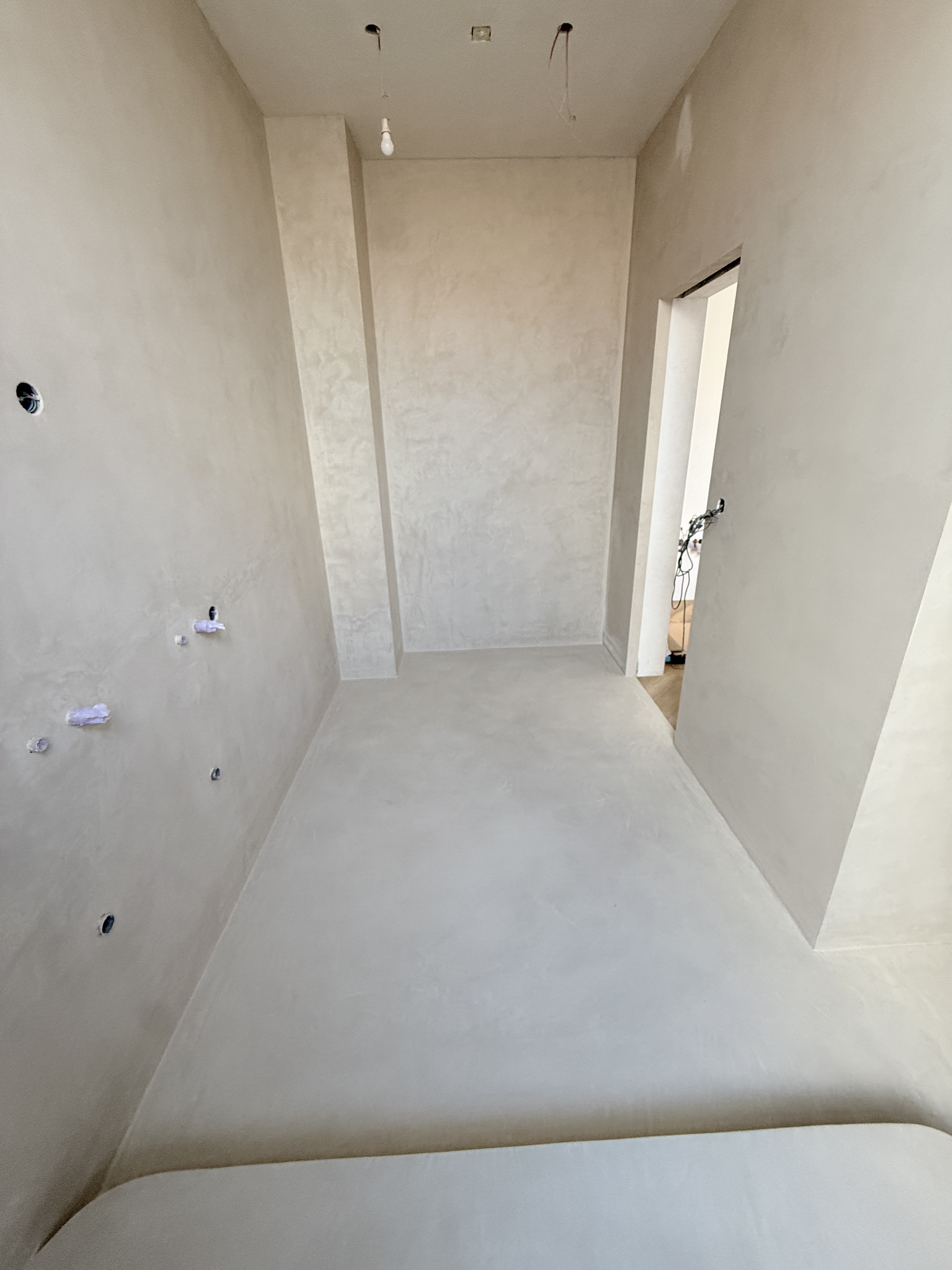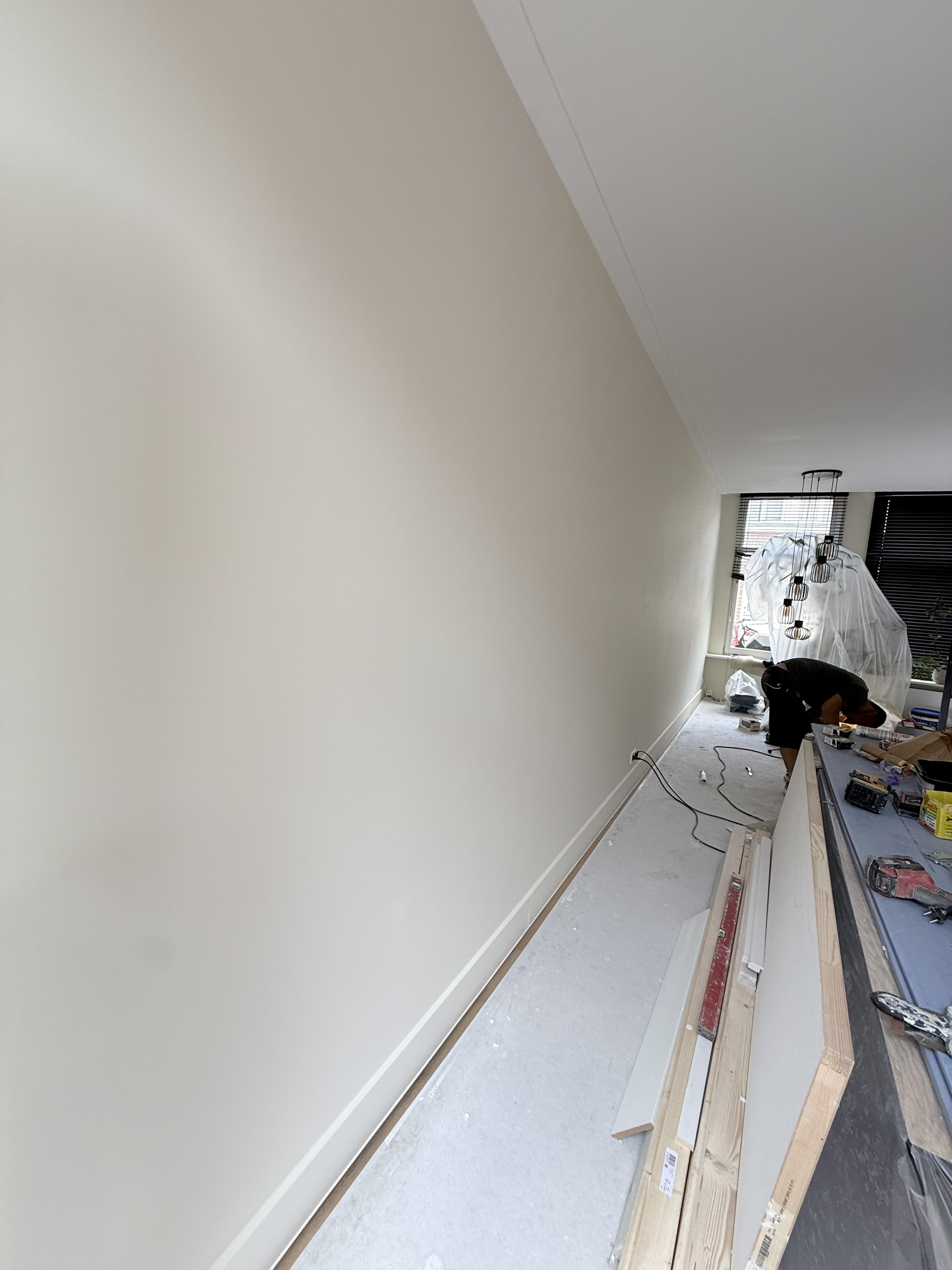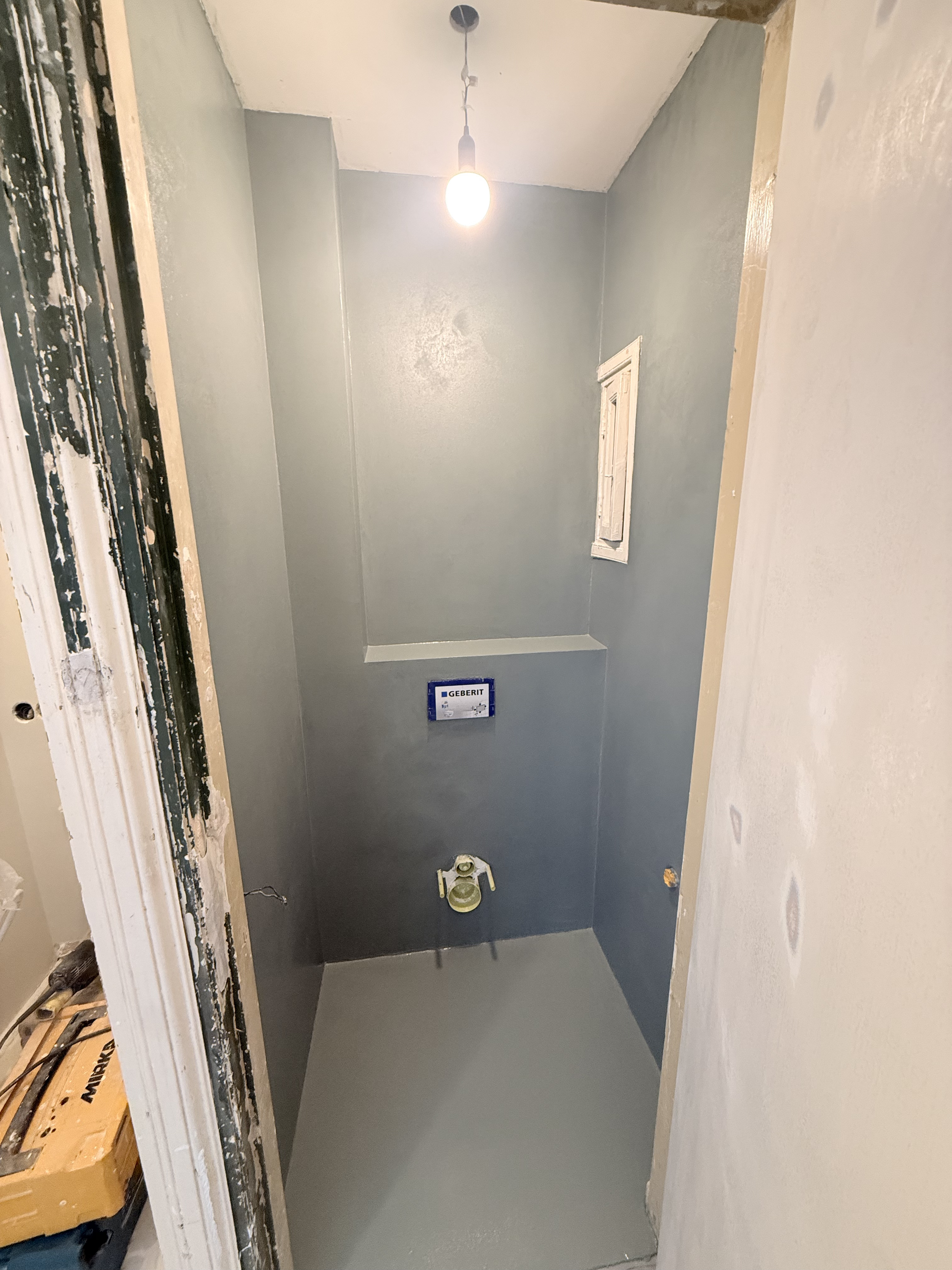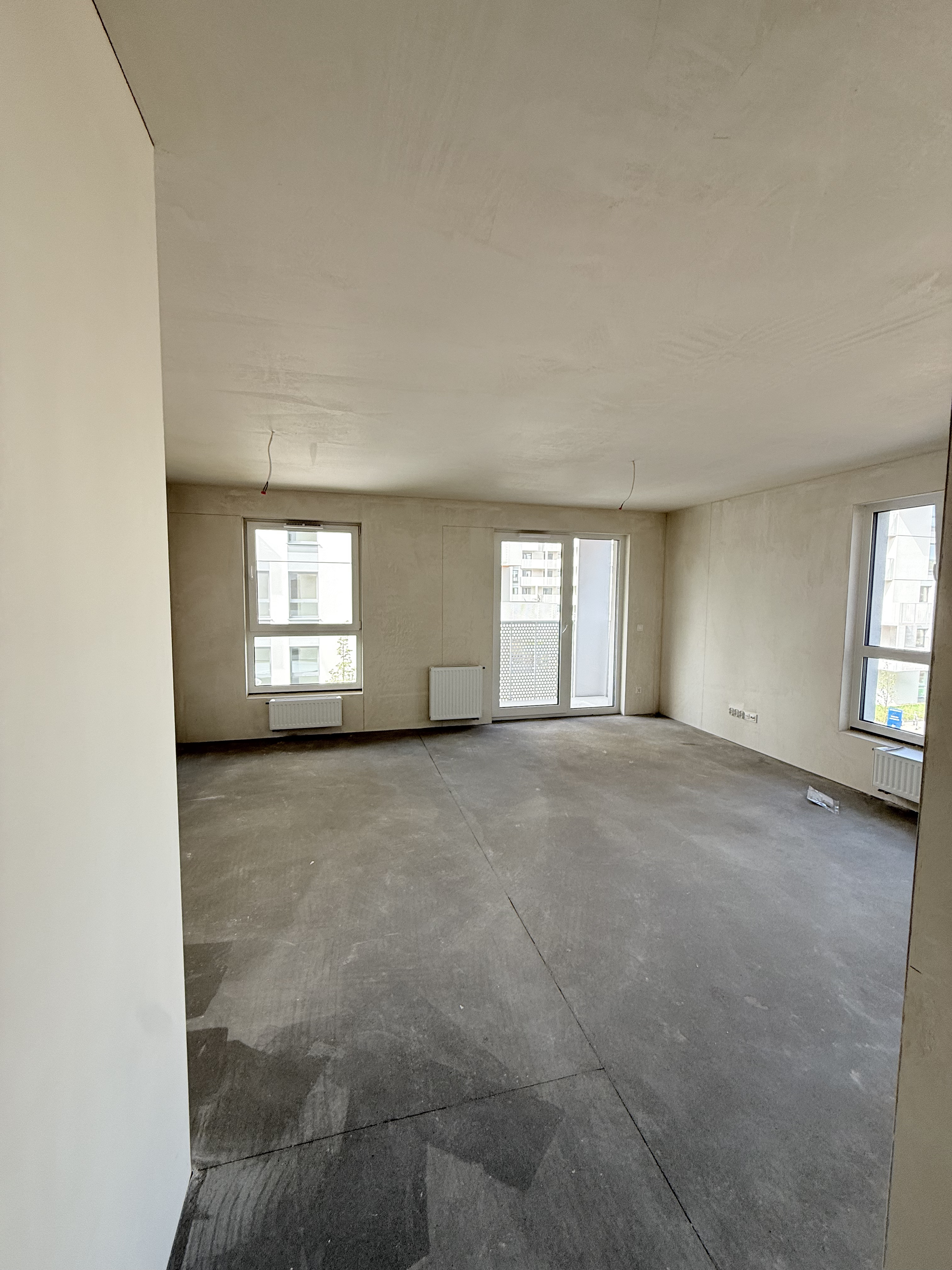
- Applying plaster is quick; drying decides the planning of the work that follows.
- Thick coats, cold and damp air and poor ventilation slow drying down considerably.
- Gypsum turns lighter as it dries; an even, light colour is the first sign.
- Ventilation helps; heating fast or running a dehumidifier flat out can cause cracks.
- Microcement and exterior render have their own drying and curing times per coat.
How long the plastering itself takes
The time for the plastering itself depends on the area, the base and the number of coats. An average room with walls that are already fairly flat is often done in one to two days, including covering up and cleaning. If the base needs repair first, with old layers removed, cracks filled and corner beads fitted, that adds time. A whole house naturally takes longer, and on large areas plasterers often work in pairs.
Then the waiting begins. How long that takes is hard to say in days beforehand. So do not plan the next stage for a fixed date, but for the moment the wall is truly dry. The quote and planning show which steps wait on each other.
In a renovation with several trades, that matters even more. A painter or decorator who arrives too early works on a damp surface. A floor layer who fits parquet in a room where the walls are still releasing a lot of moisture risks a floor that starts to move. That is why we agree the order beforehand.
What drives drying time
A plaster coat dries as the water evaporates and is carried away. Anything that slows that process makes drying take longer. In practice, five factors matter most.
| Factor | Faster drying | Slower drying |
|---|---|---|
| Thickness | Thin finishing coat | Thick filling coat |
| Base | Dry, absorbent brick | Damp wall, concrete, dense base |
| Temperature | Moderately warm inside | Cold room, cold outside wall |
| Humidity | Dry air | Wet weather, many people or cooking |
| Ventilation | Constant air exchange | Closed windows and doors |
Tip from the trade: Planning other work in the same period, such as laying a screed or tiling a bathroom? That brings extra moisture into the house and makes the plaster take longer to dry. Discuss the order beforehand.
Gypsum, lime and exterior render
Gypsum plaster is the most common material indoors. Gypsum sets quickly, but the water still has to evaporate afterwards. A thin coat on a dry, absorbent wall is often ready much sooner than a thick coat on a cold external wall. Wet gypsum is dark and turns lighter as it dries. A wall that is evenly light everywhere is a good sign, but with thick coats the core can still be damp.
Lime plaster works differently. Lime hardens by taking up carbon dioxide from the air, and that is slower. So a lime coat is not at full strength as soon as it is dry. Exterior render also has to deal with the weather: frost, rain and strong sun. More in exterior render on the facade.
Snel en kwalitatief hoogstaand werk. 3 kamers opgeleverd in 3 dagen. Gestuukte wanden en plafond. Nu zijn de kamers onherkenbaar. Zulke gladde muren waren hier nooit. Ik adviseer iedereen Parus Construction. Ook de prijzen zullen u verrassen.
Microcement: drying time per coat
Microcement is built up in thin coats: primer, base coats, top coats and a sealer. Each coat must be dry before the next goes on, and the surface is sanded in between. That is why a microcement floor or bathroom runs over several days, even when the area is small.
After the final sealer, the surface can first be walked on or touched, but it is not yet fully cured. During that period you do not put heavy furniture or rugs on it and you do not shower yet. The manufacturer states per product how long that takes. On a floor with underfloor heating, the heating may only go back up gradually. More in microcement floor.
How to tell if a wall is dry
By eye, the first sign is the colour. As long as there are dark patches on the wall, often in corners, behind radiators and on external walls, it is not dry. If the wall feels cold and clammy, there is still moisture in it. A moisture meter gives a better indication, although the reading depends on the material and the meter.
A simple test you can do yourself: tape a small piece of clear plastic to the wall and leave it overnight. If the inside of the plastic is misted the next morning, moisture is still coming out of the wall. Hold off with paint or wallpaper.
- Colour: evenly light everywhere, no dark patches left.
- Touch: not cold and clammy.
- Plastic test: no condensation on the inside after a night.
- When in doubt: a moisture meter or the plasterer's judgement.
Helping it dry, without forcing it
The most important thing is ventilation. Moisture coming out of the wall has to leave the house, otherwise it settles on cold spots. Milieu Centraal, the independent Dutch advice centre for energy and the home, advises ventilating day and night, all year round, including in winter, because too much moisture can cause mould on walls and ceilings. After plastering, that applies even more. Open the trickle vents and leave a window slightly open.
Heat moderately. A room that stays cold dries slowly, but heating fast or running a space heater flat out dries the surface quicker than the core. That can cause shrinkage cracks and weaker adhesion. A dehumidifier can help if it is used gently and the room is not sealed off completely. Do not push furniture against fresh plaster and do not hang anything on it yet.
When you can paint, wallpaper or tile
Painting can only start once the wall is dry. Painting too early causes patches and peeling. The first coat is always a primer or a thinned coat. Painting after plastering explains how. Milieu Centraal says the same: let the plaster dry well before finishing the wall.
Wallpaper also needs a dry wall, with a primer so the paper can be removed again later. Tiling over a plastered wall needs a base that suits tiles and the wet zone; in a bathroom we therefore use a waterproofing layer. To choose the right finish, read smooth plaster or spray finish.
We plan the work after plastering together with you, so you do not start too early or wait longer than needed. See our plastering page or get in touch through the contact page for a free quote with no obligation.
Frequently asked questions
How long should plaster dry before I paint?
Until the whole wall is dry and evenly light in colour. That depends on thickness, base, temperature and ventilation. A fixed number of days cannot be given.
Can I turn the heating up to speed up drying?
Better not. Moderate heating and good ventilation work better. Heating fast dries the surface quicker than the core and can cause small cracks.
Why does my plastered wall have dark patches?
There is still moisture there. Often on cold external walls, in corners and behind radiators. Ventilate and wait until the colour is even.
Can I sleep in a room that has just been plastered?
You can, but the air will be damp. Ventilate well and keep furniture away from the fresh walls.
How long does a microcement bathroom take?
Several days, because each coat has to dry and is sanded in between. After the last coat, the sealer must cure before you shower.
Renovation and finishing work from Roelofarendsveen: plastering, bathrooms, microcement, extensions, insulation, floors, electrics and plumbing. One point of contact from quote to completion. Questions? Call or WhatsApp +31 6 87 61 60 78.
Sources
Rules change. Always check your own address with the Permit Check (Vergunningcheck) in the Omgevingsloket or with your municipality.