We install both tiles and microcement. That is why we can say honestly that neither is always better. Tiles are hard, proven and easy to replace one at a time. Microcement gives a jointless, calm look, but asks more of the base and of the person applying it. The right choice depends on the room, how you use it and the look you want. This guide compares the two on the points that matter in daily life.
- Tiles are harder and better at taking knocks and dropped objects; microcement is hard wearing but can scratch.
- Microcement has no grout lines; with tiles, the grout is where limescale and dirt collect.
- In a shower, both need a waterproofing layer underneath.
- A damaged tile can be replaced; a damaged patch of microcement can be repaired, but may show.
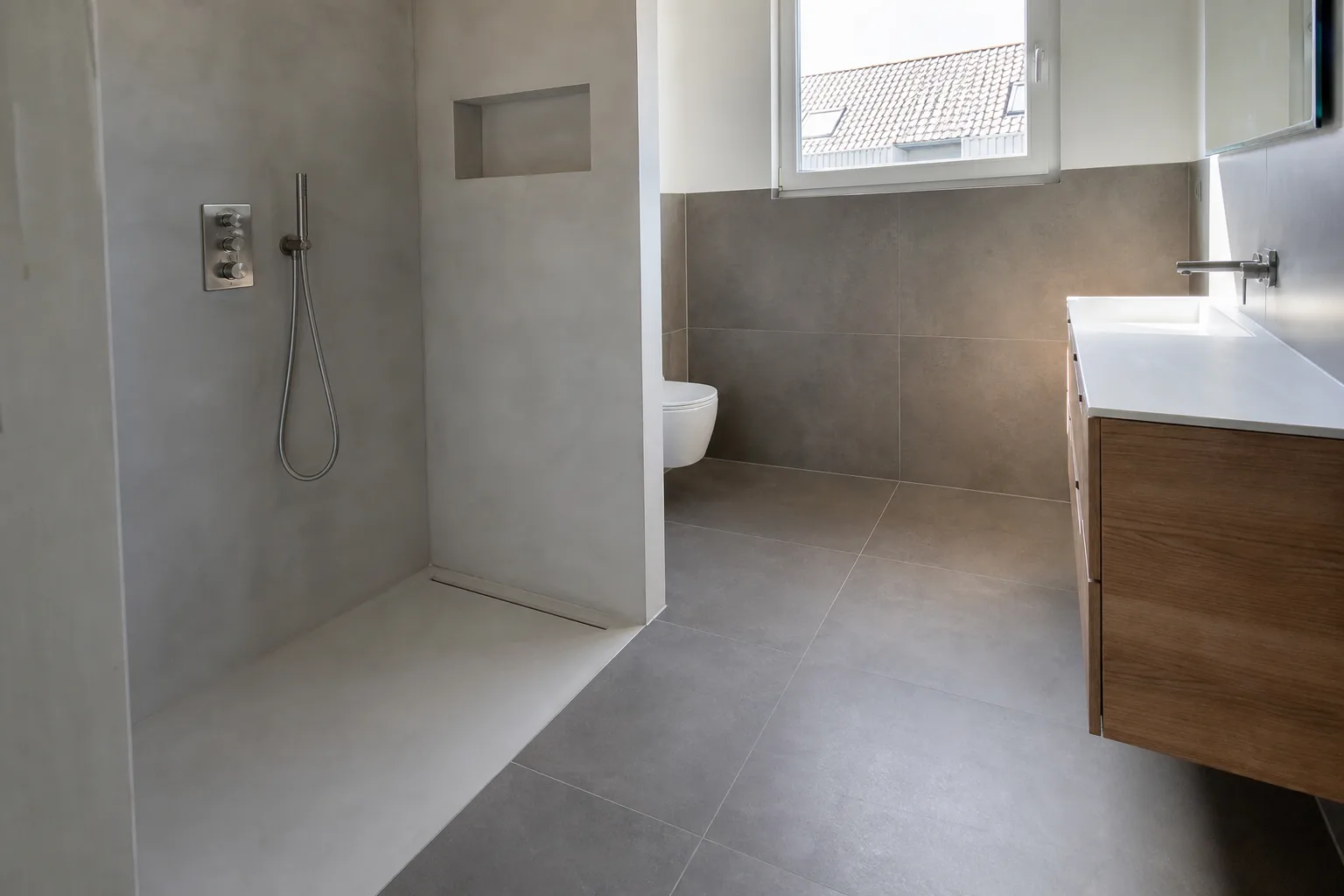
- Mixing works well: for example tiles on the shower floor and microcement on the walls.
Look and sense of space
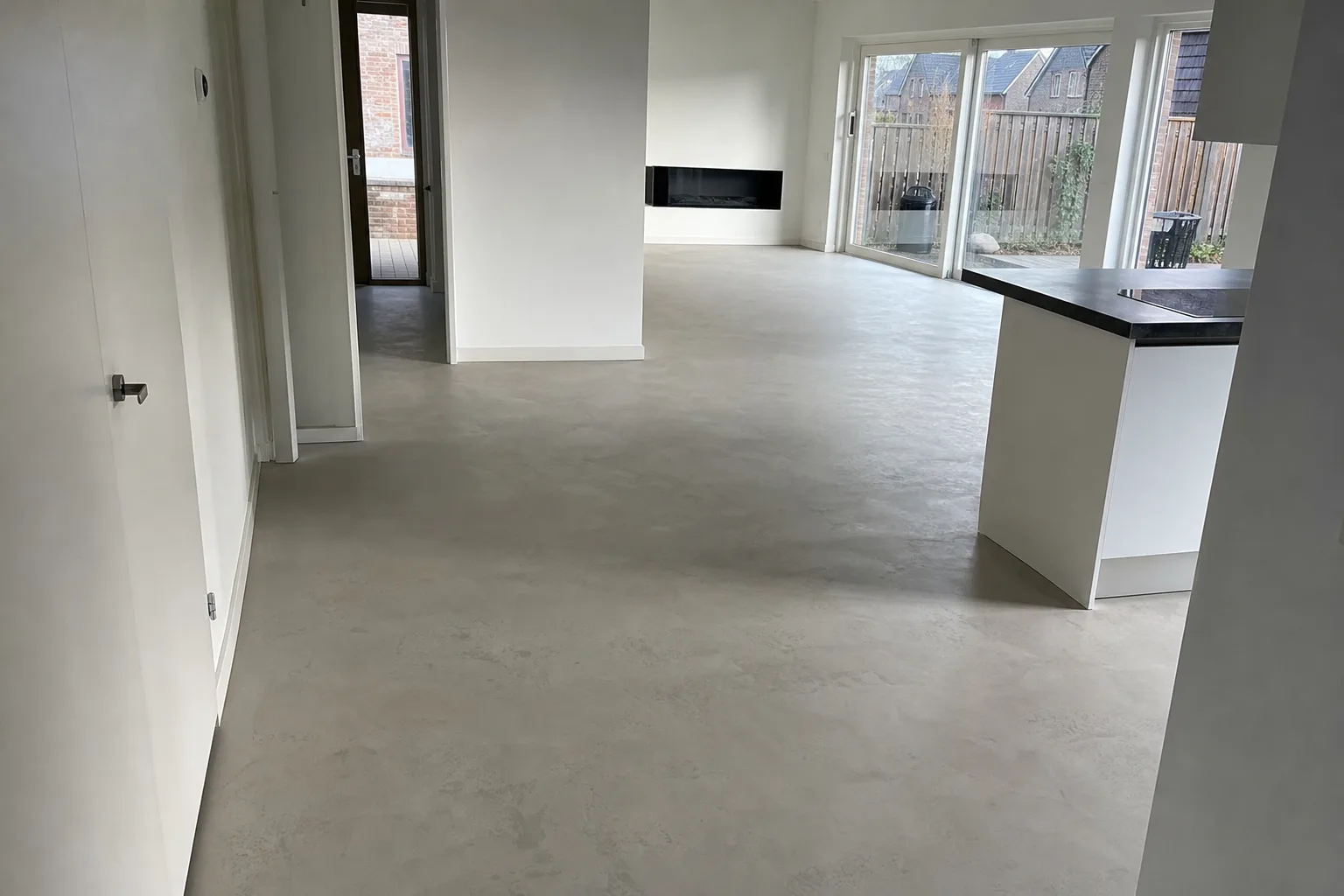
The first difference you notice is the look. Microcement is one surface. No lines run across the room, and the colour can run from the floor up the wall and into the shower. A small bathroom or toilet feels bigger and calmer as a result. The surface has a soft, lively pattern from the trowel, so it is never completely uniform. That is exactly what many people like about it.
Tiles offer more choice in shape, colour and pattern. A herringbone layout, a glazed tile or a large porcelain slab with few joints: all of that is possible. Large formats come close to the calm look of microcement, with a few joints still visible. If you want a bold pattern or colour, tiles are usually the better choice.
Strength and wear
A glazed or porcelain tile is very hard. A dropped shampoo bottle or a chair leg does little to it. Microcement is also strong and hard wearing, but the surface is a cement layer with a sealer on top. Sharp objects can leave a scratch or a small dent, and on busy walking routes the sealer wears faster than a glaze.
That does not make microcement fragile. It means you treat it slightly differently: felt pads under furniture, a mat by the door and no abrasive cleaners. In a hallway where bikes are wheeled in every day, we would lean towards tiles. In a bathroom or living room, microcement does the job well.
Waterproofing in bathroom and shower
Many people assume tiles are waterproof. That is true of the tile itself, but not of the whole wall. Grout lets moisture through over time, and silicone joints age. That is why tiling in a shower also needs a waterproofing layer behind it. Microcement is exactly the same. In both cases the real waterproofing sits underneath, with tape in the corners and collars around pipes and the drain.
The Dutch building code, the Besluit bouwwerken leefomgeving (Bbl), requires the walls and floors of a bathroom in a new home to be water repellent, up to 2.1 m high at the shower. Both finishes can meet that if they are built up properly. How it works for microcement is explained in microcement bathroom.
Cleaning and upkeep
With tiles, the upkeep is in the grout. It turns grey over time, and in the shower mould can settle in it. The tile itself can be cleaned with almost any product. Microcement has no grout, but its sealer does not like harsh products. Clean it with a mild, pH neutral cleaner and a soft cloth, and a squeegee after showering prevents limescale marks.
In the long run microcement needs a fresh sealer now and then, especially on the floor. Tiling sometimes needs new silicone joints and some regrouting after a number of years. So both need something, just in different places.
Snel en kwalitatief hoogstaand werk. 3 kamers opgeleverd in 3 dagen. Gestuukte wanden en plafond. Nu zijn de kamers onherkenbaar. Zulke gladde muren waren hier nooit. Ik adviseer iedereen Parus Construction. Ook de prijzen zullen u verrassen.
Repairs when something goes wrong
If a heavy bottle chips the corner off a tile, that one tile can come out and a new one go in, provided you still have a spare. So always keep a box of your tiles.
With microcement, damage is repaired locally and resealed. That works well, but a slight colour difference cannot always be avoided, because the trowel pattern is never the same twice. With larger damage, a whole surface is sometimes redone, from corner to corner.
Which choice for which room
In practice we see a clear pattern per room. In a toilet, microcement often works very well. The room is small, with lots of corners and pipes, and a jointless wall around a concealed cistern looks clean. Our project page shows such a toilet, with microcement around a Geberit frame. In a busy family bathroom, people more often choose tiles on the floor, because they can take a knock, and microcement on the walls for the calm look.
In living spaces it is mostly about the floor. A microcement floor in the living room and kitchen gives one continuous surface, also over underfloor heating. A tiled floor is harder and easier if you walk in and out of the garden a lot, with a dog or children. See microcement floor for what the base needs.
- Toilet: microcement or tiles; microcement often looks calmer in a small room.
- Shower wall: either, with a waterproofing layer underneath.
- Shower floor: tiles, or microcement with a non slip sealer.
- Busy hallway: more often tiles.
- Living room and kitchen: either, depending on look and use.
The two side by side
In short, the comparison looks like this. Use the table as a starting point for the conversation, not as a final verdict: the base and the room always count as well.
| Point | Microcement | Tiles |
|---|---|---|
| Look | Jointless, calm, lively texture | Wide choice of shape, colour and pattern |
| Hardness | Hard wearing, can scratch | Very hard, resists knocks |
| Joints | None | Yes, need upkeep |
| Waterproofing | Waterproofing layer underneath | Waterproofing layer underneath |
| Cleaning | Mild products | Almost any product |
| Repair | Touch up, may show | Replace tile with a spare |
| Over existing tiles | Often possible | Often possible, floor gets higher |
| Thickness | A few millimetres | Thicker, including adhesive |
Price, VAT and how to choose
We do not give amounts, but we can tell you what makes the difference. With tiles, the tile itself, its size, the pattern and the cutting weigh heavily. With microcement, most of the work is in the coats and the drying time between them. In both cases the base matters a lot: removing old tiles or straightening a wall takes time. More in plaster and microcement cost factors.
Also look at VAT (btw). According to the Dutch tax authority, the Belastingdienst, plastering work on homes older than 2 years falls under the 9% rate, while fixing tiles to walls falls under 21%. The Belastingdienst does not mention microcement separately there; our quote splits the rates per item.
If you are unsure, a mix is often the best route. Stas, the owner, comes to look and talks through how you use the room. Read more about both trades under microcement and tiling.
Frequently asked questions
Is microcement more expensive than tiles?
That depends on the tile and the base. A simple tile on a flat wall is different from a large slab or a herringbone pattern. After the survey you see both options in the quote.
Which is better for a small bathroom?
Microcement often makes a small room look bigger, because no joints break up the surface. Large tiles with few joints give a similar effect.
Can I combine microcement and tiles?
Yes, we do that often. For example tiles on the floor and microcement on the walls, or a tiled shower wall next to microcement elsewhere.
How long does microcement last?
With a good base and upkeep of the sealer it lasts a long time. The sealer on a floor needs refreshing after a number of years.
Can damage to microcement be repaired?
Yes, by touching it up locally and resealing. A slight colour difference cannot always be avoided.
Renovation and finishing work from Roelofarendsveen: plastering, bathrooms, microcement, extensions, insulation, floors, electrics and plumbing. One point of contact from quote to completion. Questions? Call or WhatsApp +31 6 87 61 60 78.
Sources
Rules change. Always check your own address with the Permit Check (Vergunningcheck) in the Omgevingsloket or with your municipality.