- Inside your private unit you may make changes without consent, as long as no other part is harmed.
- You must inform the VvE straight away about any change.
- The deed of division and the regulations define what is private and can set stricter rules.
- Work on the facade, roof, load-bearing walls or shared pipes needs a decision by the VvE.
- Rules on hard floors and noise are the most common pitfall in apartments.
Private unit and shared parts
An apartment building in the Netherlands is legally divided. Each owner holds an appartementsrecht: the right to use one part of the building exclusively, plus a share in the whole. What belongs to your unit and what is shared is set out in the splitsingsakte, the deed of division. Usually the foundations, load-bearing walls, facade, roof, the floors between storeys and the soil stacks are shared. Non-load-bearing interior walls, the kitchen and the finish of your bathroom are usually private.
That distinction decides who has a say. A new kitchen in the same place is your business. A new window in the facade or an opening in a load-bearing wall affects everyone's building. If you are unsure about a wall, check the division drawing or ask a structural engineer.
Also watch out for parts that only you use but that may still be shared. Window frames, your front door, a balcony or a roof terrace fall under the shared parts or special rules in many regulations. If you want to change them, for example different glass, another colour or a new balcony floor, first check what the regulations say.
What article 5:119 of the Civil Code says
The law is clear about your own unit. Under article 5:119 of the Dutch Civil Code, an apartment owner may make changes in the part they use exclusively without the consent of the other owners, provided this does not harm any other part. The owner must inform the association without delay.
There are two catches. First, if the change alters the building's insurance premium, the difference is yours to pay. Second, the regulations may deviate from this article. Many VvEs therefore have their own rules, for example that you ask permission in advance for a hard floor or for moving a bathroom. What your regulations say takes precedence over the general rule.
Tip from the trade: Always send the VvE a short notice with your planning in advance, even when you need no consent. The law asks you to inform the association, and neighbours who know in advance complain less.
The documents you need
Get the documents before anyone draws a design. You can order the deed of division, the division drawing and the regulations from the Kadaster, the Dutch land registry. The house rules (huishoudelijk reglement) and recent decisions come from the board or the VvE's managing agent. Also read the minutes of recent meetings. They sometimes reveal major maintenance on the way, such as replacing the soil stacks or facade work.
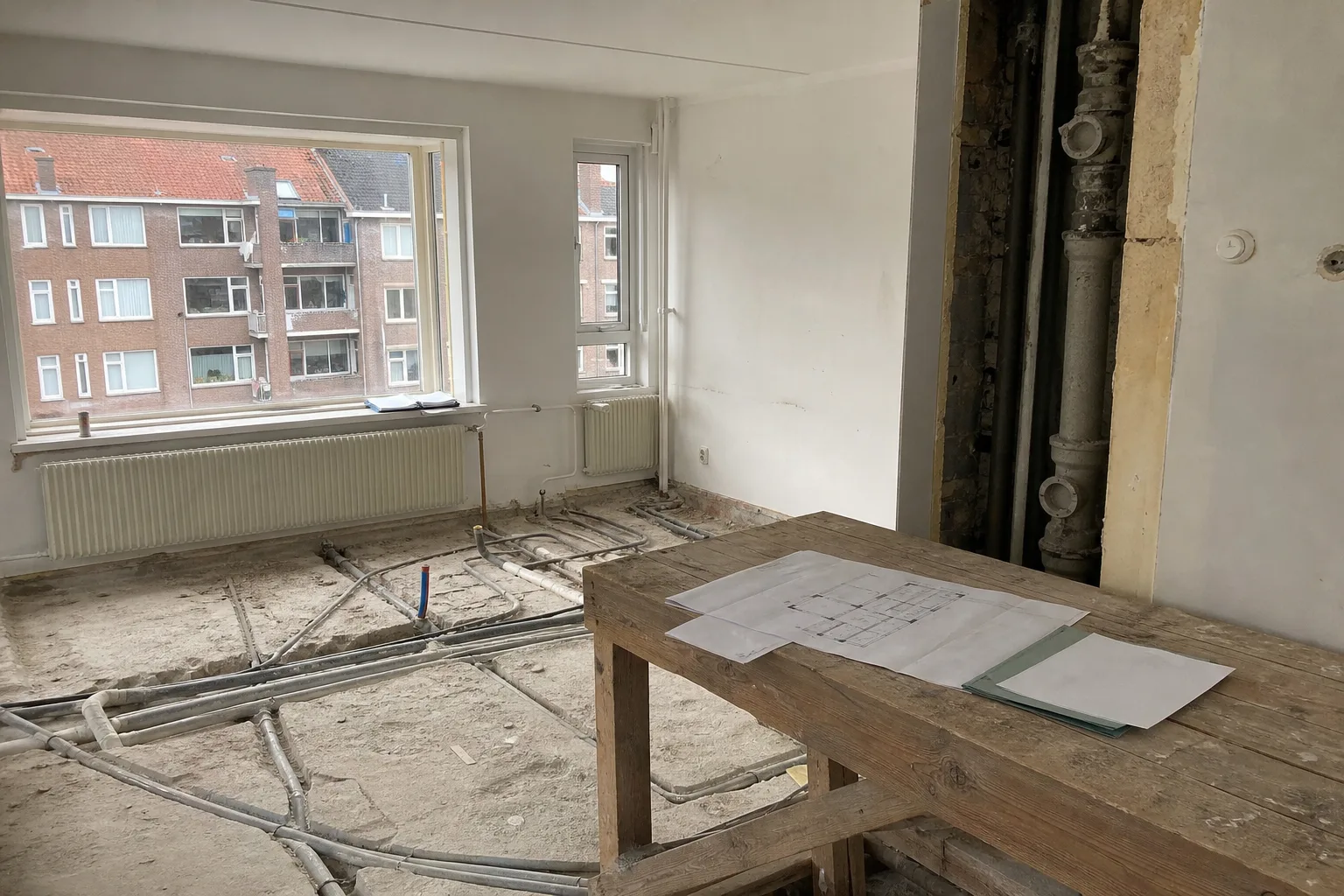
That matters more than it seems. If the VvE replaces the pipes in the shaft in two years, plan your bathroom around it. Otherwise part of your new tiling may have to be opened up again.
- Deed of division and division drawing: what is private and what is shared.
- Division regulations: rules on use, maintenance and changes.
- House rules: practical rules such as working hours and floors.
- Minutes and long-term maintenance plan: what the VvE itself is planning.
Met dit bedrijf werk ik niet voor het eerst samen. Ze hebben voor mij verschillende werkzaamheden uitgevoerd, zoals het vervangen en maken van deuren, het realiseren van een aanbouw en het uitvoeren van binnenrenovaties. De jongens zijn zeer verantwoordelijk, en vooral Stanislav geeft altijd goede adviezen.
When the owners' meeting must decide
If your plan affects shared parts, you need a decision by the general meeting of owners. Think of a new window or larger glazed door in the facade, an opening in a load-bearing wall, a connection to the soil stack in a new place, an air conditioning unit on the roof or facade, or insulating an outside wall. Under article 5:127 of the Civil Code, the meeting decides by an absolute majority of votes cast, unless the articles of association say otherwise.
Submit your request well in advance. Many VvEs meet only once or twice a year. Provide a drawing, a description of the work, the materials and, for structural work, calculations from a structural engineer. The more concrete the proposal, the better the chance it passes in one meeting. Work on the facade or structure may also need a permit from the gemeente (municipality). Use the permit check for that.
Floors, noise and pipes
Most disputes in apartments are about noise. If you replace carpet with parquet, vinyl or tiles, you hear little difference yourself, but the neighbours below hear every step. Many regulations therefore set requirements for the sound insulation of hard floors. Sometimes with a specific value, sometimes with the rule that the new floor must not perform worse than the old one. Choose an underlay or floating screed that meets the requirement and keep the product sheet.
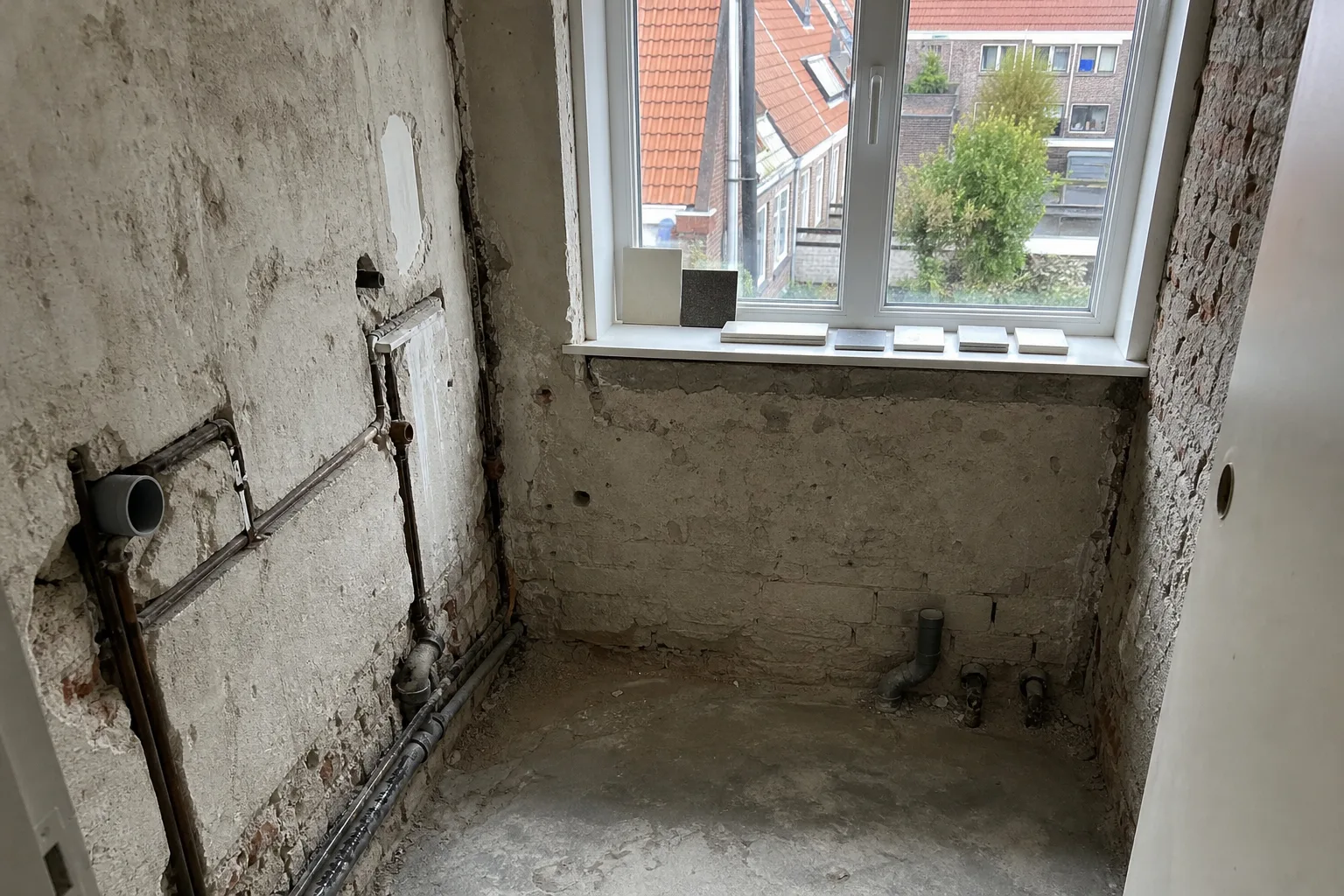
Pipes are the second trap. The soil stack and the shaft are usually shared, your own branch is not. If you move a toilet or bathroom, the waste pipe must run to the soil stack with enough fall. See our flooring and plumbing pages for how we handle this. Also read our bathroom renovation step by step.
Making the building more sustainable
Insulating the facade, roof or the floor above a basement is almost always a matter for the whole VvE. For such projects RVO, the Netherlands Enterprise Agency, runs a separate scheme: the SVVE grant for owners' associations. Under article 5:126 of the Civil Code, a VvE must also keep a reserve fund for major maintenance.
Inside your own apartment you can still do something yourself, such as insulating an inner wall with a stud wall. That is usually within your private unit, but a stud wall against the facade can change how moisture behaves in the wall. So discuss it with the VvE and have a professional do the work. Our guide to VAT and subsidies for renovation lists the schemes.
How Parus works in an apartment
In an apartment, our site visit starts with the structure, the pipe shaft and how the floor is built up. Read the rules in your regulations carefully beforehand, so the proposal to the VvE is right. Working hours and the route through the stairwell are agreed with you and the managing agent. One client wrote about an outside wall of their apartment that had been badly altered in the past: "unlike other companies, they were very precise recommending what I should do instead, which was key to choose them."
Want to know what is possible in your apartment? Get in touch. You will hear from us within 24 hours, and after the site visit you get a free quote you can also show to the VvE.
Frequently asked questions
Do I need VvE consent for a new kitchen?
Usually not, if the kitchen stays within your private unit and does not touch shared pipes or the facade. Your regulations may have extra rules. You do have to inform the VvE.
Can I remove a load-bearing wall in my apartment?
A load-bearing wall is normally a shared part. You need a VvE decision, calculations from a structural engineer and often a permit.
Where do I find the deed of division?
You can order the deed of division and division drawing from the Kadaster, the land registry. The VvE board or managing agent usually has a copy too.
Can I lay a parquet floor in an apartment?
That depends on the regulations. Many VvEs set sound insulation requirements for hard floors. Choose an underlay or floor build-up that meets them.
What if the VvE does not respond?
Send your request to the board in writing and ask for it to be on the agenda of the next meeting. For free legal advice, contact the Juridisch Loket (legal aid desk).
Renovation and finishing work from Roelofarendsveen: plastering, bathrooms, microcement, extensions, insulation, floors, electrics and plumbing. One point of contact from quote to completion. Questions? Call or WhatsApp +31 6 87 61 60 78.
Sources
- Dutch Civil Code Book 5, articles 119, 126 and 127 (wetten.overheid.nl, in Dutch)
- Permit check (Omgevingsloket, in Dutch)
- SVVE grant for owners' associations (RVO, in Dutch)
Rules change. Always check your own address with the Permit Check (Vergunningcheck) in the Omgevingsloket or with your municipality.