- 9 percent VAT applies to insulating, painting, plastering and wallpapering homes older than two years.
- For insulation it covers labour only. For painting and plastering it covers materials too.
- Work at different rates should be split on the quote and invoice.
- You apply for the ISDE insulation grant after the work, within 24 months, and a company must do the work.
- For insulating an apartment building, RVO has the SVVE for owners' associations.
The low VAT rate: which work
According to the Belastingdienst, the Dutch tax authority, 9 percent VAT applies to insulating, painting, plastering and wallpapering homes older than two years. The two years run from the date the building was first used as a home. If a home was built in stages, at least half must be older than two years.
The rate applies to homes intended for permanent occupation. It does not apply to a second home, a garage or business premises, or only to the residential part. All other renovation work, such as a new bathroom, tiling, electrics, plumbing or an extension, is at 21 percent.
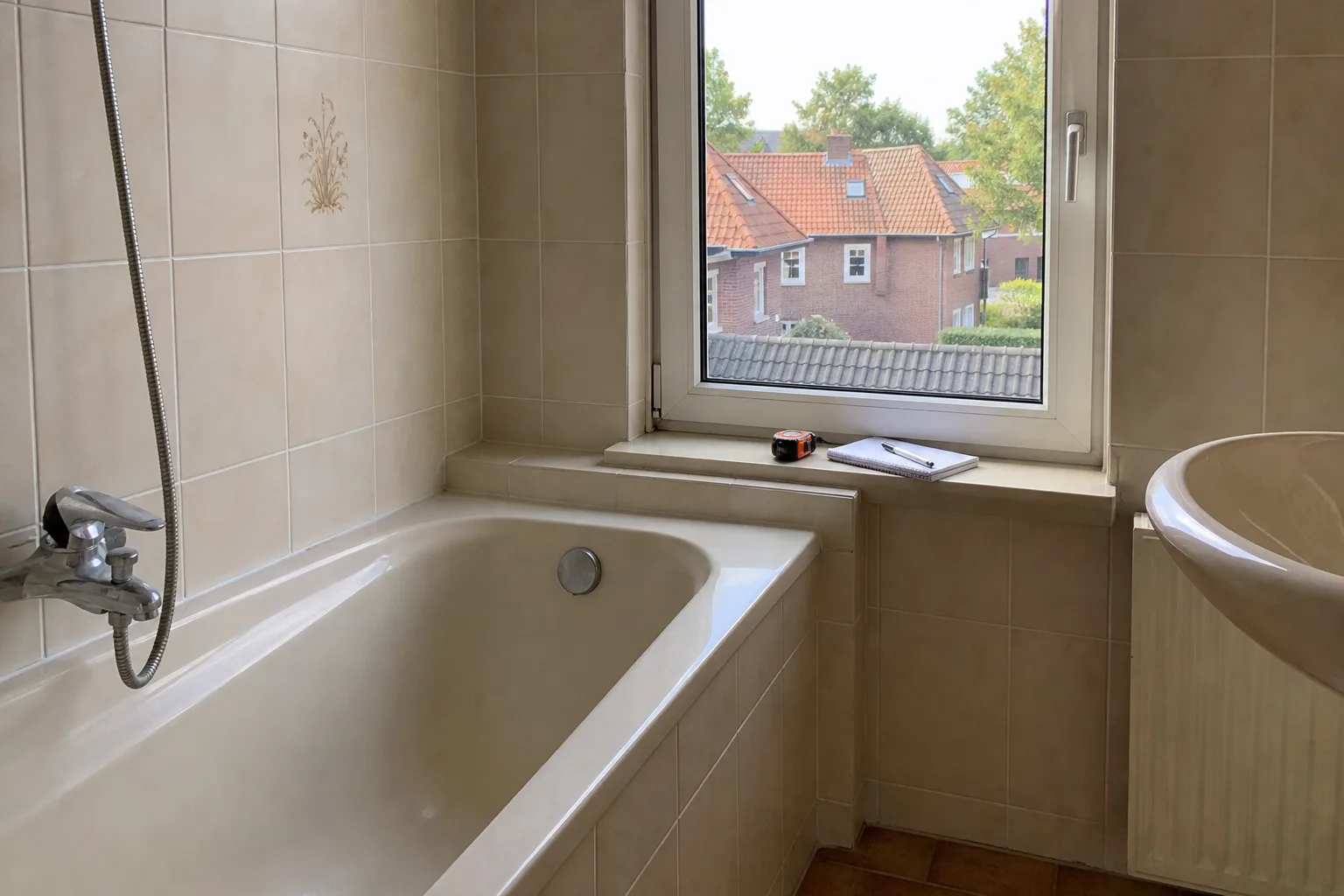
In practice a single renovation often has both rates. In a bathroom, plastering the ceiling is at 9 percent, while tiling, sanitary ware and plumbing are at 21 percent. In a full renovation the same applies to painting versus the new floor or the electrics. The contractor applies the rate, not you. But it is useful to know why two lines on the same quote carry a different VAT percentage.
| Work | VAT on labour | VAT on materials |
|---|---|---|
| Insulating floor, wall or roof | 9 percent | 21 percent |
| Painting | 9 percent | 9 percent |
| Plastering | 9 percent | 9 percent |
| Wallpapering | 9 percent | 9 percent |
| Bathroom, tiling, electrics, plumbing | 21 percent | 21 percent |
Insulation: labour only
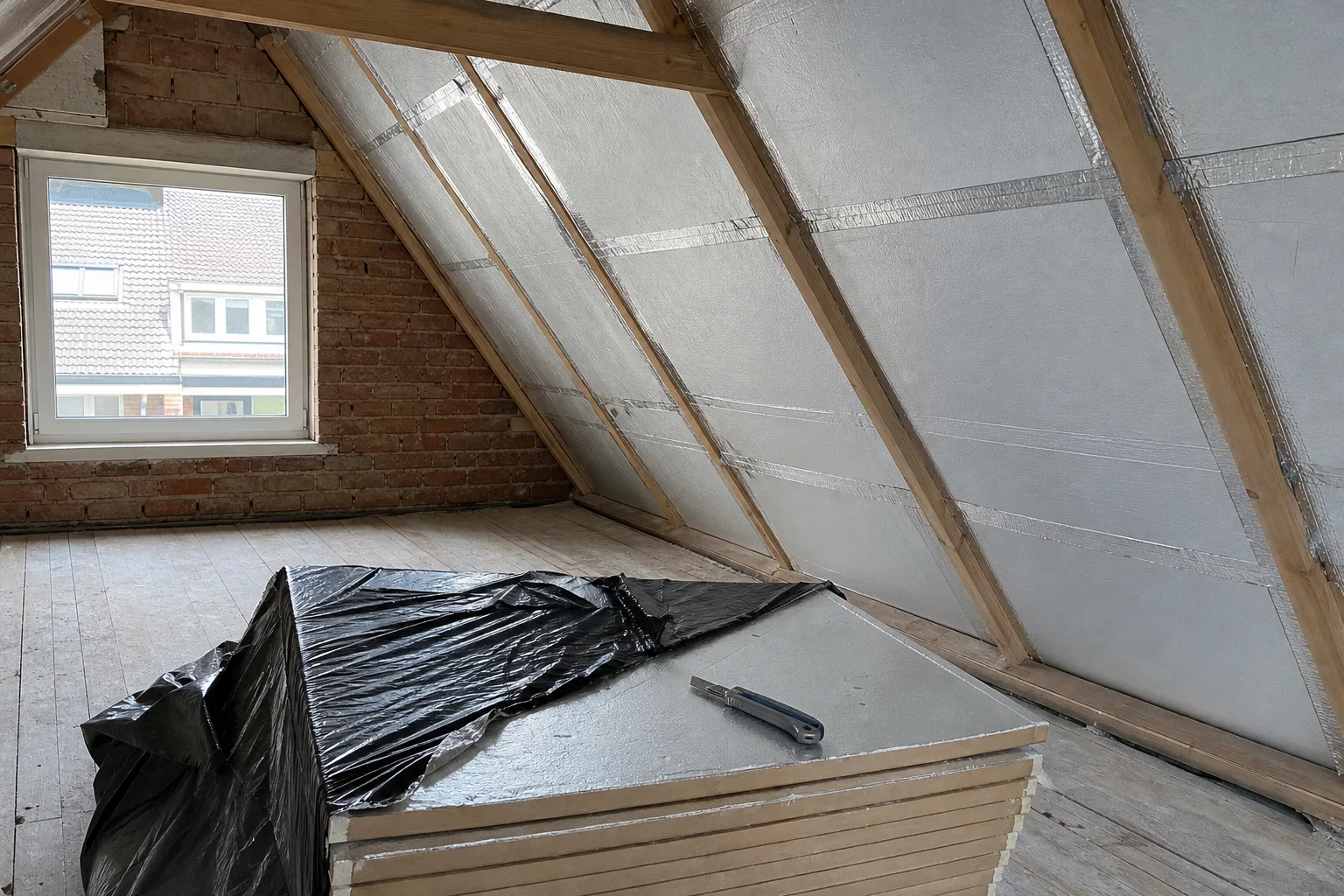
For insulation the rule is narrower. The tax authority refers to the labour costs of fitting insulation material to floors, walls and roofs of homes older than two years. The material itself is at 21 percent. It must be energy-saving insulation.
With a stud wall against an outside wall, this matters straight away. Fitting the insulation carries 9 percent on labour, but finishing the wall with plaster is a separate item. A good quote makes that distinction visible. Read more in insulating walls from the inside with a stud wall or on our insulation page.
Splitting the quote and invoice
If a contractor combines work at 21 percent and 9 percent, the tax authority says they must split the two in the quote and on the invoice. This also applies when the main contractor subcontracts work. For you that is useful, because you can see which part falls under which rate.
When comparing quotes, check whether prices are including or excluding VAT, and whether the low rate is applied where it can be. For plastering and painting in a large home it makes a noticeable difference. See reading and comparing renovation quotes for how to compare.
Tip from the trade: If you are unsure when your home was built, look it up in the BAG, the national register of addresses and buildings kept by the Kadaster. The tax authority refers to it as a source.
Met dit bedrijf werk ik niet voor het eerst samen. Ze hebben voor mij verschillende werkzaamheden uitgevoerd, zoals het vervangen en maken van deuren, het realiseren van een aanbouw en het uitvoeren van binnenrenovaties. De jongens zijn zeer verantwoordelijk, en vooral Stanislav geeft altijd goede adviezen.
ISDE: the insulation grant
The ISDE (investment subsidy for sustainable energy and energy saving) from RVO is for homeowners who insulate their home. According to RVO, your home qualifies if it was built before 1 January 2019. Owner-occupied homes in the province of Groningen and some municipalities in North Drenthe have different rules.
Eligible measures include cavity wall, facade, floor, ground, roof and loft insulation, plus insulating glass, doors and panels. From 2026 ventilation can count, but only combined with an insulation measure. UF foam no longer qualifies from 1 April 2026. Each measure has minimum and maximum areas and minimum insulation values.
A few RVO conditions often surprise people. Cavity wall and facade insulation need at least 10 m². Roof and loft insulation together must be at least 20 m², as must floor and ground insulation together. Only the existing surface counts: a new extension, dormer or extra storey is excluded. Insulation that was already there does not count towards the required value. You get a grant only once per type of insulation, so group work that belongs together in one application.
If you live in a listed building, RVO says adapted conditions apply. Insulating a monument also often needs a permit, because the work can affect its heritage value. Start with the gemeente, and only then apply for the grant.
- Insulate first, apply afterwards, within 24 months of the work.
- A building or installation company must do the work. DIY insulation does not count.
- The material must be on the RVO list of registered product codes (meldcodelijst).
- You need a DigiD, the Dutch government login, to apply.
Paperwork to keep
RVO asks for proof. Keep a photo showing the home and the work at your address. Keep the invoice and proof of payment, showing the date, amount, number of square metres, thickness, insulation value and type of material. And note the product code (meldcode) of the material. For glass, a frame or glazing schedule is needed.
Ask your contractor in advance to put those details on the invoice. Finding the thickness or product code afterwards is hard once the insulation is behind a wall. Also agree that photos are taken during the work showing the material and thickness, so you can use them in your application.
Apartments: the SVVE for the VvE
In an apartment building the facade, roof or floor above the basement is usually shared. Insulating it is then a decision for the VvE, the owners' association. For such projects RVO has a separate scheme, the SVVE grant for owners' associations. According to RVO it is open for applications until the end of 2030.
The SVVE conditions differ from the ISDE. For some parts, the VvE must apply before the measures are carried out. So read the conditions on the RVO site before the VvE places an order. For more on apartments, read renovating an apartment in an owners' association.
What this means for your planning
VAT and grants are no reason to plan a renovation differently, but they do call for a few choices up front. If you want the ISDE, choose material that is on the product code list and reaches the required insulation value. Group measures that have to be applied for together. And make sure a company does the work, with an invoice that states everything.
Rules and rates change. So check the current conditions with the tax authority and RVO just before you start. This article is not tax advice. Want to know which insulation suits your home? See our insulation page or get in touch. You will hear from us within 24 hours, and after a site visit you get a free quote.
Frequently asked questions
Does 9 percent VAT apply to my whole renovation?
No. Only to insulating, painting, plastering and wallpapering a home older than two years, and for insulation only to the labour. Other work is at 21 percent.
Do I apply for the ISDE in advance?
No. According to RVO you insulate first and then apply, within 24 months of the work.
Do I get a grant if I insulate myself?
No. According to RVO a building or installation company must do the work.
Can a tenant apply for the ISDE?
The ISDE for insulation is meant for homeowners. If you rent, discuss insulation with your landlord.
Are there municipal schemes too?
Some municipalities have their own schemes or loans. Check your gemeente's website for what applies at your address.
Renovation and finishing work from Roelofarendsveen: plastering, bathrooms, microcement, extensions, insulation, floors, electrics and plumbing. One point of contact from quote to completion. Questions? Call or WhatsApp +31 6 87 61 60 78.
Sources
- VAT rate for work on homes older than 2 years (Belastingdienst, in Dutch)
- VAT rate for insulating homes (Belastingdienst, in Dutch)
- ISDE insulation measures for homeowners (RVO, in Dutch)
- SVVE grant for owners' associations (RVO, in Dutch)
Rules change. Always check your own address with the Permit Check (Vergunningcheck) in the Omgevingsloket or with your municipality.