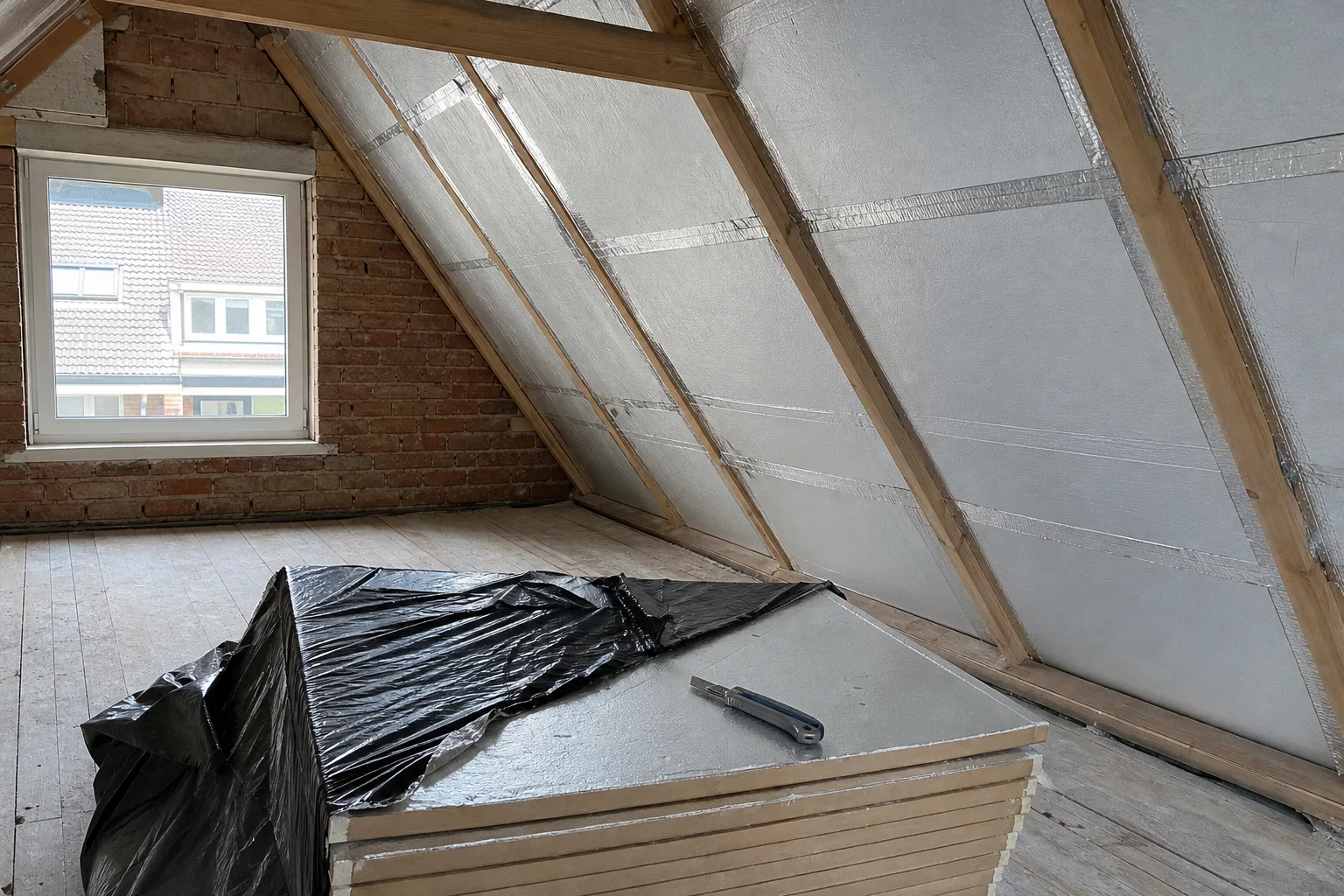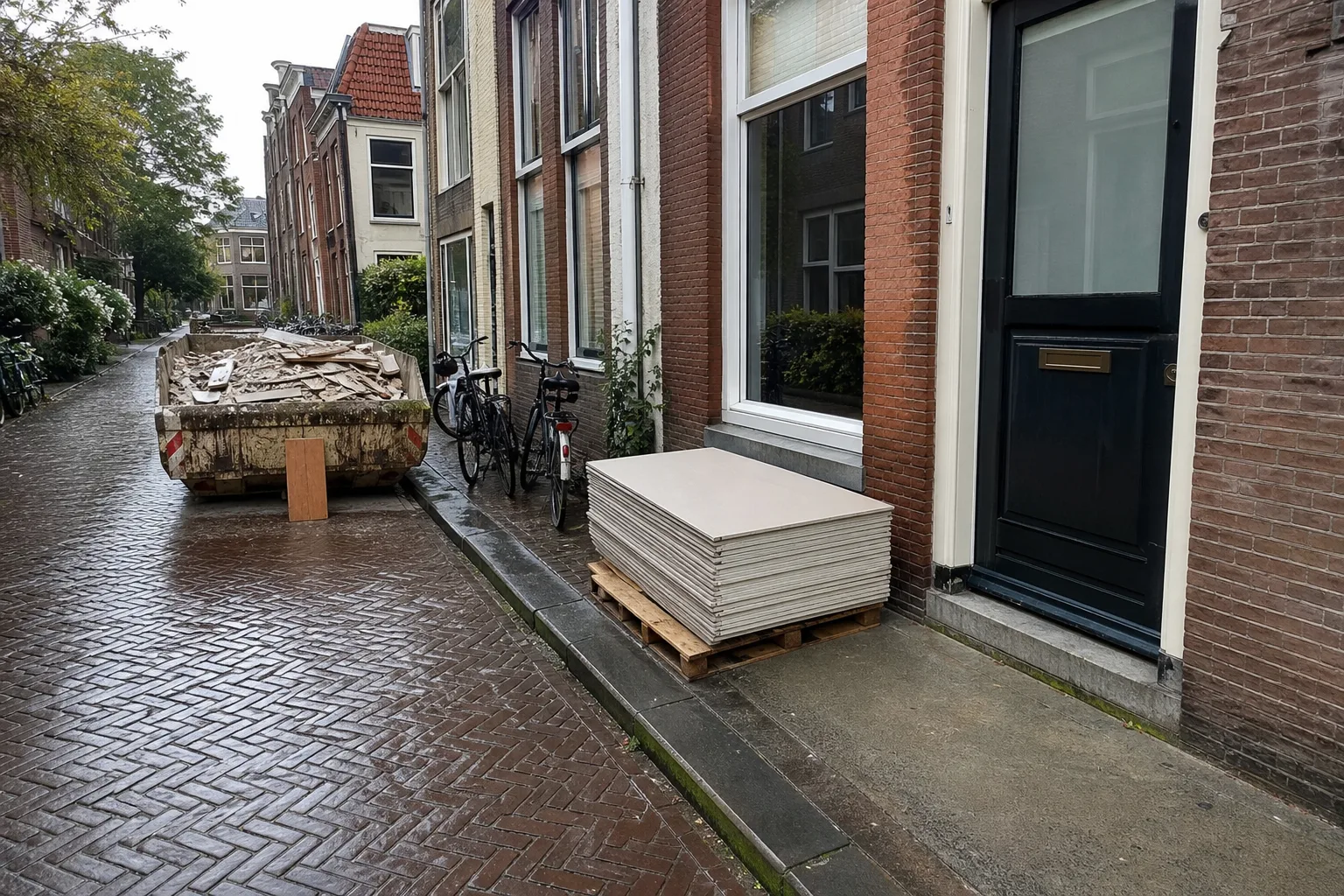
- Under the Bbl, a building company may work on weekdays and Saturdays from 7:00 to 19:00.
- The louder the noise at the neighbours' facade, the fewer days it may last.
- The gemeente can have its own policy rules for building noise.
- The Bbl rules cover professional work. For DIY, the gemeente can set rules.
- In an apartment, the VvE regulations may contain extra rules.
Working hours under the Bbl
Since the Environment and Planning Act came into force, the rules on building noise are in the Bbl. According to IPLO, the government information point, building work may only take place on weekdays and Saturdays between 7:00 and 19:00. The same window applies to demolition. So there is no building on Sundays or public holidays.
This rule applies to professional building work. If you do it yourself, your drill and hammer do not fall under these Bbl rules. The gemeente can include its own rules for non-professional work in its environment plan (omgevingsplan). So if in doubt, check your municipality's website. That also tells you what to expect when your neighbours start their own DIY project.
How long noisy work may last
The Bbl looks at how loud the work is, not just the time. The measure is the day value (dagwaarde): the average noise between 7:00 and 19:00 at the facade of a nearby home, school or care building. The higher the day value, the fewer days the work may last. Up to 60 dB(A) there is no limit on the number of days. Above 80 dB(A) it is not allowed at all.
An ordinary interior renovation rarely reaches the high values for long. Breaking out concrete, cutting into masonry or chipping off tiles can be loud for a while, though. That is why it makes sense to plan such work in one block, so the noise stays limited to a few days.
| Day value at the facade | Maximum number of days |
|---|---|
| up to and including 60 dB(A) | unlimited |
| more than 60 dB(A) | 50 days |
| more than 65 dB(A) | 30 days |
| more than 70 dB(A) | 15 days |
| more than 75 dB(A) | 5 days |
| more than 80 dB(A) | 0 days |
The role of the gemeente
The gemeente can set policy rules for building noise, covering the day value, the duration, the hours and the periods. According to IPLO, whoever carries out or commissions the work must then inform the gemeente at least two working days in advance if the work falls within those rules. If the work does not fit, the gemeente can allow more room with a tailored requirement (maatwerkvoorschrift), but it cannot be stricter than the Bbl.
For most home renovations this does not come up. It does matter for heavy breaking work, piling for an extension or work outside normal hours. The gemeente also controls the street: a skip, scaffolding or building lift on the public road needs a permit or exemption in many municipalities. Check your municipality's website, for example Amsterdam, for the rules at your address.
Tip from the trade: Apply for a skip or parking exemption well in advance. In city centres it can take a while, and without space at the door every delivery becomes a puzzle.
Demolition and asbestos
Demolition brings extra rules. According to IPLO, a demolition notice is needed if more than 10 m³ of demolition waste is produced or asbestos is removed. It must reach the gemeente at least four weeks before work starts.
Demolition falls under the same working hours as building work. It is often the noisiest and dustiest part of the whole renovation. Good screening with plastic sheeting, taped doors and dust extraction while cutting help keep the rest of the home and the stairwell clean.
Ze hebben in 1 week tijd de hele beneden verdieping stucwerk gerepareerd, geschilderd en gesausd tot volle tevredenheid. Netjes en accuraat gewerkt, flexibel geweest en vakwerk afgeleverd. Dus top.
Apartments: the VvE and the stairwell
In an apartment building there is another layer. Many VvEs have house rules on noise, for example hours for drilling or demolition, or rules on using the lift and stairwell. Under article 5:128 of the Dutch Civil Code, the owners' meeting can make rules on the use of shared parts of the building.
Read those rules before the schedule is fixed. Tell the board or managing agent about the work and agree how materials and rubble get in and out of the building. Protect the lift and stairs where needed. For more on apartments, read renovating an apartment in an owners' association.
Agreements with the neighbours
The law does not require you to inform the neighbours, but it helps a great deal. A note or a chat a week ahead, with the start, the duration and the noisy days, prevents most complaints. Neighbours who know the breaking work is on Tuesday and Wednesday can plan their working-from-home days around it.
Also give them a phone number for any problems. A complaint that goes straight to the contractor is solved faster than one that goes to the gemeente or the VvE.
- Start date and expected end date.
- The noisiest days, such as demolition and breaking work.
- Working hours and when materials will be delivered.
- A phone number for questions or complaints.
- Arrangements for the skip, parking and the stairwell.
Living in the home during the work
If you stay at home during the renovation, you hear the noise up close. If you work from home, plan to be elsewhere on the demolition and breaking days. Agree which room stays dust-free and how it is screened off. A bedroom with a closed door and plastic sheeting across the doorway already makes a big difference.
For expats new to the Netherlands, it helps to know that an early start at 7:00 is allowed under the rules. If you would rather the team started later, agree that in advance. For more on what is different about renovating here, read renovating as an expat in the Netherlands.
How Parus works in the city
We work in Amsterdam, Haarlem, Leiden, The Hague, Utrecht and the surrounding area, including city centres and apartment buildings. At the site visit we look at access, parking and the route through the building. It makes sense to group the noisy work together in the schedule and stay within the working hours. That keeps the impact on the neighbours limited.
There is plenty to gain within the permitted hours too. Cutting can often be done outside in one fixed spot instead of in the middle of the stairwell. Grinding masonry with dust extraction is quieter and cleaner than without. And materials delivered in one go mean fewer vans in the street and less carrying through the building. None of this is in any rule, but neighbours notice the difference.
Want to know how this would work at your home? First read the order of works in a renovation or get in touch. You will hear from us within 24 hours, and after a free site visit you get a quote with a schedule.
Frequently asked questions
What time can a contractor start?
Under the Bbl, a building company may work on weekdays and Saturdays between 7:00 and 19:00. The gemeente may have its own policy rules.
Can work be done on a Sunday?
Under the Bbl, professional building and demolition work does not take place on Sundays and public holidays. Exceptions are only possible through the gemeente.
Do these rules apply to DIY?
No, the Bbl rules are about professional work. Your gemeente may have rules for DIY in its environment plan.
Where can I complain about building noise?
Talk to the contractor first. If that does not help, contact the gemeente. In an apartment you can also involve the VvE board.
Do I need a permit for a skip?
Many municipalities require a permit or exemption for a skip on the public road. Check your municipality's website.
Renovation and finishing work from Roelofarendsveen: plastering, bathrooms, microcement, extensions, insulation, floors, electrics and plumbing. One point of contact from quote to completion. Questions? Call or WhatsApp +31 6 87 61 60 78.
Sources
- Noise rules for building work (IPLO, in Dutch)
- Demolition notification rules (IPLO, in Dutch)
- Dutch Civil Code Book 5, article 128 (wetten.overheid.nl, in Dutch)
- City of Amsterdam (English)
Rules change. Always check your own address with the Permit Check (Vergunningcheck) in the Omgevingsloket or with your municipality.