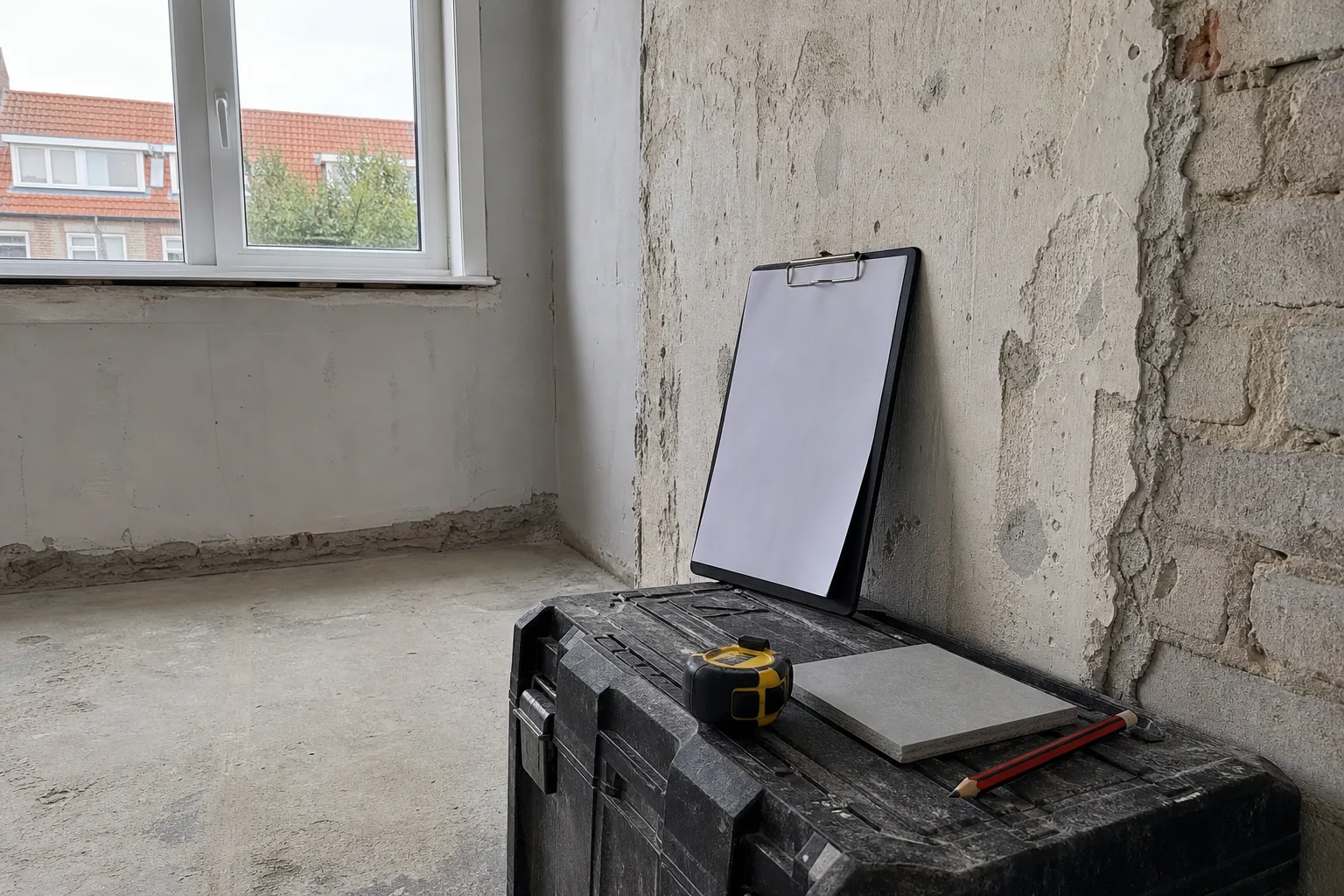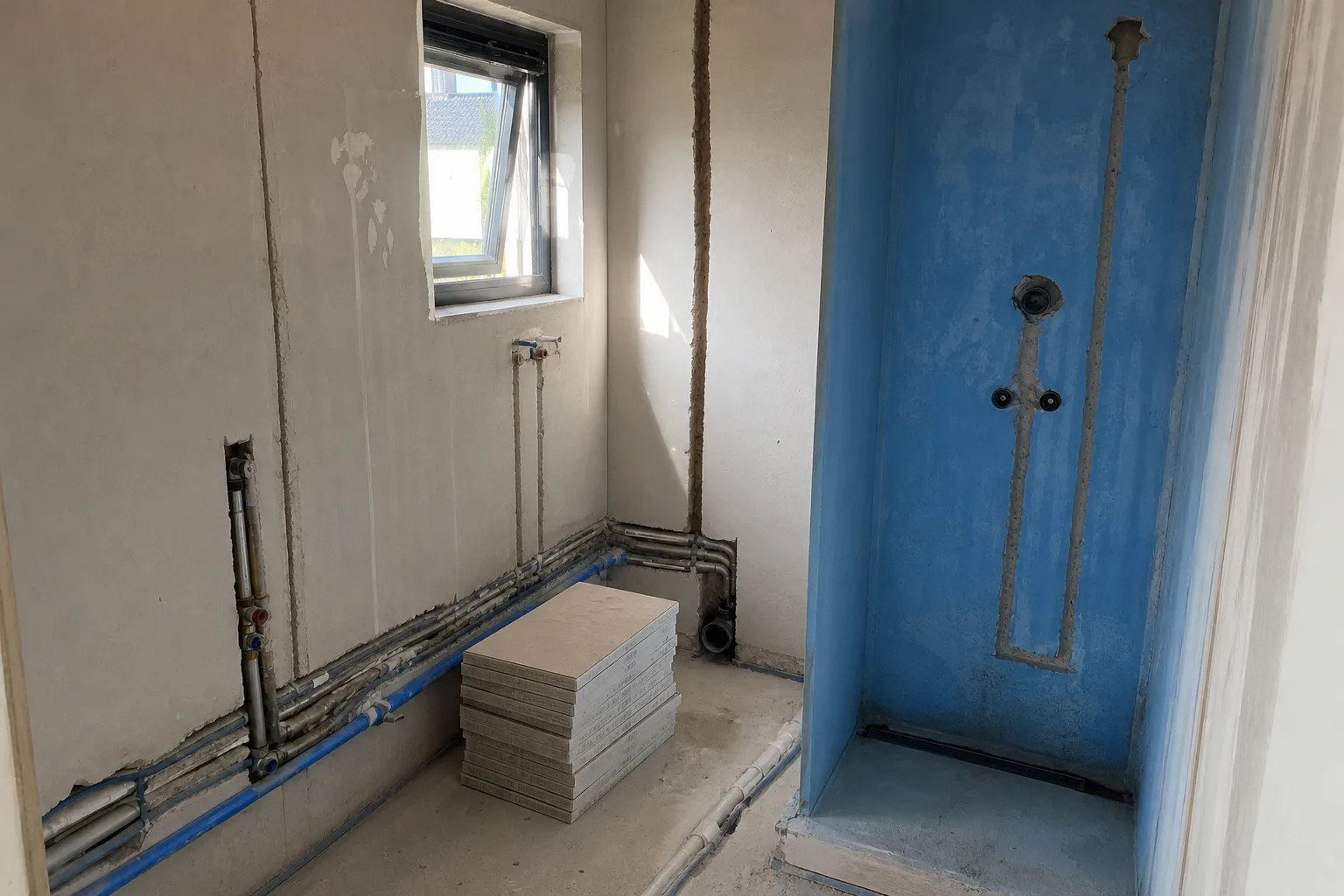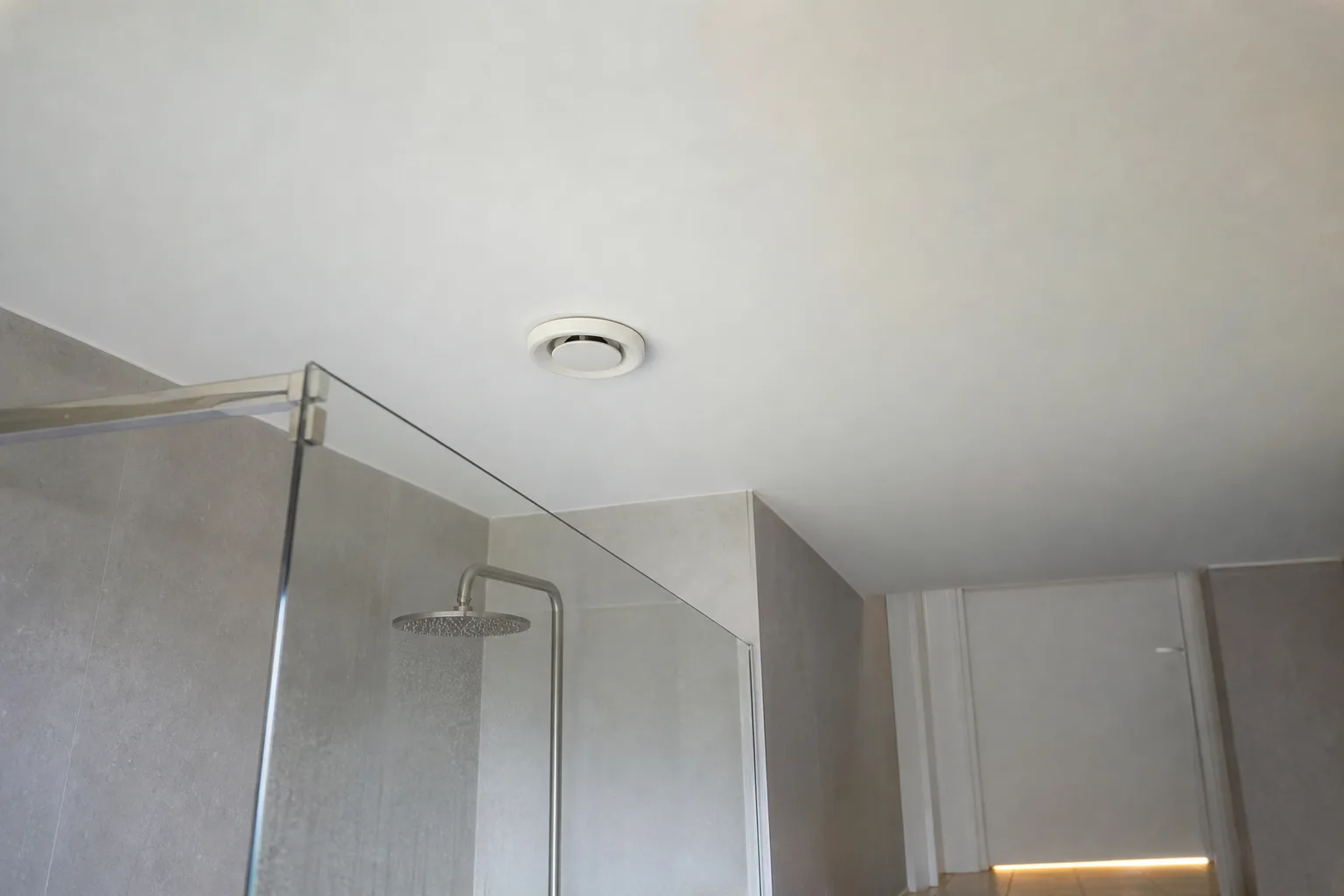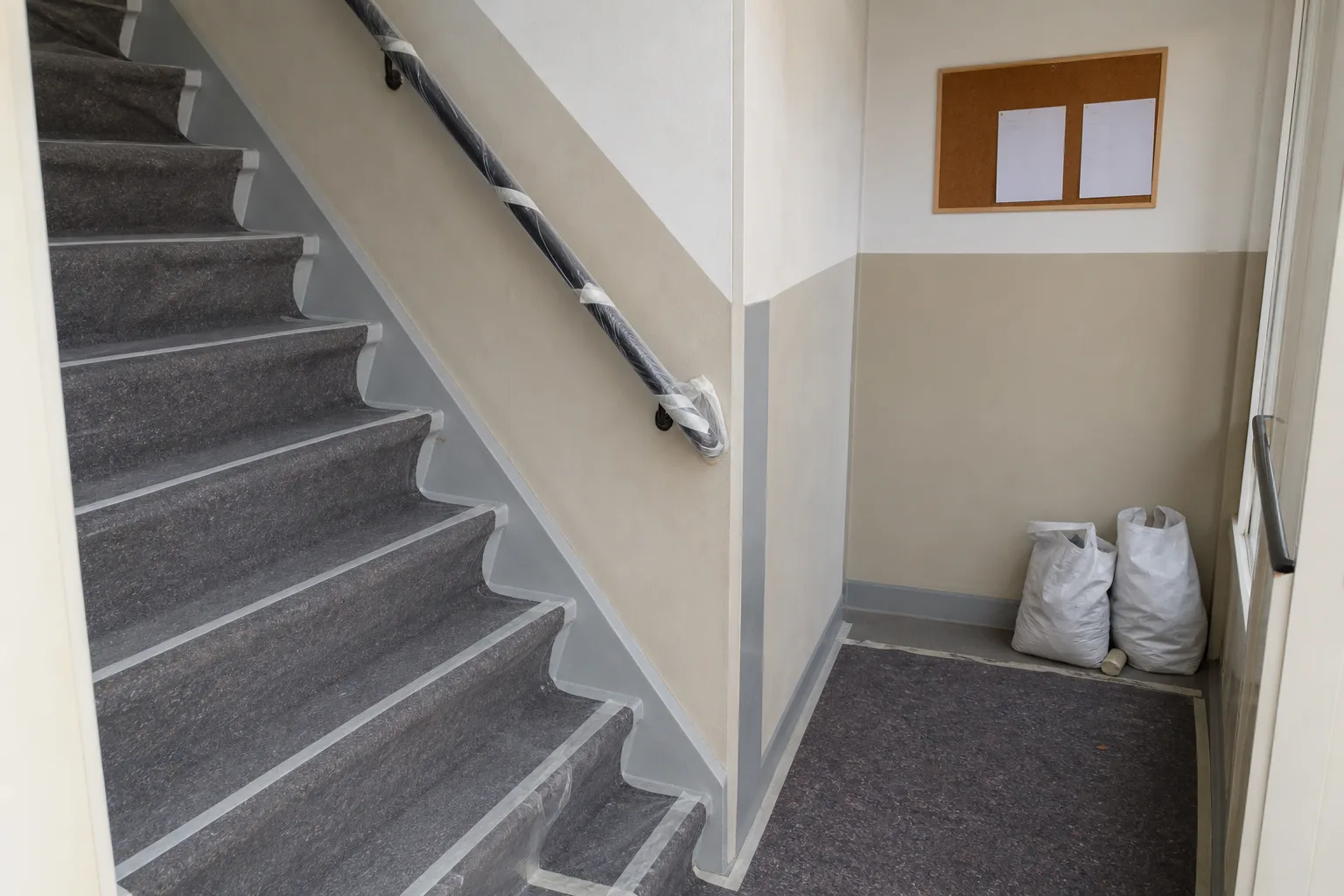
- As an apartment owner in the Netherlands you are automatically a member of the VvE.
- The deed of division (splitsingsakte), the division regulations (splitsingsreglement) and the house rules decide what is private and what needs consent.
- Soil stacks, ventilation ducts, the structure and the floor between homes are often shared parts.
- A hard tiled floor can carry more impact noise to the flat below. Many regulations set requirements for this.
- You prevent leaks with a pressure test, full waterproofing and clear agreements about the main stopcock.
What the VvE is and why it matters
As I amsterdam explains for expats, buying an apartment makes you a member of the VvE, and membership is mandatory. The association looks after the shared parts of the building. Each building can have extra rules in its deed of division and division regulations, and these rules are legally binding.
The Dutch government site adds that the majority decides within a VvE, but it has to take all owners' interests into account, and an owner can ask the subdistrict court (kantonrechter) to annul an unreasonable decision. For a bathroom renovation this means you have a lot of freedom inside your own apartment, but as soon as you touch something shared, or something that affects the neighbours, the VvE's rules apply.
Private or shared: check the deed
What belongs to you and what belongs to the VvE is set out in the deed of division and the division regulations. Many associations use a standard model regulation with their own additions. There is often also a set of house rules, the huishoudelijk reglement, with practical rules on working hours, the stairwell and the lift.
As a rough guide, in practice the sanitary ware, tiles and pipes inside your apartment are private, while the soil stack, the ventilation duct, the structural floor and load-bearing walls are shared. But this varies by building, so always read your own documents. If they are only in Dutch, ask the VvE manager for a summary of the relevant articles.
| Item | Usually | What it means |
|---|---|---|
| Sanitary ware, taps, tiles | Private | Your choice, within the regulations |
| Pipes inside your apartment | Private | You are responsible for leaks from them |
| Soil stack | Shared | Connection or replacement agreed with the VvE |
| Ventilation duct | Shared | No stronger fan without consent |
| Structural floor and load-bearing walls | Shared | Breaking, cutting or opening up needs consent |
When to ask for consent
Consent is often needed if you connect to or replace the soil stack, change the ventilation duct, cut into the structural floor for a walk-in shower, or change the floor build-up. Some regulations also require consent for a different floor finish, because of noise. If in doubt, ask the board or the managing agent.
Do it in writing and in good time. Describe what you want to do, when, and how you will limit nuisance and damage. A quote that describes the work and the floor build-up in concrete terms helps here. Sometimes a decision has to wait for the members' meeting. Plan for that, so your start date does not slip.
Separate from the VvE, some work can also need a permit, for example in a listed building or when the structure changes. Use the permit check in the Omgevingsloket, the national Environment and Planning Portal. VvE consent does not replace a permit, and the other way round.
Tip from the trade: Ask the managing agent whether there are earlier decisions about bathrooms or floors. If neighbours have done something similar, the requirements are often already set.
Ze hebben in 1 week tijd de hele beneden verdieping stucwerk gerepareerd, geschilderd en gesausd tot volle tevredenheid. Netjes en accuraat gewerkt, flexibel geweest en vakwerk afgeleverd. Dus top.
Noise: during the work and afterwards
Strip-out is the loudest part of the job. Chipping tiles off a wall and removing an old screed can be heard through the whole building. Many house rules set working hours. Plan the noisy work within them and keep it as short and concentrated as possible. Put a note up in the stairwell or speak to the direct neighbours beforehand. It saves a lot of irritation.
After the work, it is the lasting noise that counts. A hard tiled floor carries more impact noise downwards than an old floor with vinyl or timber. That is why many associations ask for a floor build-up with a sound-damping layer. Waste pipes can also be noisy, so new pipes are best wrapped and fixed with rubber-lined clips.
If you replace a ventilation unit, Dutch rules for renovation set limits on installation noise in habitable rooms, see IPLO on installation noise (in Dutch). So choose a quiet fan that is properly fixed.
Preventing leaks into the flat below
A leak in an apartment shows on the neighbours' ceiling within a day. The cause is almost always in one of three places: a leaking joint inside the wall, water soaking through the grout around the shower, or a poor connection to the waste.
So ask for a pressure test on the water pipes before the wall is closed. The waterproofing belongs in the whole wet zone, with sealing tape in every corner and collars around penetrations, and the drain is bonded into the membrane. How this works is in waterproofing and sealing tape.
- Agree who may close the main stopcock, and where it is.
- Tell the neighbours in advance when the water goes off, if a shared pipe is involved.
- Have the pressure test and waterproofing photographed before they are covered.
- Check which insurance covers what: yours, the VvE's and the contractor's. Parus is fully insured.
Practical matters: stairwell, lift and waste
Materials and demolition waste go through the stairwell or the lift. Agree that floors, stairs and lift walls are protected and that the work area is kept tidy. A skip on the street needs arrangements with the gemeente (municipality) and sometimes with the VvE. We remove the building waste; agree in advance where and when loading and unloading happen.
If your apartment is in an older building with a narrow staircase, we measure it during the survey. Large tiles or a glass shower panel have to make it round the turn. More on that in small bathroom in an Amsterdam apartment.
The order of work in an apartment
The order of work in an apartment is the same as in a house: survey, design, strip-out, pipes and wiring, floor and walls, waterproofing, tiles and fittings. The difference is in the preparation: VvE consent, agreements with the neighbours and planning the noisy work. The full sequence is in bathroom renovation step by step.
At Parus you have one point of contact. Stas does the survey and keeps the schedule on track. Ask for a quote that describes the work clearly enough to submit to the VvE. More about our approach is on bathroom renovation, or ask straight away for a free quote.
Frequently asked questions
Do I always need VvE consent for a new bathroom?
Not always. Work inside your own apartment is often fine without it, but work on shared parts, the floor build-up or the ventilation usually needs consent. Your division regulations decide.
What if the VvE says no?
Ask why and see whether an adjusted plan would work. If you think the decision is unreasonable, an owner can ask the subdistrict court to annul it. Get legal advice on that.
Can I lay a tiled floor in my apartment?
Often yes, but many regulations set limits on impact noise. A floor build-up with a sound-damping layer usually solves it. Check your regulations.
Who pays if water leaks into the flat below?
That depends on the cause and the insurance policies. If a pipe inside your apartment leaks, it is usually your responsibility. If in doubt, let your insurer look into it.
Which documents does the VvE usually want to see?
Usually a description of the work, the floor build-up and the schedule. A detailed quote helps. You submit the request to the board or the managing agent yourself.
Renovation and finishing work from Roelofarendsveen: plastering, bathrooms, microcement, extensions, insulation, floors, electrics and plumbing. One point of contact from quote to completion. Questions? Call or WhatsApp +31 6 87 61 60 78.
Sources
- Everything you need to know about Vereniging van Eigenaren (I amsterdam)
- What is a VvE? (Rijksoverheid, Dutch)
- Installation noise: renovation rules (IPLO, Dutch)
- Permit check (Omgevingsloket)
Rules change. Always check your own address with the Permit Check (Vergunningcheck) in the Omgevingsloket or with your municipality.