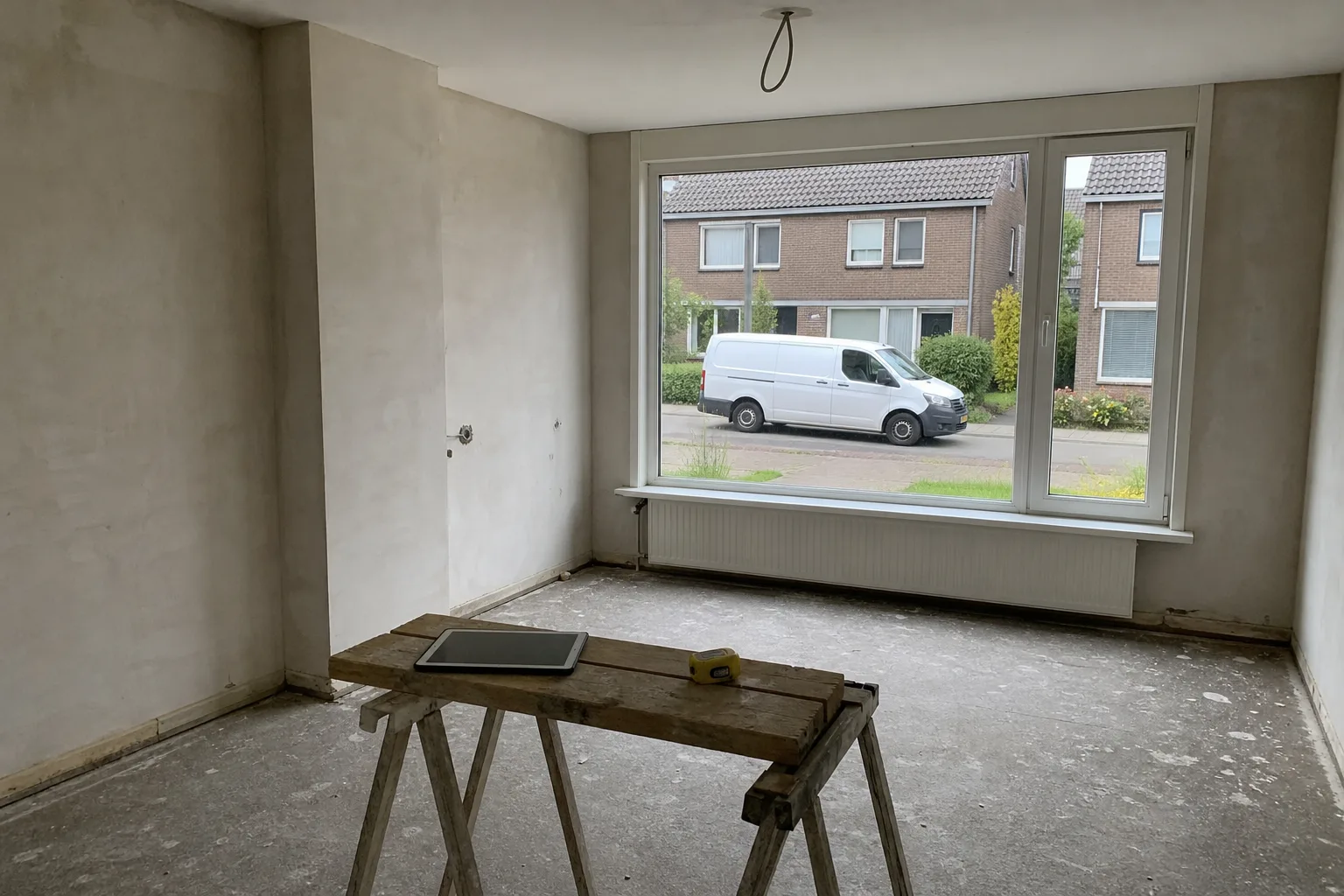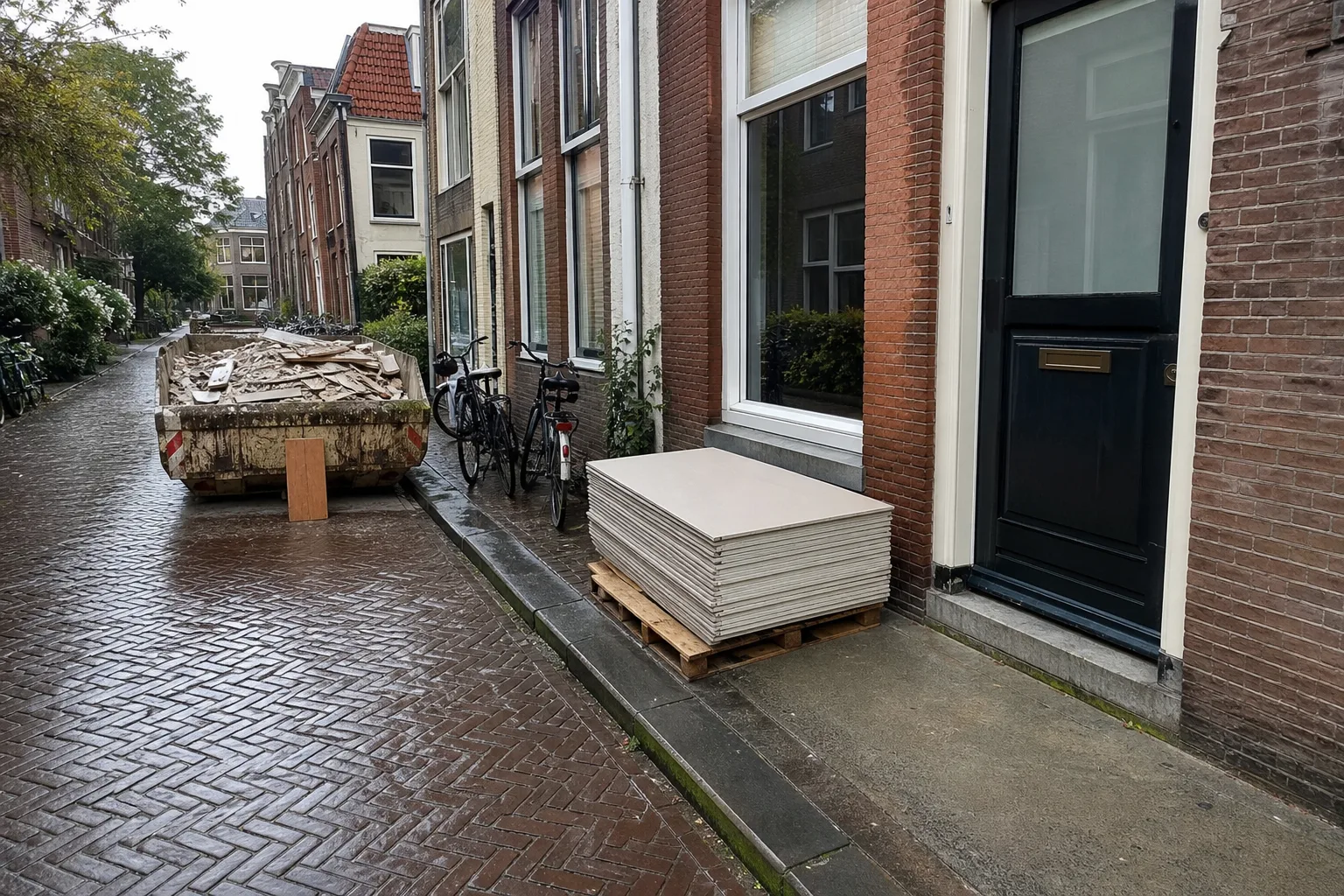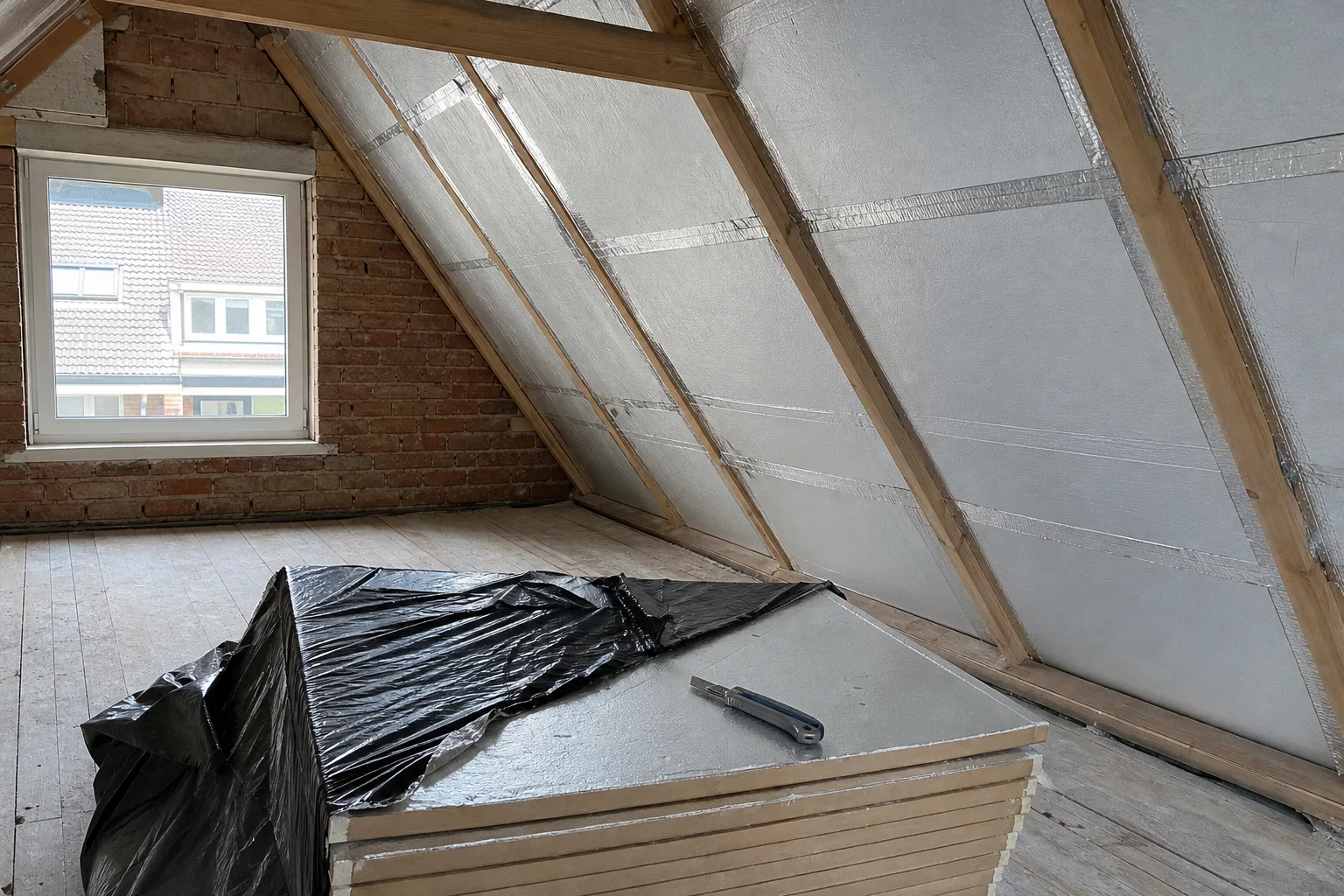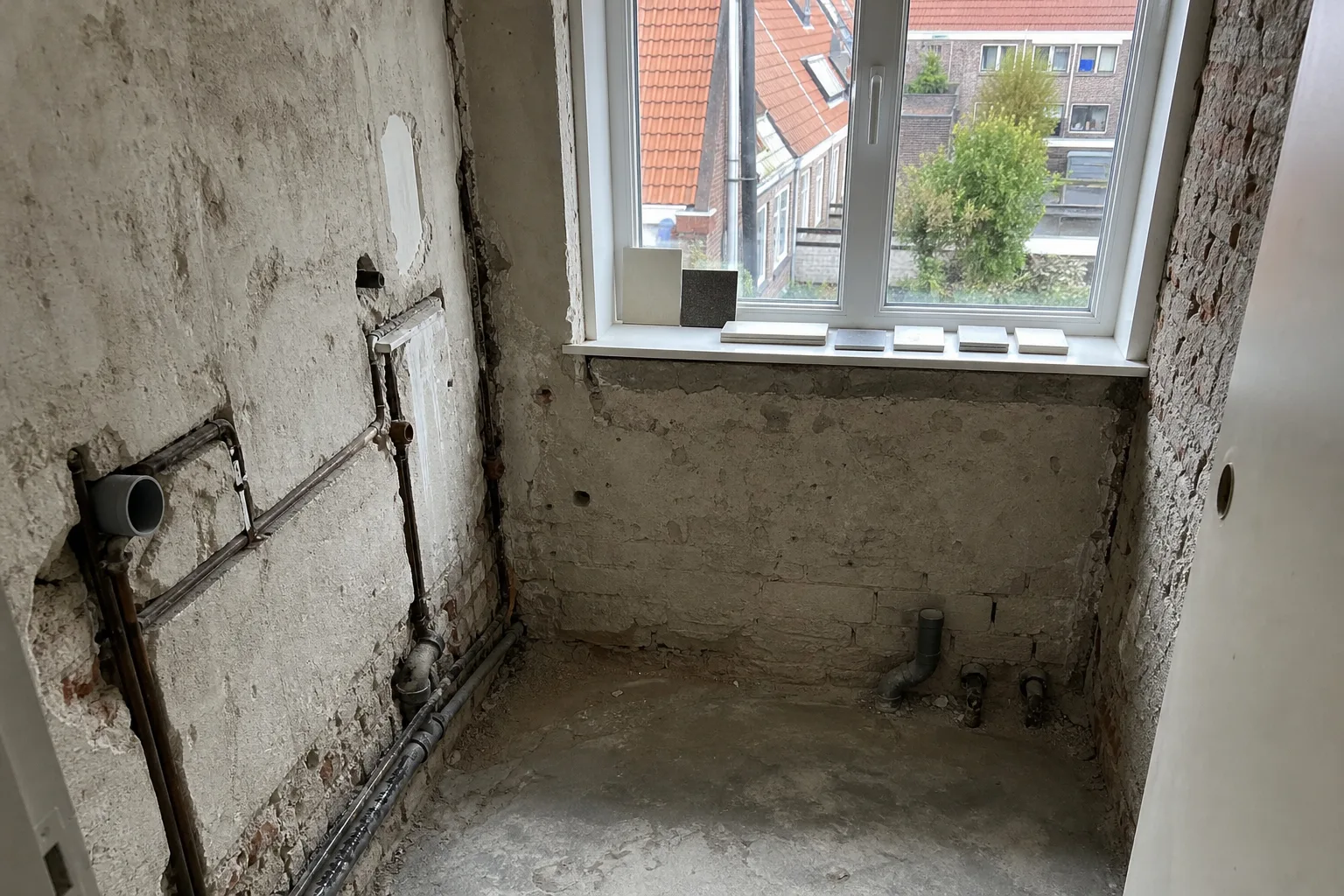
- Size matters, but the condition of the substrate often matters just as much.
- Moving pipes and electrics costs more than renewing them in the same place.
- Materials and level of finish are where you have the most choice.
- Access, floor level and parking decide how much time goes into deliveries.
- The VAT rate differs by type of work: 9 or 21 percent.
Scope and quantities
The first factor is the obvious one: how much is being done. The square metres of wall to be plastered or tiled, the floor area, the number of rooms. But area alone says little. A small bathroom with tiles to the ceiling, a walk-in shower and concealed taps can be more work than a large bathroom with a simple layout.
So at the site visit we look at quantities and at complexity. How many corners, niches and connections are there? Is there a sloping roof to work around? The more detail, the more hours per square metre.
Combining work can actually save. If you renovate the bathroom and have the toilet and hallway plastered at the same time, you pay once for setting up, screening off and removing rubble. Separate jobs at different times each need fresh preparation. So it is wise to mention at the site visit everything you plan for the coming years, even if you do not want it all done straight away.
The condition of the substrate
What lies beneath the finish decides how much preparation is needed. A straight, dry wall can be plastered almost straight away. An old wall with cracks, loose lime or damp must be repaired first. A timber floor that flexes must be stiffened before tiles can go on. A concrete floor that is out of level must be levelled before parquet or vinyl.
The year of construction tells a lot. Homes built before 1994 may contain asbestos. According to IPLO, the government information point, demolition work in such buildings requires an asbestos survey. That is a fixed step that takes time and money, but not one you want to skip.
Tip from the trade: If you suspect damp or structural cracks, have the cause investigated first. A new finish on a wall that keeps getting wet will not last.
Services: move or renew
Plumbing and electrics are a large item, and the difference lies in location. Renewing a toilet, shower or basin in the same place is relatively simple. Moving it means new drains with enough fall to the soil stack, chases in walls or floors, and sometimes a raised floor. The further from the soil stack, the more work.
Electrics work the same way. Extra sockets, spotlights or an induction hob sometimes need new circuits in the meter cupboard or a heavier connection. With a boiler, radiators or underfloor heating, the condition of the existing system plays a role. See our plumbing service for the options.
Materials and level of finish
This is the factor you influence most. Tiles, sanitary ware, taps, floors and paint come in many price ranges. How they are applied matters too. Large tiles need a flatter substrate than small ones. Microcement has no joints, but it is built up in several layers with drying time. A herringbone floor takes more time than straight boards.
A common mistake is saving on what you will not see later. Waterproofing in a bathroom, the underlay beneath parquet and the preparation of a wall are where savings backfire. Saving on a tap or a tile is fine, as those are easier to replace later. Read more on our bathroom renovation page.
Met dit bedrijf werk ik niet voor het eerst samen. Ze hebben voor mij verschillende werkzaamheden uitgevoerd, zoals het vervangen en maken van deuren, het realiseren van een aanbouw en het uitvoeren van binnenrenovaties. De jongens zijn zeer verantwoordelijk, en vooral Stanislav geeft altijd goede adviezen.
Access and surroundings
A renovation on the ground floor of a detached house with a driveway is different from a fourth-floor apartment in central Amsterdam without a lift. Everything has to go up and the rubble has to come down. Parking can be limited or expensive, and a skip on the street needs a permit or exemption in many municipalities.
In an apartment the VvE (owners' association) rules may also play a part, for example on working hours or use of the lift. That costs no money directly, but it affects planning. Our article on building hours and noise in the city explains more.
| Factor | What pushes the price up | What keeps it down |
|---|---|---|
| Substrate | Cracks, damp, uneven floors, asbestos | Straight, dry and solid surfaces |
| Services | Moving pipes and electrics | Renewing in the same place |
| Materials | Large formats, custom work, complex patterns | Standard sizes, simple application |
| Access | High floor without a lift, no parking | Ground floor, space at the door |
| Planning | Rush, separate phases, late choices | Choices made early, one continuous schedule |
Rules, VAT and planning
Some things cost money without you seeing anything: a permit, structural calculations, a demolition notice or an asbestos survey. They belong in the budget. VAT differs as well. According to the Belastingdienst, the Dutch tax authority, insulating, painting, plastering and wallpapering homes older than two years carry 9 percent, and for insulation only on labour. Other work is at 21 percent. More in VAT and subsidies for renovation.
Planning counts too. Work done in one continuous schedule is more efficient than work split into separate parts, because there is less setting up, screening off and clearing away. Choices made late or changed halfway often lead to extra work.
Living in during the work, and the season
If you stay at home, there is more screening off and cleaning up, and sometimes a temporary facility is needed, such as a makeshift kitchen or a working shower on another floor. That takes hours that would not be needed in an empty home. Staying elsewhere for a week during demolition and the rough work can shorten the whole project.
The season plays a part too. In winter, drying times for plaster and screed are longer, and outdoor work on a facade or extension depends more on the weather. In busy periods material delivery times can be longer. A flexible start date gives more room in the schedule. Custom items, such as a made-to-measure window frame or a special tile, often take longer to deliver than standard materials, and the schedule has to allow for that.
How to reach a fair price
A reliable price starts with a site visit. After that, Parus gives you a quote with all work written out, so you can see what the price is made of. If you want to save, we can show which choices make the most difference without hurting the result. How to read a quote is explained in reading and comparing renovation quotes.
One client wrote about a large renovation with us, where the work grew considerably along the way: "The guys worked hard and met the deadline regardless that we had to almost double the amount of work from the initial estimation." Want to know what applies to your home? Get in touch. You will hear from us within 24 hours, and after the site visit you get a free quote with no obligation.
Frequently asked questions
Why do you not show prices on your website?
Because the price depends mostly on what we only see at a site visit, such as the substrate, the pipes and access. A figure without a visit would confuse more than help.
What is the biggest cost factor in a bathroom?
Often moving pipes and drains, followed by the condition of floor and walls and the chosen materials.
Can I save by doing the demolition myself?
Sometimes, but agree it in advance. In homes built before 1994 care is needed because of possible asbestos, and careless demolition can create extra repair work.
Is one contractor for everything more expensive?
Not necessarily. One schedule for all trades avoids waiting time and duplicated work between trades.
When do I get a price?
After the site visit you get a detailed quote with all costs of the work, free and without obligation.
Renovation and finishing work from Roelofarendsveen: plastering, bathrooms, microcement, extensions, insulation, floors, electrics and plumbing. One point of contact from quote to completion. Questions? Call or WhatsApp +31 6 87 61 60 78.
Sources
- Asbestos survey duty under the Bbl (IPLO, in Dutch)
- VAT rate for work on homes older than 2 years (Belastingdienst, in Dutch)
Rules change. Always check your own address with the Permit Check (Vergunningcheck) in the Omgevingsloket or with your municipality.