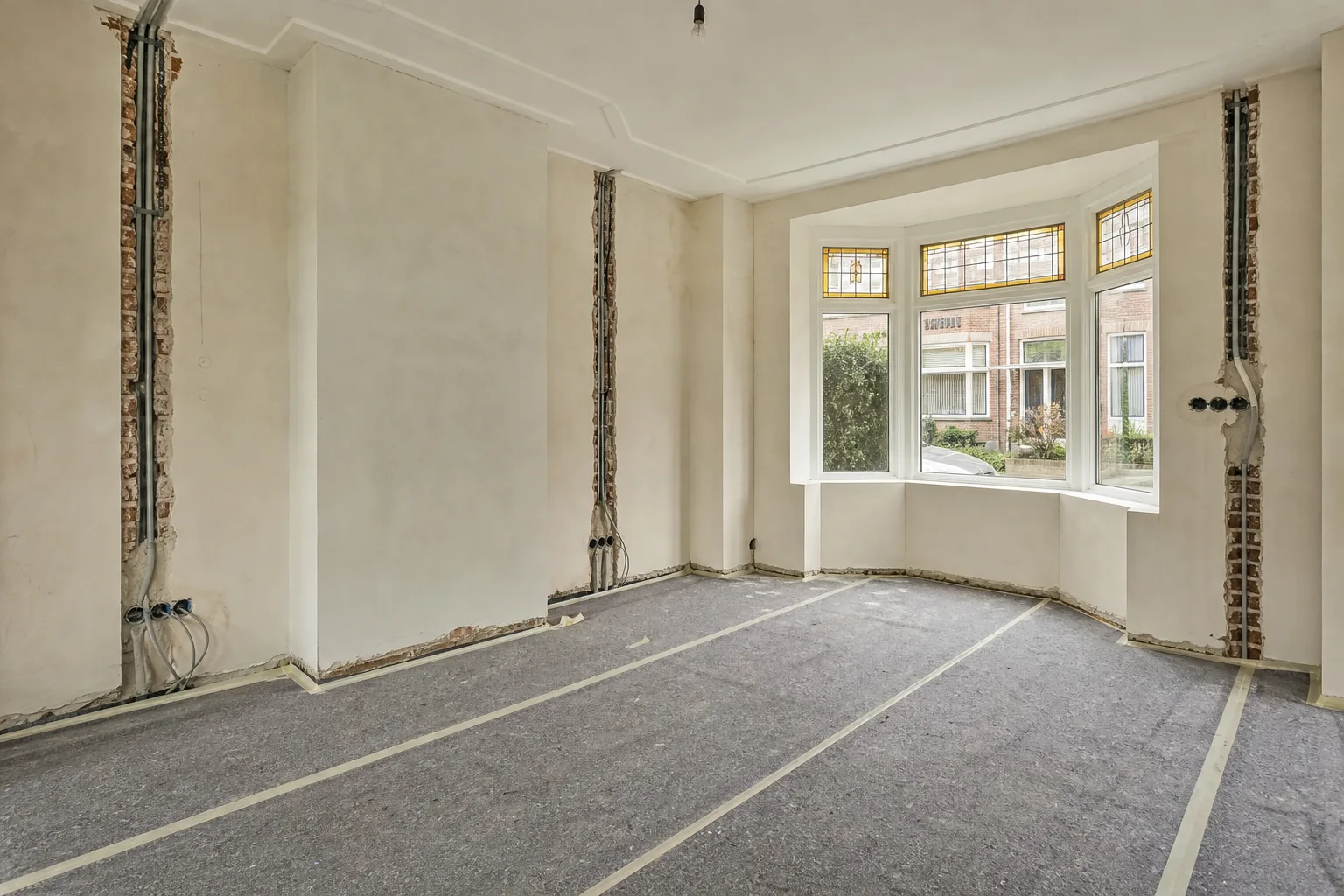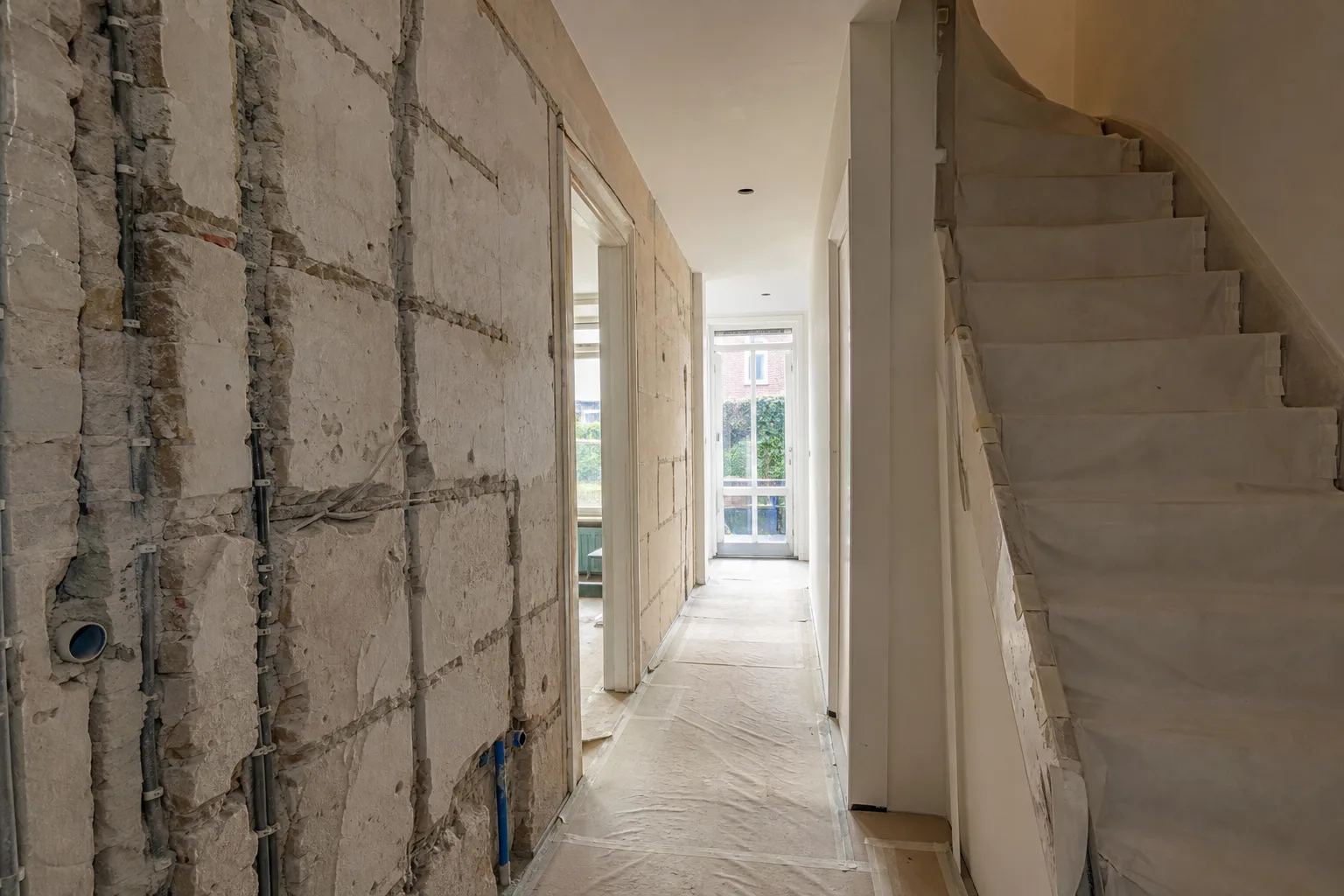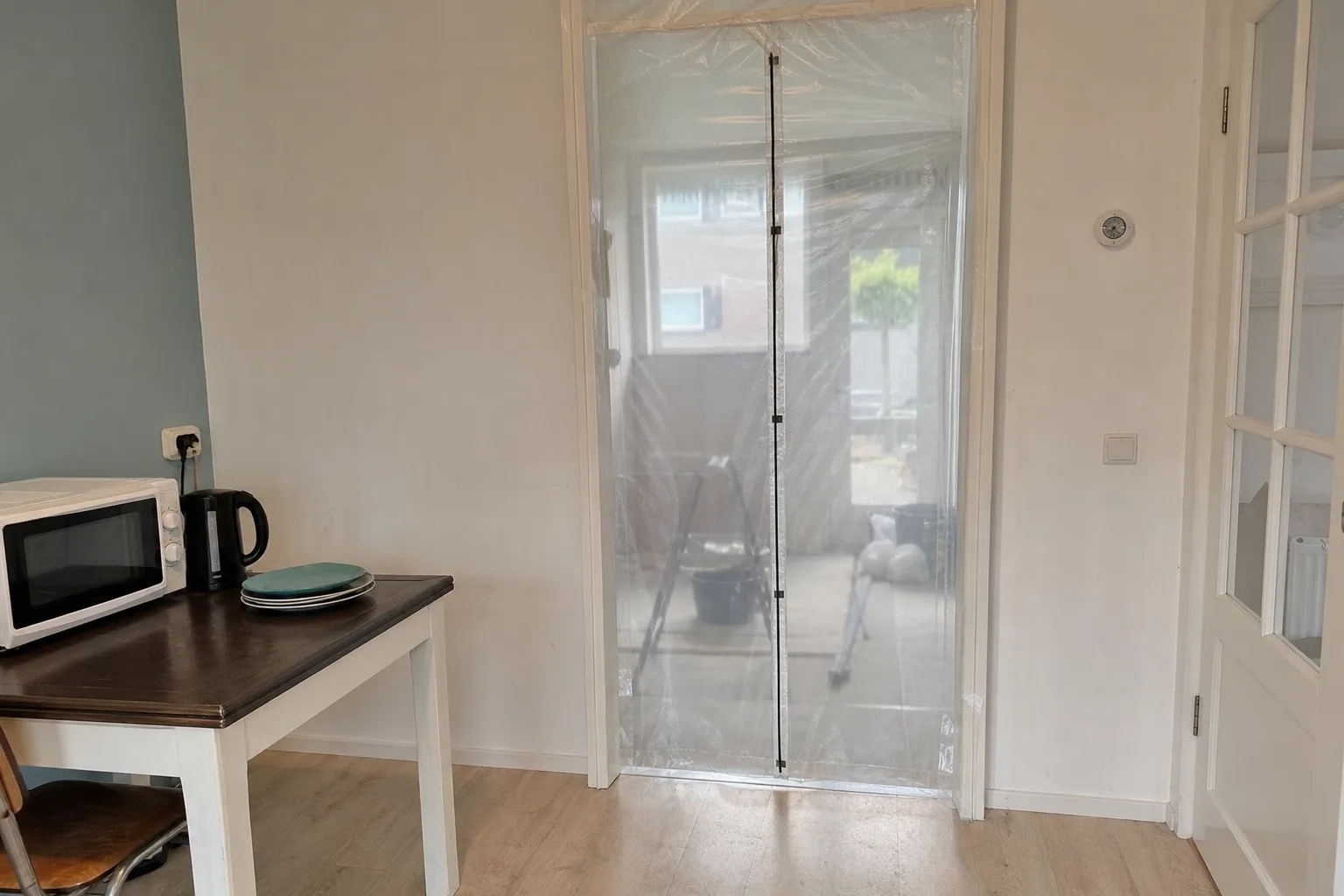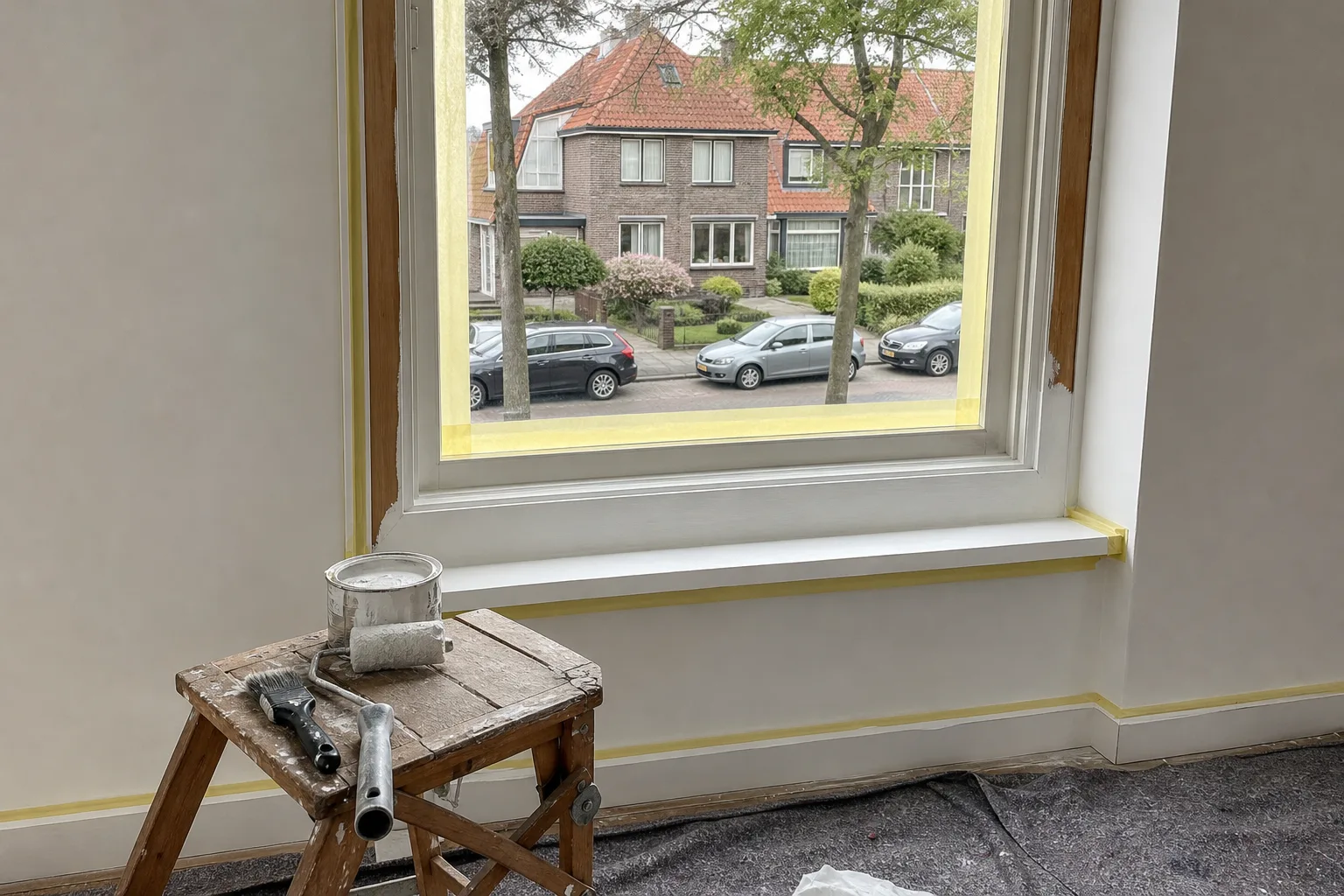
- Preparation decides the result: sanding, filling, degreasing and priming.
- Indoors a water-based paint usually suits. Milieu Centraal advises ventilating during and after painting.
- New plaster must be dry before it is painted.
- Paint outside in dry weather, not in strong sun and not in the cold.
- Painting work on a home more than 2 years old is charged at 9% VAT.
Walls, woodwork and lacquer
Dutch painters use three words. Sauzen means applying emulsion to walls and ceilings, usually with a roller. Schilderen is mostly used for woodwork such as doors, frames and skirting boards. Lakken means applying a hard, often glossy coat to that woodwork. Each needs a different paint and different preparation.
For walls and ceilings you usually choose a matt or eggshell emulsion. Matt hides small imperfections, while eggshell is easier to wipe clean and suits a kitchen, hallway or child's room. For woodwork you choose a paint that can take knocks and cleaning.
| Surface | Usual finish | Watch out for |
|---|---|---|
| New plaster | Primer plus two coats of emulsion | Let it dry properly first |
| Existing painted wall | Clean, touch up, one or two coats | Old paint must be sound |
| Internal doors and frames | Sand, prime, top coat | Degrease around handles |
| External frames and fascias | Repair timber, prime, two coats of exterior paint | Dry weather, no strong sun |
Preparing indoors
A wall that looks good after painting was made flat beforehand. Cracks and holes are filled, joints sealed where needed, and bumps sanded down. Then the wall is cleaned of dust. Paint does not stick well to a greasy or dusty surface, and you see that later as flaking or patches.
New plaster must be dry first. Painting a damp wall leaves patches and can peel later. How long drying takes depends on the thickness, the temperature and the ventilation. Then a primer evens out how much the wall absorbs, so the paint goes on evenly. Read more about the base on our plastering page.
- Furniture out or in the middle, covered.
- Floor, skirting, frames and sockets masked and covered.
- Cracks and holes filled, left to dry and sanded flat.
- Dust removed, greasy spots degreased.
- Primer on new or very absorbent surfaces.
Choosing paint and ventilating
Indoors, water-based paint is the better choice. Milieu Centraal, the Dutch independent consumer information body on environment and energy, recommends it because it contains fewer harmful substances than paint with a lot of organic solvents. Water-based paint still gives off fumes, so ventilating during and after painting matters: open the windows or turn the mechanical ventilation up.
There are good water-based paints for indoor woodwork too, including doors and frames. Where there is heavy wear, such as stair rails, a harder paint may be better. We discuss that item by item. Do not rinse leftover paint or brushes down the sink, because it pollutes the water. Leftover paint belongs with small chemical waste, which your municipality collects.
Tip from the trade: Choose the colour in daylight and in the light you use in the evening. Paint a sample of at least half a square metre on the wall and live with it for a day.
Ceilings, stairwells and awkward spots
A ceiling is the hardest surface in the house. Low light from a window shows every stripe and bump. That is why we paint a ceiling wet on wet, in one go from wall to wall, and roll the final coat towards the light. For large or high ceilings, spray plaster may be a better choice than paint; we discuss that at the survey.
A stairwell needs scaffolding or a stable stair platform, because the walls are high and the stairs are in the way. In a bathroom and kitchen you choose a paint that can handle moisture and cleaning. And around frames and skirting boards, a neat line of sealant makes the difference between tidy and truly finished.
We zijn heel erg tevreden. Hele aardige man en echt vakwerk afgeleverd. Alles keurig netjes achtergelaten!
Exterior painting
Exterior paint protects first and looks good second. Timber frames, doors, fascias and bargeboards take a beating from rain, sun and changes in temperature. Where the paint cracks, moisture gets into the wood and rot starts. So good exterior painting begins with an inspection: where is the wood soft, where is the paint coming away, where does water sit on a sill?
Rotten patches are cut out and repaired with a timber filler or a new piece of wood. Then comes sanding, priming and two top coats. Sealant around glass and joints is renewed where needed. A rendered or insulated facade needs a different approach, with a paint that lets moisture out.
The right time to paint outside
Paint outside in dry weather, on a dry surface. Too cold is no good, because the paint dries poorly. Strong sun on a dark frame is no good either, because the paint dries too fast and can blister. In the Netherlands spring to early autumn is usually the best period, but the day itself matters most.
So plan exterior painting with some slack. If it rains for a week, the work moves. That is better than painting wet wood, which will peel again within a few years.
Listed buildings, owners' associations and VAT
If you live in a listed building or a protected townscape, changing the colour of the facade or frames can need a permit. Repainting in the same colour counts as routine maintenance for a national monument. Read more in renovating a listed building. In a block of flats, the owners' association (VvE) usually decides on exterior painting, often with a fixed colour.
According to the Dutch Tax Administration (Belastingdienst), painting work on a home more than 2 years old is charged at the reduced VAT rate of 9%. That includes the preparation and the materials used. If it is combined with other work, the parts are listed separately on the invoice.
Painting as part of a renovation
In a renovation, painting comes at the end, after plastering, tiling and laying the floor. Our guide to the order of works explains why that order is fixed. At Parus Construction, painting follows straight on from the plastering. We fill cracks, sand the surface and apply several coats for full coverage, and we cover furniture and floors.
One client wrote in a Google review (in Dutch) that in one week we repaired the plaster throughout the ground floor and painted it, to his full satisfaction, working neatly, accurately and flexibly. Read more on our painting page. Get in touch for a free survey. We reply within 24 hours.
Frequently asked questions
How long must new plaster dry before painting?
It depends on the thickness, temperature and ventilation. Painting a damp wall leaves patches. We check on site whether the wall is dry enough.
Is one coat of emulsion enough?
On an existing wall in the same colour, sometimes. On new plaster or with a colour change you usually need two coats for an even finish.
Can I stay at home while painting is done?
Usually yes. Ventilate well during and after the work, and preferably do not sleep in a freshly painted room.
When is the best time for exterior painting?
In dry weather on a dry surface, without strong sun or cold. In the Netherlands spring to early autumn is usually best.
What does painting cost?
It depends on the area, the condition of the surface, any timber repair and access. After a survey you get a free quote.
Renovation and finishing work from Roelofarendsveen: plastering, bathrooms, microcement, extensions, insulation, floors, electrics and plumbing. One point of contact from quote to completion. Questions? Call or WhatsApp +31 6 87 61 60 78.
Sources
- Choosing the right paint (Milieu Centraal, Dutch)
- VAT rate for painting (Belastingdienst, Dutch)
- Ventilating your home (Milieu Centraal, Dutch)
Rules change. Always check your own address with the Permit Check (Vergunningcheck) in the Omgevingsloket or with your municipality.