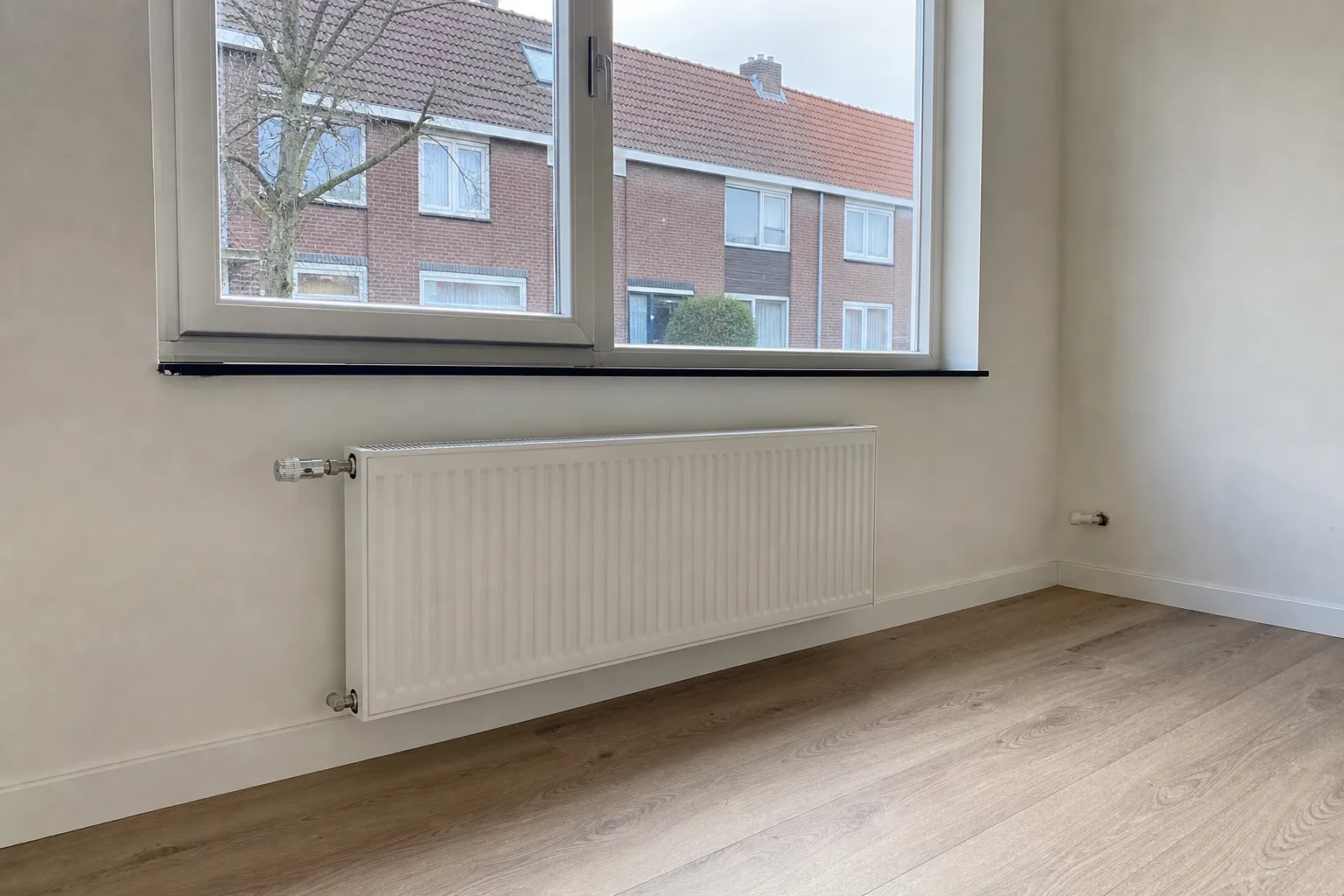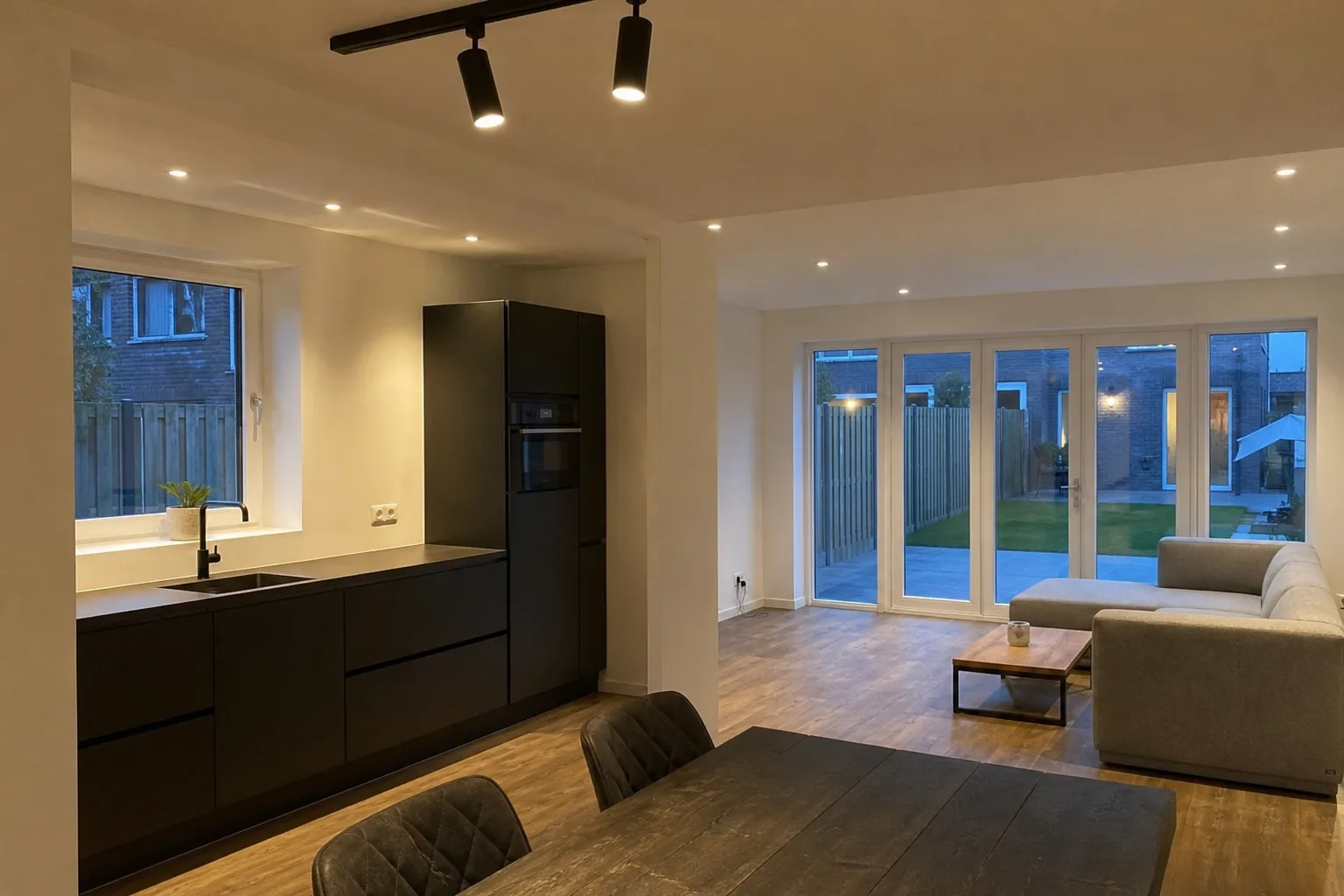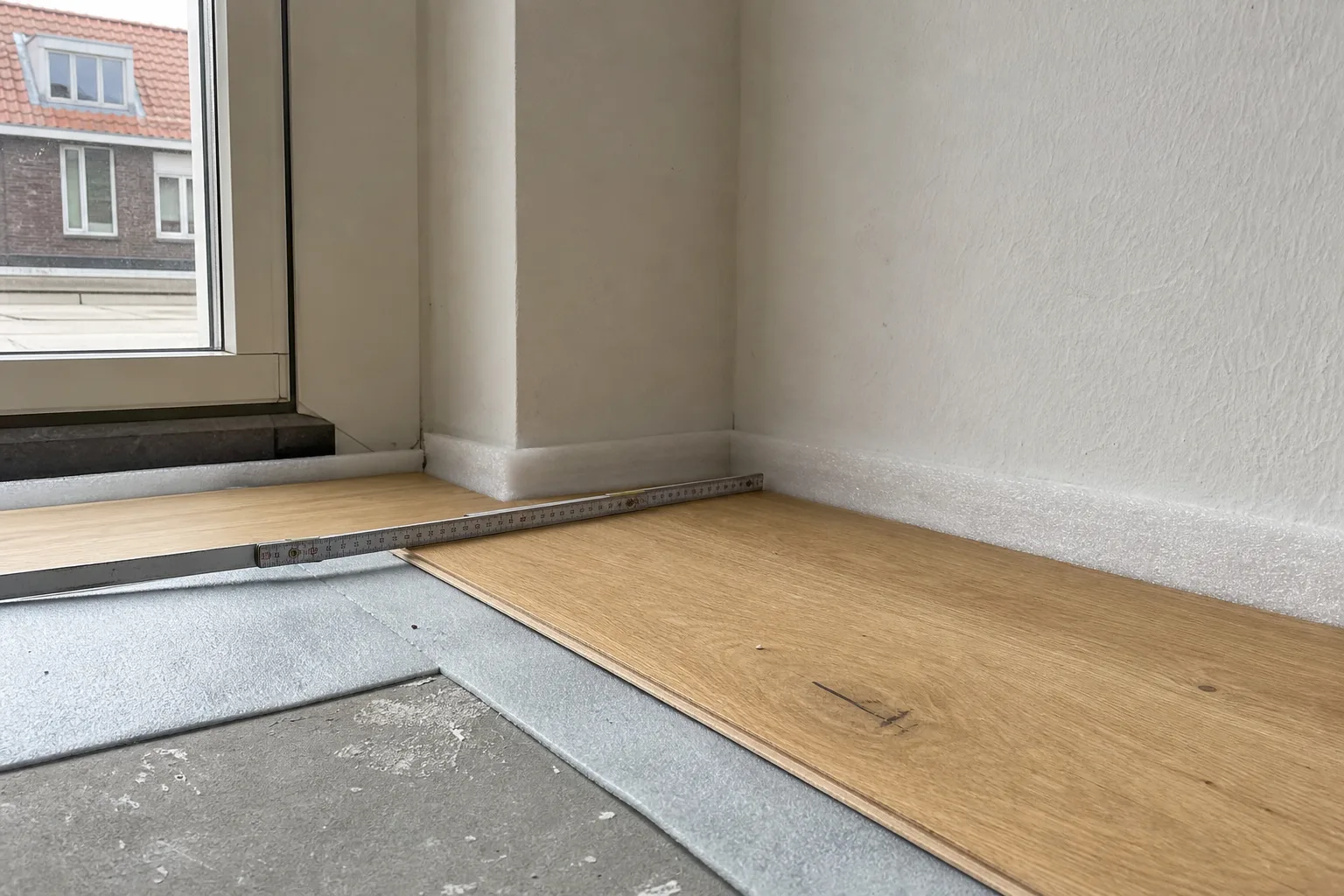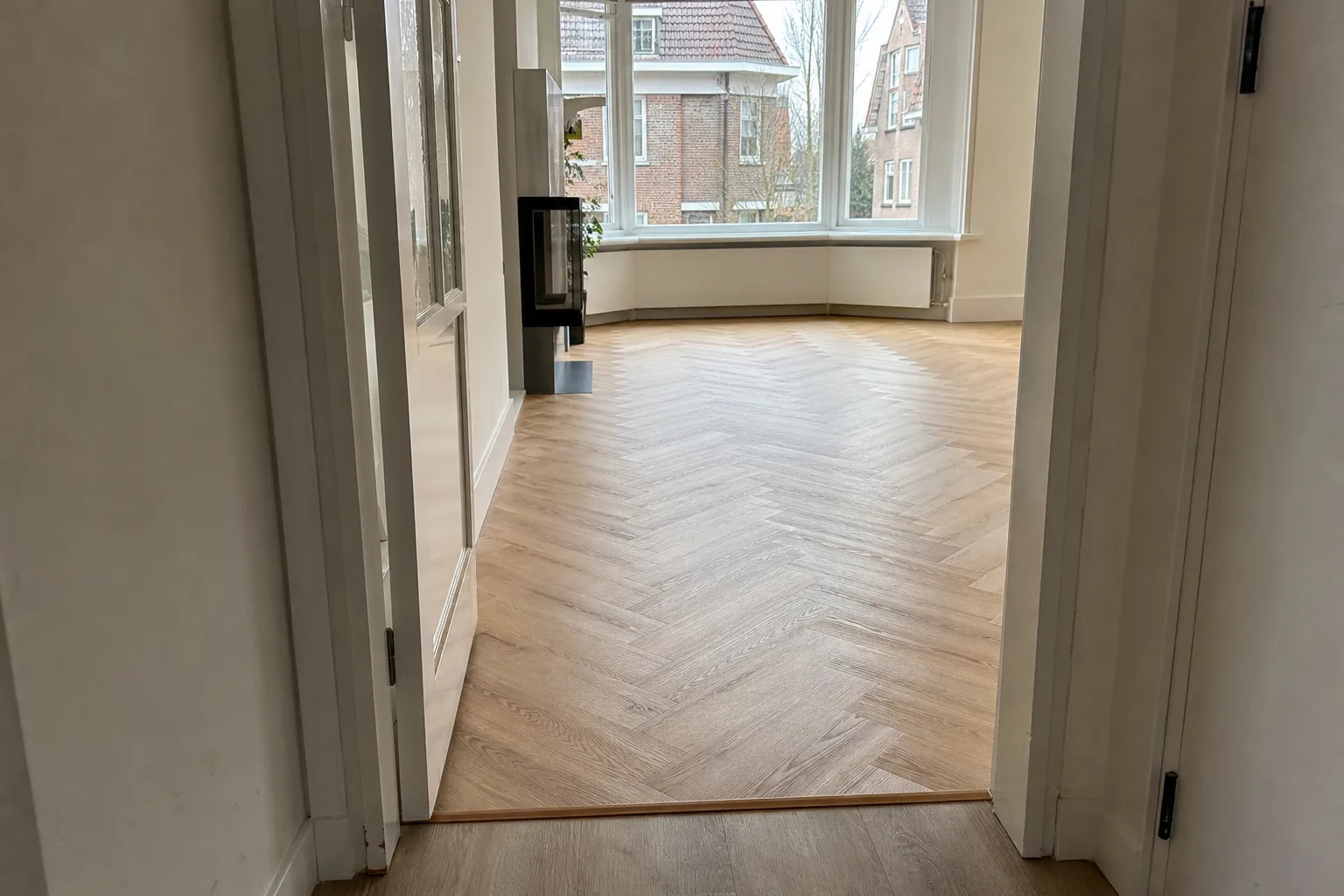
- Parquet is wood: warm, renewable by sanding, but sensitive to standing water and scratches.
- PVC is water resistant, hard wearing and thin, but cannot be sanded once the wear layer has gone.
- Both floors need a flat, dry subfloor; levelling is often half the job.
- With underfloor heating the thermal resistance of the floor matters; glued engineered parquet and glue-down PVC usually work.
- In an apartment the owners' association (VvE) often sets the sound insulation required under a hard floor.
Two very different materials
Parquet is a wooden floor and comes in two main types. Solid parquet is wood all the way through, such as oak planks or herringbone blocks. Engineered parquet has a top layer of real wood on a stable base of softwood or plywood. That build makes engineered parquet calmer: it shrinks and swells less as the humidity in your home changes between a damp Dutch winter and a dry, heated room.
PVC is a plastic floor with a printed decor and a clear wear layer on top. You choose between glue-down planks, which are bonded to the subfloor, and click planks, which float on an underlay. PVC feels softer and quieter than laminate, but it is still plastic. Milieu Centraal, the independent Dutch environmental information service, describes PVC as oil based and points out that wooden boards are easier to reuse and recycle. For some clients that counts, for others it does not.
Daily use: children, pets and wet areas
PVC handles spilled water, muddy paws and a wet mop well. That is why we often lay it in kitchens, hallways and homes with small children or dogs. A thick wear layer stands up to chairs being pushed back. A sharp object or a small stone under a shoe can still leave a scratch or dent, and that will not polish out.
Parquet is less forgiving with water. A puddle left overnight can make the joints swell. Scratches show sooner, especially on a lacquered floor. The upside is that wood can be repaired. An oiled floor can be touched up locally, and solid parquet or engineered parquet with a thick top layer can be sanded and refinished after years of use. The floor then looks new again.
- Kitchen and hallway: PVC is practical, parquet works with a good lacquer and a mat by the door.
- Living room and bedroom: both floors work, here the look usually decides.
- Bathroom: PVC can work in some cases, we advise against parquet; microcement or tiles are the more common choice.
Look and feel underfoot
A wooden floor has its own grain in every plank. No two boards are the same, and over the years the floor develops a patina. Herringbone and chevron give an older house with high ceilings a classic look. At the edges we finish with a skirting board or a small quarter round, so the expansion gap stays out of sight.
Wood-look PVC has improved a lot in recent years. Good planks have an embossed texture that follows the grain and a decor that does not repeat every few boards. Still, many people notice the difference barefoot: wood feels slightly warmer and firmer, PVC slightly softer. PVC is also sold in a herringbone format. If you are unsure, lay a few sample pieces in your own light, ideally on a grey day and on a sunny one.
Underfloor heating and thermal resistance
If you have underfloor heating, or plan to add it, the thermal resistance of the floor matters. This is called the Rd value. The lower the value, the more easily heat passes through. In its guidance on floors and underfloor heating, Milieu Centraal advises a floor with an Rd value of no more than 0.15 m²K/W over underfloor heating and lists PVC planks, most wooden floors and stone as suitable. Thick carpet is not.
According to Milieu Centraal, fully glued parquet floors are the best wooden choice over underfloor heating, while floating boards on a thick underlay give poor efficiency. Over underfloor heating, the usual choice is fully bonded engineered parquet or glue-down PVC. The underlay beneath a floating floor also adds resistance, so we look at the whole build-up rather than just the top layer. Read more in our article on installing water underfloor heating.
Tip from the trade: For any floor, ask for the Rd value of floor and underlay combined. That figure tells you more than a suitable for underfloor heating label on the box.
Ze hebben in 1 week tijd de hele beneden verdieping stucwerk gerepareerd, geschilderd en gesausd tot volle tevredenheid. Netjes en accuraat gewerkt, flexibel geweest en vakwerk afgeleverd. Dus top.
The subfloor decides the result
PVC is thin and follows every bump. A grain of sand, an old tile joint or a ridge in the screed will show up after a few weeks as a lump or line when the light falls across the floor. For glue-down PVC the subfloor must be smooth, flat, clean and dry, which usually means levelling. Parquet is a little more tolerant because the boards are thicker and stiffer, but hollow spots still lead to a springy or creaking floor.
Moisture is the second point. A new screed or a fresh levelling layer has to dry before wood or PVC goes on top. If there is old vinyl sheet flooring, we check for asbestos first: Milieu Centraal notes that vinyl sold between 1963 and 1983 can have an asbestos paper backing. With an old timber floor we check whether the joists and boards are secure and whether the crawl space underneath is ventilated, which is common in Dutch houses. How we handle that is explained in levelling and preparing a subfloor.
Noise, apartments and the VvE
A hard floor passes more impact noise to the neighbours than carpet does. Footsteps, a dropped spoon and chairs sliding all travel down through the floor. In a single family house you mainly notice this yourself upstairs. In an apartment it affects the people below. Many VvE's, the owners' association that every Dutch apartment owner belongs to, have rules about hard floors and the sound insulation underneath in their deed of division (splitsingsreglement) or house rules (huishoudelijk reglement).
Read those rules before you choose a floor. A click PVC on a thin underlay does not always meet them. A sound insulating underlay or a floating build-up makes the floor higher and sometimes slightly softer underfoot. We cover this in a new floor in an apartment.
What the price depends on
We do not list prices on our website, because every floor is different. The price depends on a few fixed points. The first is the state of the subfloor: can we lay straight away, or does an old floor have to come out, be repaired and levelled first. The second is the material: type of wood, thickness of the top layer and the pattern, or for PVC the thickness of the wear layer and glue-down or click.
Then there are the square metres, the number of doors, thresholds and stairs, and the finish at the edges. Herringbone takes longer than straight planks because each block is laid by hand. Planning plays a part too: drying time of a levelling layer and letting the material acclimatise in the room. After our visit you receive a quote in which every part is listed separately.
| Point | Parquet | PVC |
|---|---|---|
| Material | Wood, solid or engineered | Plastic with decor and wear layer |
| Water | Sensitive, wipe up spills quickly | Copes well |
| Repair | Sanding and refinishing often possible | Replace the damaged plank |
| Underfloor heating | Glued engineered usually suitable | Glue-down PVC usually suitable |
| Subfloor | Flat and dry | Very flat, smooth and dry |
How we work
During the site visit Stas, the owner of Parus Construction, looks at the subfloor, checks how flat it is and asks how you use the room. We then advise which floor fits and what preparation is needed. Levelling and laying are done as one job by our own team, so nothing falls between two trades. Skirting, thresholds and the joins with the kitchen or stairs are included.
If electrics, pipework or heating are part of the same project, we lay the floor last, once everything underneath is finished. See our flooring service or ask for a free, no-obligation quote. We reply within 24 hours.
Frequently asked questions
Can PVC go on underfloor heating?
Yes, PVC is often laid over underfloor heating. Glue-down PVC usually has a low thermal resistance. Check the Rd value of floor and underlay combined and stay within the maximum floor temperature the manufacturer gives.
Can I have parquet in the kitchen?
You can, as long as you wipe up spills quickly and the floor is well finished with lacquer or oil. A mat by the dishwasher and sink helps. If that feels like too much attention, PVC or tiles are the usual kitchen choice.
How long will the floor last?
That depends on use and care. Solid parquet and engineered parquet with a thick top layer can be sanded several times. With PVC the thickness of the wear layer decides how long it keeps looking good.
Does the old floor have to come out?
Not always. A flat tiled floor can sometimes stay if the joints are filled and the surface is levelled. A loose or springy timber floor must be fixed or replaced first. We assess this during the visit.
Can I simply lay PVC or parquet in my apartment?
First check the deed of division and house rules of your VvE. They often state which sound insulation is required under a hard floor and whether you need permission.
Renovation and finishing work from Roelofarendsveen: plastering, bathrooms, microcement, extensions, insulation, floors, electrics and plumbing. One point of contact from quote to completion. Questions? Call or WhatsApp +31 6 87 61 60 78.
Sources
- Floors and floor coverings, in Dutch (Milieu Centraal)
- Underfloor heating, in Dutch (Milieu Centraal)
- Asbestos in and around the home, in Dutch (Milieu Centraal)
Rules change. Always check your own address with the Permit Check (Vergunningcheck) in the Omgevingsloket or with your municipality.