A radiator often lasts for decades, until something changes in the house. You knock through a wall, fit a new kitchen, switch to a heat pump or finally want to get rid of the old column radiator under the window. Then the question is: replace, move, or both. This article explains which radiator suits which situation, what happens to the pipes when you move one, and why balancing the system afterwards makes the difference between a warm house and a lukewarm one.
- A radiator's output has to match the room and the water temperature of your heating system.
- According to Milieu Centraal, a panel radiator with two or three panels and fins is usually suitable for low temperature heating.
- An old column radiator gives little output for its weight and suits a heat pump less well.
- Moving a radiator means a new pipe route through floor or wall; plan it before plastering and flooring.
- After the work the system has to be bled, pressurised and balanced.
Why replace or move
We see the same reasons in almost every renovation. A radiator sits exactly where a kitchen unit, wardrobe or sliding door now has to go. A room has become larger through a knock-through or extension, and the old radiator can no longer heat it. A radiator leaks, rusts or is so old that the valves no longer close properly. Or you are switching to a heat pump, which works with cooler water.
Sometimes it is about looks. A sleek designer radiator or a trench convector in the floor fits a new interior better than an old panel with a cover around it. Even then: choose on output first, appearance second.
Output and low temperature heating
A radiator gives off heat according to its size, its construction and the temperature of the water flowing through it. A radiator that works fine with a gas boiler running hot water can be too small once the water gets cooler. That happens with a heat pump, but also when you turn your boiler temperature down to save gas.
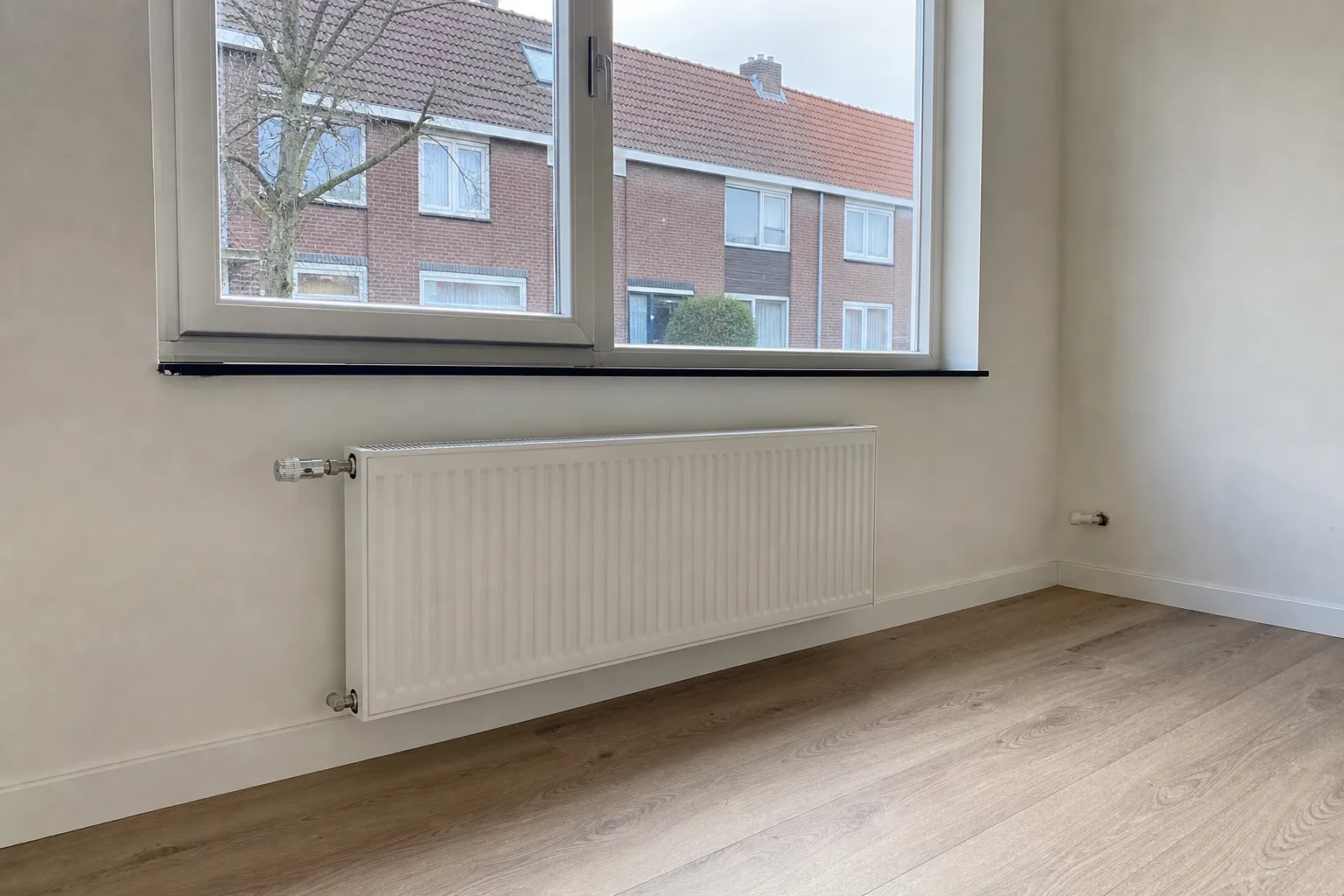
According to Milieu Centraal, the independent Dutch energy information service, a panel radiator has one, two or three panels, often with fins attached. A radiator with two or three panels and fins is usually suitable for low temperature heating. With a single panel or no fins it sometimes works and sometimes not, depending on insulation. An old fashioned column radiator with thick cross plates has less output and a lot of weight, and is usually less suitable.
We calculate the required output per room before choosing a radiator. That takes into account the size of the room, the amount of glass, the insulation of walls and floor, and the water temperature you heat with now or will heat with later.
| Type | Feature | At low temperature |
|---|---|---|
| Panel radiator, single panel | Slim, takes little space | Sometimes enough, depends on insulation |
| Panel radiator, 2 or 3 panels with fins | More output at the same width | Usually suitable |
| Column radiator | Heavy, classic look | Usually less suitable |
| Convector | High output, little radiant heat | Suitable |
| Underfloor heating | Large surface | Very suitable |
Smaller steps: fans and foil
Not every radiator needs to go. Milieu Centraal mentions radiator fans as a simple addition: small fans under or on top of the radiator that push the warm air into the room faster. According to its energy saving tips, a radiator then gives off about 20 percent more heat. The fans use little electricity and need a socket nearby.
If a radiator is against an uninsulated outside wall, reflective radiator foil behind it helps. Removing a radiator cover, or moving furniture and long curtains away from it, also makes a difference. Only when that is not enough does replacement become worthwhile.
Met dit bedrijf werk ik niet voor het eerst samen. Ze hebben voor mij verschillende werkzaamheden uitgevoerd, zoals het vervangen en maken van deuren, het realiseren van een aanbouw en het uitvoeren van binnenrenovaties. De jongens zijn zeer verantwoordelijk, en vooral Stanislav geeft altijd goede adviezen.
Moving: the new pipe route
Moving a radiator is mostly pipework. Flow and return have to reach the new spot, and the old connection is capped or removed completely. In a house with a timber floor the pipes often run between the joists, so we can work from the crawl space or under a lifted board. With a concrete floor the pipes go in a channel in the floor, in the wall or visibly along the skirting.
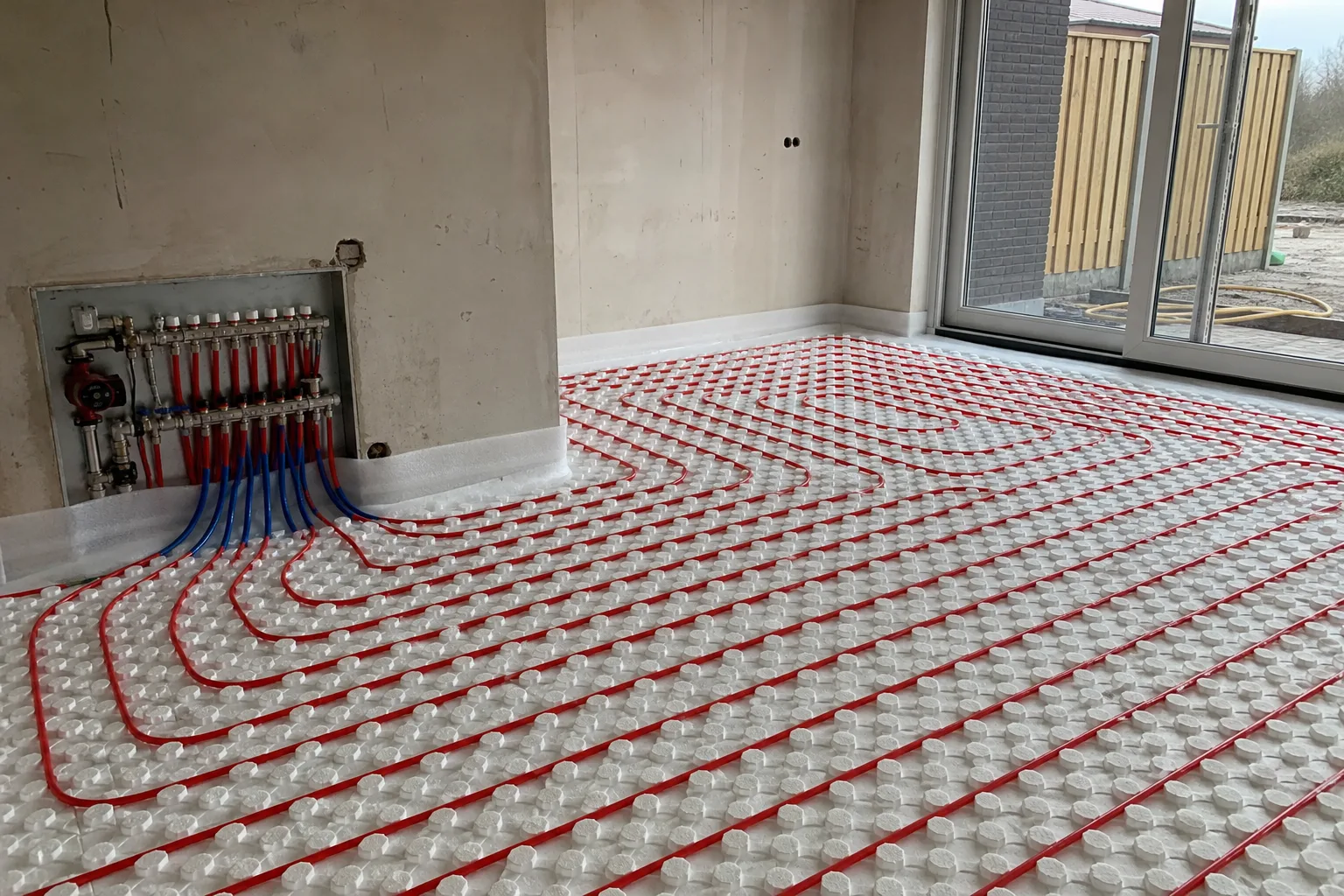
A pipe in the wall or floor means cutting and breaking out, followed by plastering and floor repair. That is why we always plan a move before plastering, tiling and laying the new floor. Nothing has to be opened twice. If underfloor heating is going in at the same time, read installing water underfloor heating.
- Where will the radiator go, and is there room under the window or along the wall.
- Which route can flow and return take: floor, wall or skirting.
- Will plaster, tiles or flooring need repairing afterwards.
- Is a socket needed for a fan or an electronic thermostatic head.
Position, height and fixing
The classic spot is under the window. There the radiator warms the cold air that drops down along the glass, which prevents a draught at floor level. With a large glazed wall that is not always possible. Then it becomes a trench convector in the floor, a tall radiator beside the glass or underfloor heating.
A radiator has to hang firmly. On a masonry wall that is simple. On a stud wall or plasterboard wall we build reinforcement into the wall or choose a radiator on feet. With a heavy column radiator that matters even more. If we are building an insulated lining wall in the same project, see our insulation service, we add the reinforcement straight away.
Tip from the trade: With a new wall or lining, mark the radiator position in advance and have a timber batten or board fixed inside the wall. Reinforcing afterwards is far more work.
Filling, bleeding and balancing
After fitting, the system is filled, bled and brought up to pressure. We check every joint for leaks. Then comes the step that is often forgotten: balancing. Water takes the easiest route. Without balancing, the radiator closest to the boiler gets too much hot water and the one furthest away stays lukewarm.
Hydronic balancing (waterzijdig inregelen) sets the flow through each radiator with the lockshield valves or pre-settable valves. Milieu Centraal points out that new radiators mean the system should be balanced too, and that this can be a job for a specialist. With thermostatic radiator valves you then set the temperature per room. According to Milieu Centraal that saves a few percent on heating.
What the price depends on
The price depends on the number of radiators, their type and size, and whether they stay in the same place. Replacing on the existing connections is simplest. Moving needs new pipes, and the length and route matter a lot: through a crawl space is quicker than through a concrete floor.
Cutting and breaking out, repairing plaster, tiles or flooring, and balancing the whole system count as well. At Parus pipework, plastering and flooring are done in one job by the same team. See our plumbing service or ask for a free quote. If you are also considering a different heat source, read replacing your boiler.
Frequently asked questions
Can I replace a radiator myself?
Swapping a radiator of the same size on the same connections is technically simple, but the system has to be drained, refilled, bled and balanced. For moving a radiator or running new pipes we recommend a professional.
Is my radiator suitable for a heat pump?
A panel radiator with two or three panels and fins usually is. With a single panel or a column radiator it depends on insulation and the output per room. We calculate that room by room.
How long will the heating be off?
For a simple swap it is usually part of a day. Moving radiators with new pipes can take longer. We plan the work so you are not left in the cold unnecessarily.
What is balancing?
Setting how much water flows through each radiator, so every room heats evenly. Without it, radiators far from the boiler often stay lukewarm.
Can a radiator go on a plasterboard wall?
Yes, as long as the wall is reinforced at that spot or the radiator stands on feet. With new walls we plan the reinforcement in advance.
Renovation and finishing work from Roelofarendsveen: plastering, bathrooms, microcement, extensions, insulation, floors, electrics and plumbing. One point of contact from quote to completion. Questions? Call or WhatsApp +31 6 87 61 60 78.
Sources
- Low temperature heating, in Dutch (Milieu Centraal)
- Heating energy saving tips, in Dutch (Milieu Centraal)
- Thermostats and radiator valves, in Dutch (Milieu Centraal)
Rules change. Always check your own address with the Permit Check (Vergunningcheck) in the Omgevingsloket or with your municipality.