- Porcelain, fired right through, is hard, absorbs very little water and suits floors and walls.
- Large tiles mean few joints, but need a flat base and do not suit every shower fall.
- On the shower floor choose a tile that has grip when wet and walked on barefoot.
- Grout colour and joint width shape the look as much as the tile itself.
- Order from one batch and keep spares, so you can replace a tile later.
Material: ceramic, porcelain or natural stone
Most bathroom tiles are ceramic. Within that group there is an important difference. Wall tiles with a red or white body are softer and absorb more water. They are light, easy to cut and fine for walls. Porcelain tiles are fired at a high temperature. They are hard, hard-wearing and absorb almost no water, so you can use them on floors and walls.
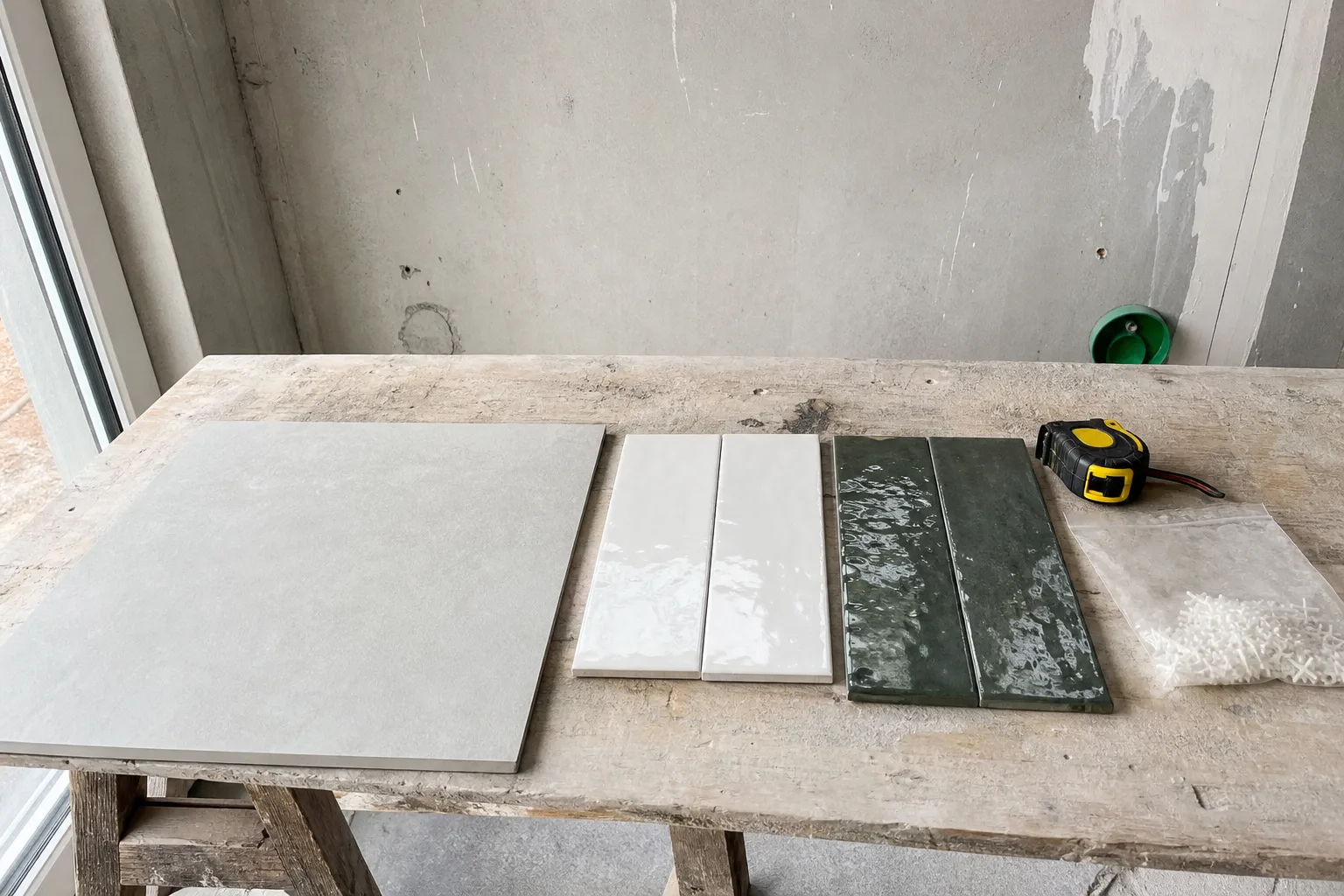
Natural stone, such as marble or slate, is beautiful and unique, but needs more maintenance. It can stain and is sensitive to acidic cleaners. Handmade or encaustic cement tiles add character. One of our projects is an industrial-style bathroom with dark green wall tiles. Tiles like these vary in colour and size from piece to piece, so laying them takes longer and needs a wider joint.
| Material | Strength | Watch out for |
|---|---|---|
| Ceramic wall tile | Light, easy to cut, many colours | Not for floors |
| Porcelain | Hard, low absorption, floor and wall | Heavier, harder to cut |
| Natural stone | Unique look | Needs sealing, sensitive to acid and stains |
| Handmade or cement tile | Character and colour | Size variation, wider joint, more laying time |
Size: large, small or in between
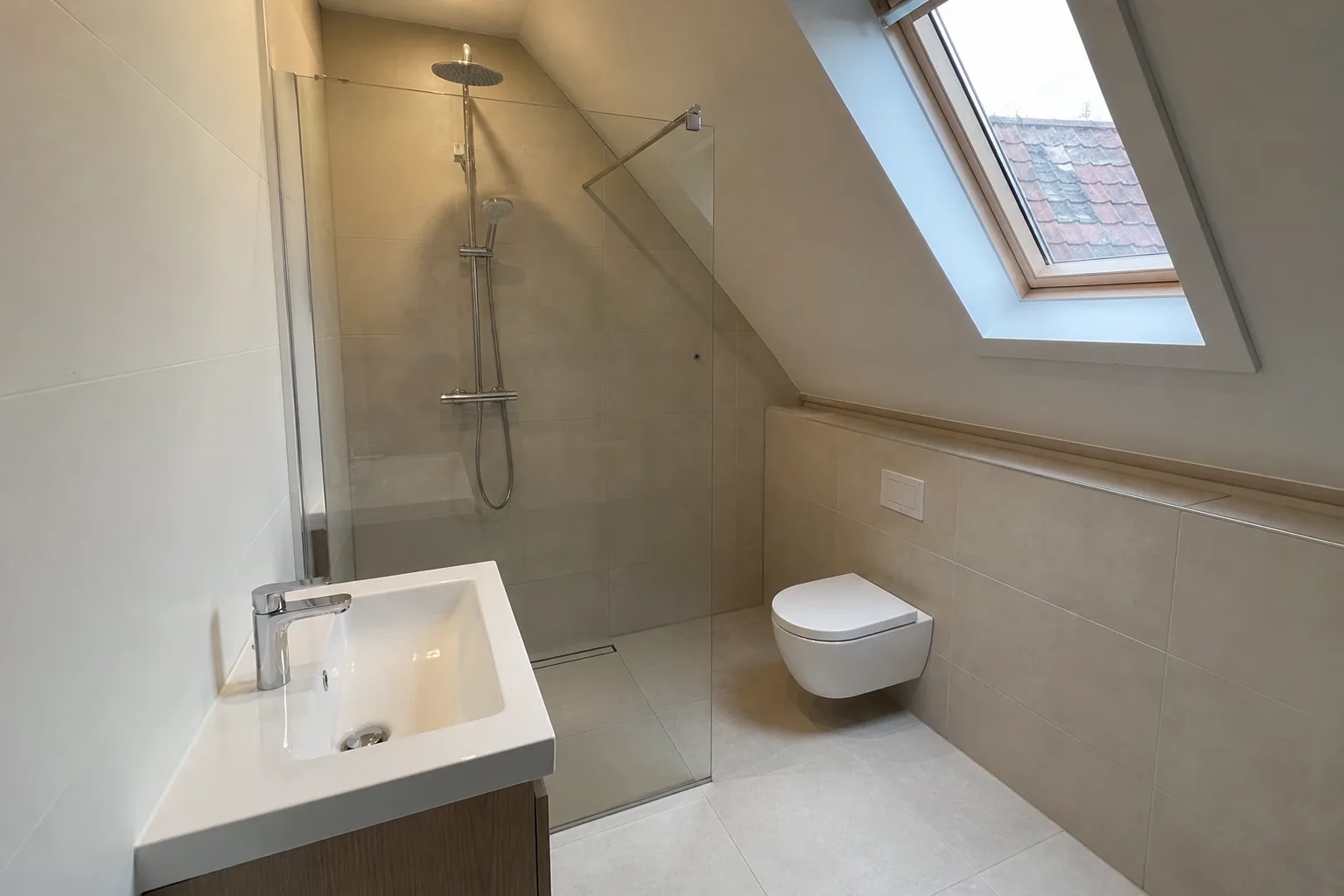
Large tiles are popular. They give few joints and make a room look calm. But the larger the tile, the flatter the base has to be, because every bump shows as a raised edge. Large tiles are also heavy and have to go up the stairs. In an old apartment with steep, narrow Dutch stairs that is a practical point, see small bathroom in an Amsterdam apartment.
A shower floor with a point drain has to fall from four sides. Large tiles cannot follow that shape. Then you choose smaller tiles, or a linear drain so the floor falls in one direction. Small mosaic tiles give many joints, which on a shower floor is actually an advantage for grip. More in walk-in shower.
Tip from the trade: Large rectangular tiles are often very slightly bowed. So do not lay them at a half offset, but at about a third. The edges then line up better.
Grip on a wet floor
A bathroom floor gets wet and you walk on it barefoot. A high-gloss tile is slippery then. Manufacturers state slip resistance with a class. For wet areas walked on barefoot there is usually a separate class, alongside the familiar R rating for shoes. When choosing, ask for the class for wet, barefoot floors.
In the shower choose a tile with grip: matt or lightly textured. Outside the shower it can be a little smoother, but a matt tile is often more pleasant there too. Gloss works well on walls, where nobody walks.
Finish and colour
Matt tiles hide limescale and water marks better than gloss. Light colours make a small room look bigger, dark colours add mood but show limescale sooner. With a stone-look or concrete-look tile the difference is in the print: the more variations the manufacturer makes within a series, the less repetition you see on the wall.
If you would rather have no joints, microcement is an alternative. The trade-offs are in microcement or tiles. In its guide to a new bathroom (in Dutch), Milieu Centraal, the Dutch environmental information centre, names tiles as a moisture-resistant finish for walls and floors and advises against latex wall paint in bathrooms because of mould.
Snel en kwalitatief hoogstaand werk. 3 kamers opgeleverd in 3 dagen. Gestuukte wanden en plafond. Nu zijn de kamers onherkenbaar. Zulke gladde muren waren hier nooit. Ik adviseer iedereen Parus Construction. Ook de prijzen zullen u verrassen.
Grout: width, colour and type
Rectified tiles have precisely ground edges. You can lay them with a narrow joint of around 2 to 3 millimetres. Tiles with a natural edge or handmade tiles need a wider joint, because the size varies per tile.
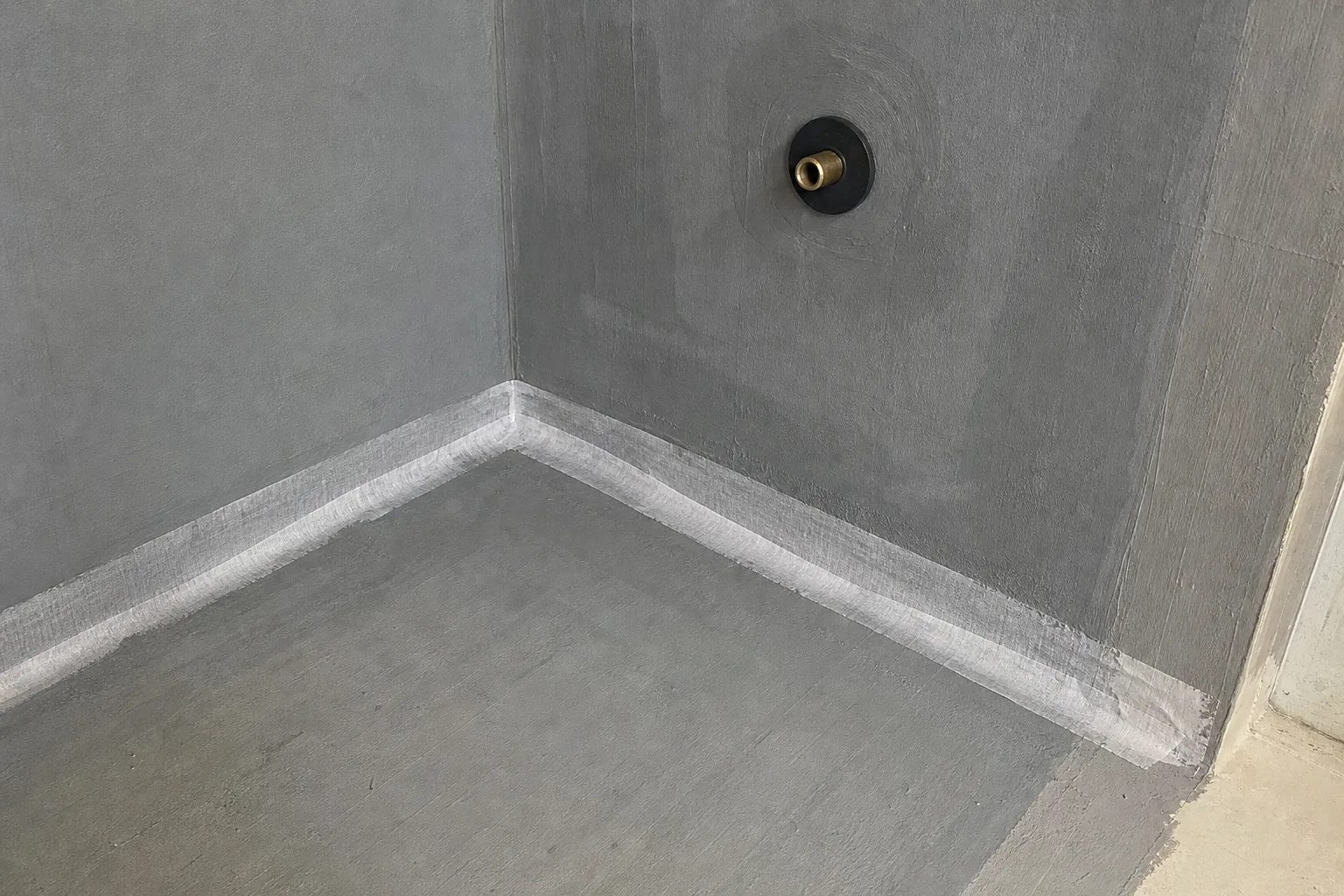
Grout colour shapes the look. Grout matching the tile makes the surface look calm. A contrasting grout draws the pattern. Light grout on the floor turns grey more quickly. In the shower you can choose a grout that absorbs less dirt and water. However good the grout is, the waterproofing sits underneath, see waterproofing and sealing tape.
The base and the weight
Tiles are only as good as the base. A wall must be flat, dry and strong enough. On a timber floor the floor must first be made stiff, or grout and tiles will crack. With large tiles we check flatness with a long straightedge and level where needed. According to IPLO (in Dutch), the whole bathroom floor must be water-repellent. You achieve that with the build-up of membrane, adhesive and tile together, not with the tile alone.
Weight counts too. Porcelain tiles on a concrete floor are no problem. On a timber attic floor with an extra screed, tiles and sanitary ware, the load adds up. That is why for an attic bathroom we look at the joists first.
Ordering: batch, cutting waste and spares
Tiles are fired in batches. Two batches of the same tile can differ slightly in colour or size. So order everything at once, from the same batch, and check the codes on the boxes.
Allow for cutting waste. The bigger the tile and the more corners, niches and pipes, the more waste. A diagonal or herringbone pattern wastes more than a straight lay. Keep a few tiles as spares after the job. If one breaks later, you have a match. In a few years the same series is often no longer available.
- Take a sample home and look at it in daylight and artificial light.
- Check the floor tile suits underfloor heating, if you have it.
- Measure the stairs and stairwell for large formats.
- Order from one batch and keep spares.
Advice and installation at Parus
You are free to choose your own tiles. We are happy to advise on tiles and grout colour and to match the choice to the room, the sanitary ware and the base. During the survey Stas looks at the walls and floor and tells you which size works without extra preparation and what a large format would need.
More on how we lay tiles is on tiling. For advice on your room, ask for a free quote. You will hear back within 24 hours.
Frequently asked questions
Can I use the same tile on floor and wall?
Yes, if it is a floor tile such as porcelain. A wall tile is usually not suitable for floors. The same tile on both gives a calm look.
Which tile is least slippery in the shower?
A matt or lightly textured tile, or small mosaics with many joints. Ask for the slip resistance class for wet, barefoot floors.
Can large tiles go in a shower with a point drain?
It is tricky, because the floor falls from four sides. With a linear drain it works, because the floor then falls in one direction.
How many extra tiles should I order?
That depends on size, pattern and the number of corners. We work out the cutting waste for you. On top of that, keep a few tiles as spares.
Can new tiles go over the old ones?
Sometimes, if the old tiles are firm and flat and the room allows the extra thickness. In a bathroom we usually remove old tiles, so we can build up the waterproofing properly.
Renovation and finishing work from Roelofarendsveen: plastering, bathrooms, microcement, extensions, insulation, floors, electrics and plumbing. One point of contact from quote to completion. Questions? Call or WhatsApp +31 6 87 61 60 78.
Sources
- New bathroom: sustainable renovation (Milieu Centraal, Dutch)
- Moisture protection in existing buildings (IPLO, Dutch)
Rules change. Always check your own address with the Permit Check (Vergunningcheck) in the Omgevingsloket or with your municipality.