Most Dutch homes are heated by a gas combi boiler, the cv-ketel, which also supplies the hot water. You rarely replace one at a moment of your choosing. It happens when the boiler starts failing or the engineer says parts are getting hard to find. If you only start choosing then, there is little time. This article covers what you can arrange in advance, the options, who is allowed to work on a gas boiler and what happens during installation, based on official Dutch sources.
- Only CO-certified companies may work on gas appliances in the Netherlands; doing it yourself is a criminal offence.
- The public register of gas installation companies shows whether a company is certified.
- Milieu Centraal advises not to wait until the boiler breaks down and to consider a hybrid heat pump.
- The hot water class on the energy label tells you how much hot water a boiler can deliver.
- The Dutch government advises a check at least every two years and a carbon monoxide alarm at home.
When replacement makes sense
There is no fixed age at which a boiler has to go. The signs are clear, though. The boiler cuts out more often, the water pressure keeps dropping, the hot water runs hot and cold, or the engineer tells you parts for this model are no longer made. Rust around the heat exchanger or a leak under the boiler are signs too.
Milieu Centraal, the independent Dutch information service on energy, advises not to wait until the boiler breaks, because you then have little time to compare options. A boiler that fails in January is often replaced in a hurry with the same type, when a better option might have been available.
- Frequent faults or restarts within a short time.
- Water pressure that keeps falling and needs topping up.
- Hot water that varies in temperature or takes long to arrive.
- The engineer reports that parts are no longer available.
- Rust, leaks or unusual noise from the boiler.
Who may work on a gas boiler
Gas comes with strict rules in the Netherlands. According to the Dutch government, only companies with a CO-vrij certificate may work on a gas appliance, and doing such work yourself is a punishable offence. The rule comes from the Gas Boiler Act (Gasketelwet). As the English page on business.gov.nl explains, it covers installing, maintaining and repairing boilers, water heaters, gas fires and flues, and the consumer who hires an uncertified company can be penalised too.
You can check whether a company is certified in the public register of gas installation companies. A CO qualification held by one engineer is not the same as certification of the company. So the work on gas and flue must be done by a CO-certified installation company. Ask that company for proof of certification before work starts, also when the boiler swap is part of a larger renovation run by a general contractor.
Tip from the trade: Look the company up in the register yourself, by name or Chamber of Commerce (KvK) number. Do not rely on a logo printed on a quote.
Gas boiler, hybrid or fully electric
When replacing, you have roughly three routes. A new high efficiency boiler (hr-ketel) is the familiar choice and works with your existing pipes and radiators. A hybrid heat pump works alongside a boiler: the heat pump does most of the heating, the boiler steps in on cold days and makes the hot tap water. Milieu Centraal mentions a reduction in gas use of up to about 70 percent with a hybrid heat pump.
A fully electric heat pump replaces the boiler altogether. According to Milieu Centraal that is an option when the home is already reasonably to well insulated. If the insulation is not there yet, a hybrid system in an all-electric ready version is a stepping stone. The national ISDE subsidy from RVO, the Netherlands Enterprise Agency, applies to heat pumps; check the current conditions before you order.
| Option | What stays | Best suited to |
|---|---|---|
| New gas boiler | Pipes and radiators | Homes that will be upgraded later, limited space |
| Boiler with hybrid heat pump | Boiler for hot water and cold days | Moderately to reasonably insulated homes |
| Fully electric heat pump | No gas boiler | Well insulated homes with low temperature emitters |
Snel en kwalitatief hoogstaand werk. 3 kamers opgeleverd in 3 dagen. Gestuukte wanden en plafond. Nu zijn de kamers onherkenbaar. Zulke gladde muren waren hier nooit. Ik adviseer iedereen Parus Construction. Ook de prijzen zullen u verrassen.
Hot water: choosing the right class
A combi boiler heats the house and makes hot tap water. How much hot water it delivers is shown on the energy label as the hot water class. Milieu Centraal lists the classes S, M, L and XL. A high flow is only needed if you want to run two showers at once or fill a bath quickly.
An oversized boiler costs more and can use more than needed. An undersized one gives you a lukewarm shower when someone opens the kitchen tap. The distance between boiler and shower matters too: the longer the pipe, the longer you wait for hot water. With an attic bathroom or an extension, the pipe route is therefore worth discussing in advance. See also our bathroom renovation page.
What happens on installation day
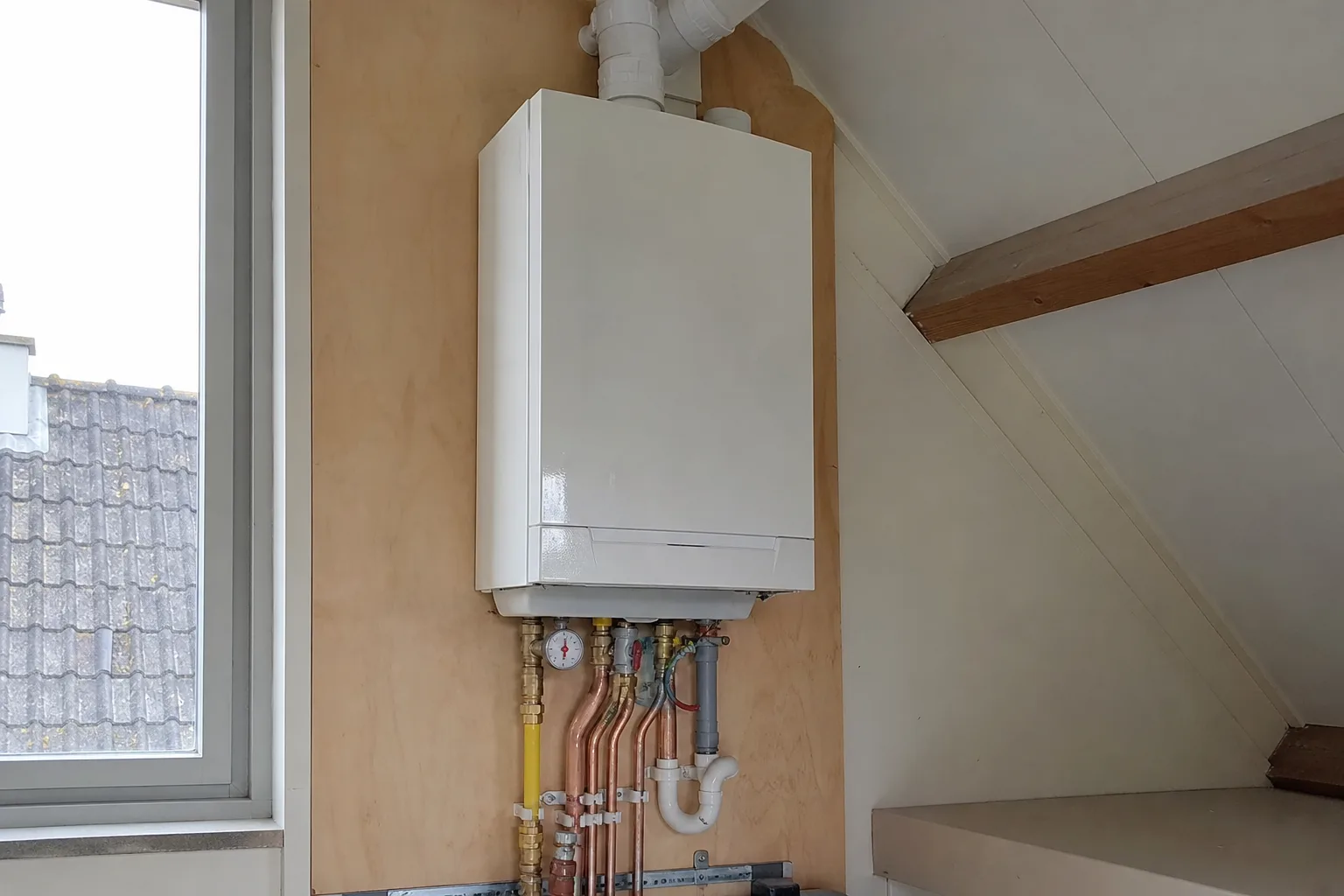
On the day of the swap the system is drained and the gas supply is shut off. The old boiler is disconnected and taken away. The new boiler is then hung and connected to gas, heating flow and return, cold water, hot tap water and the condensate drain. The flue and air supply are checked and renewed where needed, because a boiler is only as safe as its flue.
After filling, the system is bled, brought up to pressure and commissioned. The installer checks combustion and operation and sets the boiler up for your home. You get an explanation of the thermostat, topping up the pressure and the fault codes. Ask for the commissioning report and keep it with your house documents.
- Disconnect and remove the old boiler.
- Connect the new boiler to gas, heating, hot water and condensate drain.
- Check or renew the flue and air supply.
- Fill, bleed, pressurise and set up the system.
- Explanation for you and the commissioning report.
Safety after installation
Carbon monoxide is a gas you cannot smell or see. The Dutch government advises having your gas installation checked at least once every two years by a CO-certified company and fitting a carbon monoxide alarm. The alarm warns you when there is too much carbon monoxide in the home.
If you live in an apartment with a shared flue, the VvE (the owners' association) is responsible for maintaining that flue. The government advises raising this with your VvE or landlord and asking for proof that the shared flue has been checked and is safe. It is also a good moment to look at your radiators; see replacing or moving radiators.
What the price depends on
The price depends on the type of boiler or heat pump, the hot water class and whether the boiler stays in the same place. Moving it means new gas, water and heating pipes and a new flue. The state of the existing flue, condensate drain and electrical connection counts as well. With a hybrid or fully electric system there is also an outdoor unit, a place to put it and sometimes an extra circuit in the meter cupboard.
At Parus we look at the existing installation, the location and the pipework during the site visit, and discuss the boiler type and position. You receive a detailed quote. With any quote for a boiler swap, ours included, ask which company does the work on gas and flue, and ask for that company's CO certificate. See our plumbing service or ask for a free quote. We reply within 24 hours.
Frequently asked questions
Can I fit a boiler myself?
No. Work on gas appliances may only be done by a CO-certified company. According to the Dutch government, doing this work yourself is a punishable offence.
How do I check whether an installer is certified?
Look the company up in the register of gas installation companies. It shows whether the company is certified for work on boilers, water heaters, gas fires and flues.
Can the new boiler go in a different place?
Often yes, for example from the kitchen to the attic or a storage room. That requires new pipes and a new flue. We include this in the site visit.
Am I required to choose a heat pump?
Check the current rules on the websites of the Dutch government and Milieu Centraal before you decide. We advise on what suits your home technically, and you decide.
How often does a boiler need servicing?
The Dutch government advises a check at least once every two years by a CO-certified company. Many manufacturers also give their own service advice.
Renovation and finishing work from Roelofarendsveen: plastering, bathrooms, microcement, extensions, insulation, floors, electrics and plumbing. One point of contact from quote to completion. Questions? Call or WhatsApp +31 6 87 61 60 78.
Sources
- CO certificate for working on gas appliances (business.gov.nl)
- Preventing carbon monoxide poisoning at home, in Dutch (Rijksoverheid)
- Register of certified gas installation companies, in Dutch
- Hybrid heat pumps, in Dutch (Milieu Centraal)
- ISDE heat pump subsidy for homeowners, in Dutch (RVO)
Rules change. Always check your own address with the Permit Check (Vergunningcheck) in the Omgevingsloket or with your municipality.